Skylights and rooflights for Tow Law roofs
Tow Law lies 21 road miles south-west of Newcastle, on the A68 in County Durham. A roof up here has to keep a room warm as well as bright, so we begin with the roof and the glass that will sit in it.
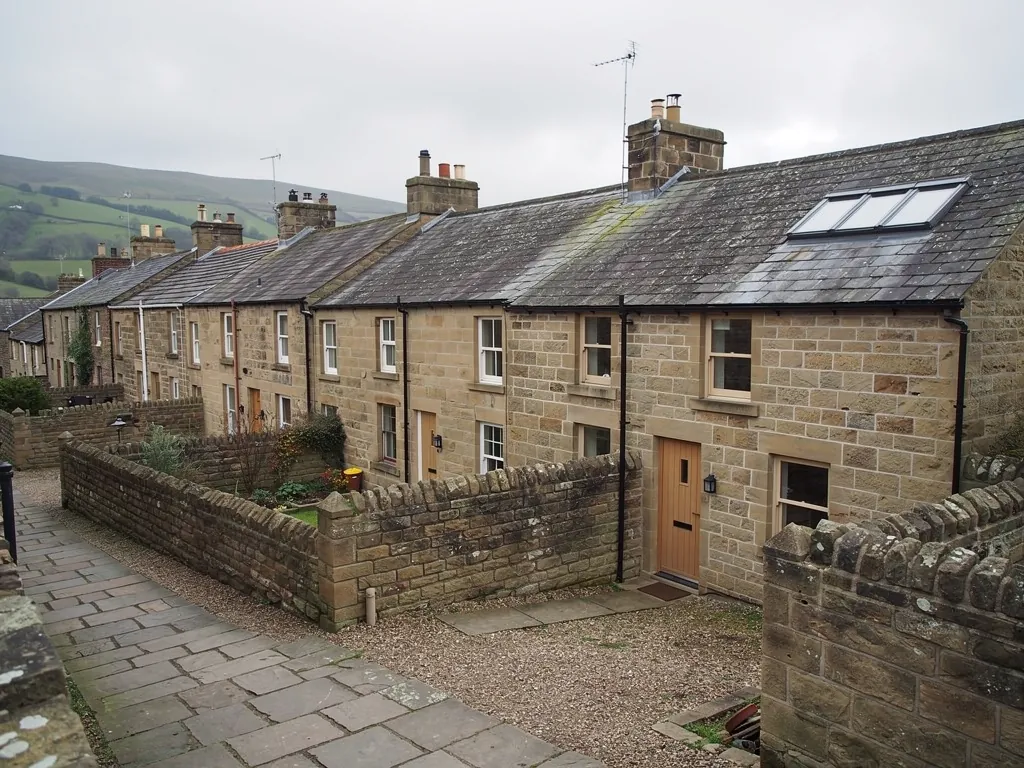
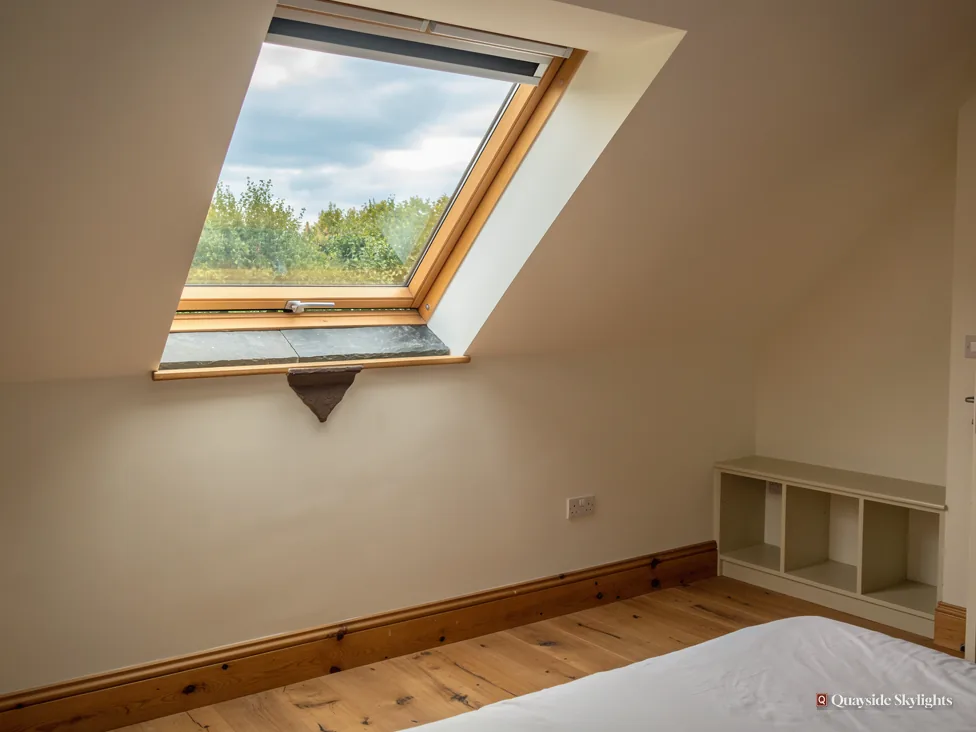
Daylight is easy, keeping the warmth in is the real brief
Tow Law grew fast when blast furnaces and collieries arrived, from about 2000 people in 1851 to about 5000 by 1881. Whatever the age of your own home, you may have a room under the roof that is dim, or an old rooflight that lets heat leak out. A new rooflight has to do both jobs: let light in and hold warmth in.
The rooflights we install around Tow Law
Each is picked for your roof and your room on a free survey, not from a shelf. Roof lanterns, Flat roof rooflights, Roof windows, VELUX windows, Electric rooflights, Energy efficient rooflights, Misted rooflight replacement, Walk-on rooflights, Conservation rooflights, Sun tunnels.
Tow Law, roof to room
A rooflight that is bright, warm and dry
The job runs roof first, then product, then a survey that weighs the glass for warmth and damp, and last the sign-off and papers; a question apiece covers them.
What kind of roof do I have, and does it limit the choice?
Short answer
Slate or tile on a slope will carry a roof window, while a flat deck suits a rooflight or lantern. The covering, the rafters and the pitch all narrow the field, so we read the roof before we talk about the glass.
A place that swelled with ironworks and pits was built up over a long period, and we never guess a roof from the name of a street. The questions are simpler: is it pitched or flat, what is it covered with, and what lies underneath?
Pitched slate or tile
On a pitched roof the covering is laid over battens fixed to rafters. A roof window sits in that plane, with a flashing kit to carry water around the frame. The spacing of the rafters and the pitch of the slope tell us how wide a window can go before the framing needs extra timber. A slope that has been re-covered at some point may sit differently from the original courses, and that affects how the flashing is cut.
Flat roofs on additions
A flat roof has a deck, a waterproof layer and usually some insulation. A flat rooflight or lantern is set on an upstand over that build-up. Manufacturers commonly give a minimum upstand of around 150mm above the finished roof, so the waterproof layer has somewhere to finish. If the existing roof is thin or tired where the opening will go, we say so in the quote.
What the covering says about the job
A heavy covering may need more care at the cut than a light tile, and a roof with a membrane under the covering needs that membrane dressed into the frame. These are matters for the survey, roof by roof.
You can tell us what you have in a message and a photo, and we will tell you which families of rooflight suit it before we visit.
Telling us about the roof
The more you can say before the visit, the quicker the survey goes. Mention whether there is a loft, how old any existing rooflight is, and which room you would light first. If the roof has been re-covered or extended, say when and by whom, if you know.
Our view: the build-up of your roof decides which rooflight fits more firmly than the size of the room does.
Which rooflight should go into a Tow Law roof like mine?
Short answer
Choose a roof window for the slope, a rooflight or lantern for the deck, and a sun tunnel when the room is windowless under a loft. Each has to meet Part L, so we start with a frame and glazing that hold warmth well.
The roof points to a family, and the room points to a size. The families, in turn.
Roof windows
A roof window lies in the slope and lights a room directly beneath. It can open for air and is designed to be reached from inside. Every VELUX size is a code, and in MK04 the pair of letters describes width where the digits describe height. The roof windows hub covers each way a unit can open. Laminating the inner pane is the standard treatment over somewhere you sleep or work.
On a flat deck
One option is a level pane in a low frame; the other, a lantern, stands a pitched glass roof on the deck. The lantern throws light wider and adds height, and the flat unit is lower and tidier. Both are covered on the flat-roof side of our work, and the flat rooflight page sets out the details.
Tubes of light
A loft in the way of a window leaves the dome-and-tube route: the dome on the roof, the shiny-walled tube, the diffuser at ceiling level. It suits a landing or a bathroom that sits under a loft.
Why the glazing is the main choice
For a room you heat, the glass and the frame do most of the work of keeping that heat in. Double glazing that carries a low-emissivity coating plus a warm edge spacer sheds less heat than a plain pane. A triple-glazed unit loses less again. Our energy efficient rooflights hub compares the options. We set them out on the survey and put your choice in the quote with a fixed price.
Whichever you pick, the new unit has to meet the limits for existing dwellings. Those are set out in the next chapter, where we look at warmth in detail.
Fixed, opening or electric
A fixed rooflight is the simplest and the tightest against draughts. An opening one lets damp air out and fresh air in, and an electric one can be run from a switch or a remote when the roof is out of reach. Our guide to electric and opening rooflights explains what each involves.
How do you make sure a Tow Law rooflight stays warm and does not run with condensation?
Short answer
The unit has to meet Part L: 2.2 W/m²K for a rooflight and 1.4 W/m²K, or WER Band B, for a roof window. Condensation depends on warm damp air reaching a cold surface, so we look at glazing, frame, ventilation and the room's use at the survey.
Glass is a cold surface by nature, and a rooflight sits in the coldest part of a house. Two things follow: the unit has to be rated well, and the room has to be able to shed its moisture.
The numbers the regulations set
Part L of the Building Regulations, for existing dwellings in England, sets a limiting U-value of 2.2 W/m²K for a rooflight and 1.4 W/m²K, or WER Band B, for a roof window. A lower figure means less heat lost. Those are limits, not targets, and a better-rated unit costs more but holds warmth better. The table sets out how the products stand against each other.
Why condensation forms
Condensation appears when warm air carrying moisture meets a surface cooler than the air's dew point. A kitchen or bathroom throws out a lot of moisture, and a glass pane in a cold roof is an obvious place for it to land. A better-insulated frame and a warm-edge spacer keep the inner surface warmer, so droplets form less readily. An opening unit or a trickle of ventilation lets the moist air out.
On survey day
What the room is used for, the roof insulation round the opening and the seal between frame and lining are all examined. A bathroom needs different treatment from a bedroom. A south-facing slope over a loft room may call for solar control as well, so it does not overheat in summer.
The quote lists the glazing, the frame and the lining. Nothing is added after the survey unless the job changes, and the price is fixed.
Sun and shade
A slope that faces the midday sun brings strong light and warmth into a loft room, which suits a study but can tire a bedroom in summer. Glass with a solar control coating admits less heat, and a blind fitted inside or out trims it again. A slope that faces away brings gentler light all day. We ask which way yours faces and write the glass into the quote to match.
| Product | Part L limit | What helps most |
|---|---|---|
| Flat rooflight or lantern | 2.2 W/m²K | Low-emissivity coating and warm edge |
| Roof window | 1.4 W/m²K, or WER Band B | Insulated frame and a well-sealed lining |
| Lantern | 2.2 W/m²K | An insulated frame and a deep upstand |
| Opening unit | The limit for its type | Ventilation that clears damp air |
What happens after the rooflight is in: sign-off, guarantee and permission?
Short answer
We handle the Building Control notification where it applies, and you receive our 10-year workmanship guarantee in writing. Ahead of ordering, flats must secure Durham County Council's planning approval, and listed houses have a consent route of their own.
The glass is the visible part of a job. The paperwork afterwards is what you will want if you ever sell.
Sign-off
Cutting a new opening in a roof is building work, so it is notified to Building Control, either the local authority or a registered building control approver. For Tow Law that authority is Durham County Council. Where the work needs notifying, we take care of it.
The guarantee
A written guarantee on our workmanship, running ten years, is yours. It covers our fitting and is never described as insurance. The maker's own warranty on the glass and frame sits beside it.
Permission comes first
That order matters. Planning questions are settled before the work, not after. On a house, most rooflights fall under permitted development within set limits, and our planning permission guide explains them. On a flat, the rule is different: no householder permitted development, so planning permission from Durham County Council is needed for a new rooflight. A house on the statutory list needs listed building consent before almost any rooflight.
If the roof is shared
What a flat's title or lease says settles ownership above and below the ceiling line, and whether a co-owner has a say. Study it and talk to that co-owner before ordering.
Nearby places
If you are nearer Wolsingham than Tow Law, our Wolsingham page describes the jobs we take on at that end of the dale. The process, the free survey and the fixed written quote are the same wherever you are.
Keeping the papers together
Put the quote, the guarantee, the maker's paperwork and any Building Control correspondence in one folder with the house documents. A buyer's solicitor may ask for them, and they answer the question quickly when they do.
If you are renting out the property or the roof belongs to a freeholder, copy them in on the paperwork too, so that everyone with an interest holds the same record of what was installed.
Warmth, damp and permission in short
Which council does Tow Law come under?
Durham County Council. Tow Law is 21 road miles south-west of Newcastle, in County Durham, so planning permission for a flat, listed building consent and the Building Control notification all go through that council. The A68 passes through it, but the road does not change the authority.
Can a new rooflight leave my room chillier in winter?
Not if the glazing is chosen well. A unit that meets Part L, with a coated pane and a warm edge, loses little heat. A badly chosen or badly sealed unit can feel cold, which is why we put the glazing in the quote and not as an afterthought.
Why does my bathroom rooflight drip with condensation?
Warm, damp air from the room is meeting a cold pane. A rooflight with a warmer frame and coated glass runs drier, and an opening unit or a vent clears the damp air. We assess these at the survey when you are choosing a replacement.
Can one rooflight light a long, narrow room?
Sometimes, if the light can fall along the length. A pair can do better than one large unit, because it spreads light evenly. Our quote request lets you describe the room, and the survey settles the number.