South Shields skylights and rooflights for rooms with inside walls only
South Shields is a coastal port town at the mouth of the Tyne, 11.8 road miles east of Newcastle. Begin with the room that has no outside wall, and we will work out the skylight, the rooflight and the permission that fit it.
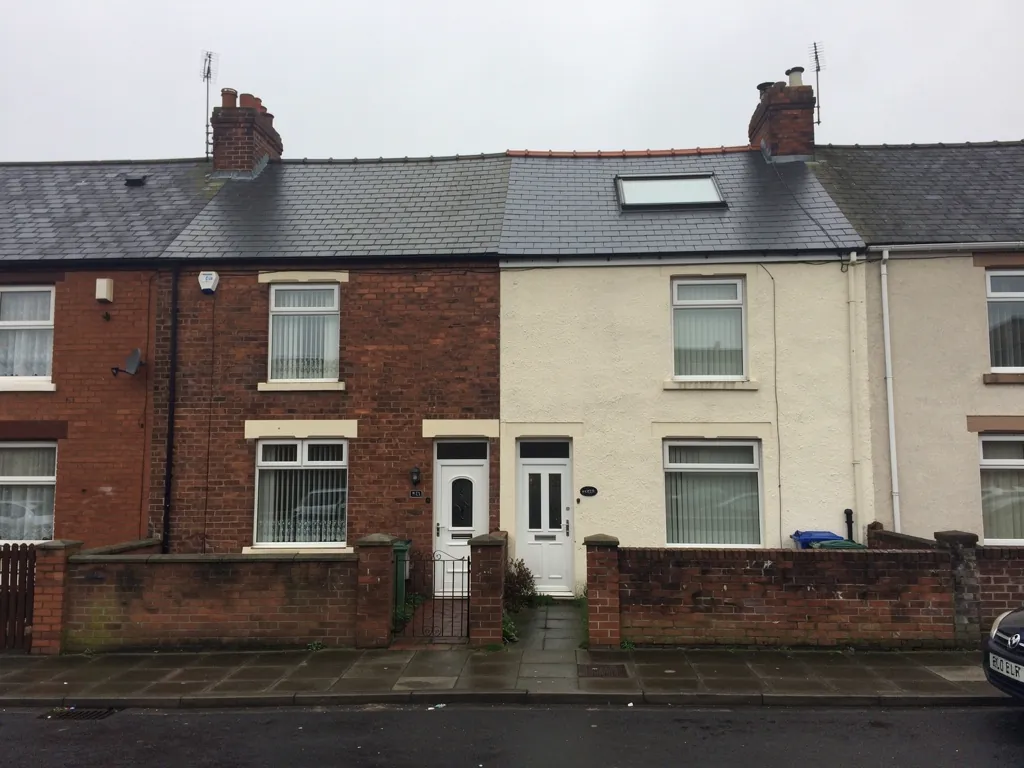
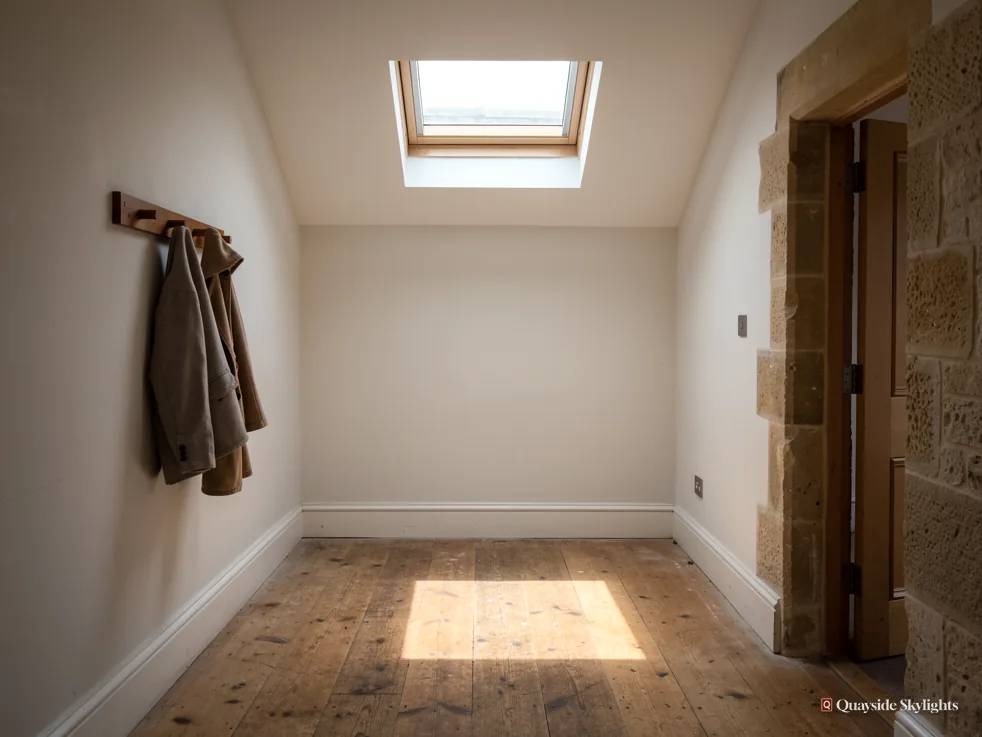
The bathroom or landing with only inside walls
A town on the sea and the river has no shortage of sky, yet some rooms in South Shields homes see none of it. A bathroom squeezed between two bedrooms, a stair landing or a pantry behind the kitchen can have no outer wall at all. Daylight can only reach such a room through the ceiling, which makes the roof above it the place to look.
Roof glazing we install around South Shields
These are the types on offer, and the survey picks the one that suits your ceiling. Roof lanterns, Flat roof rooflights, Roof windows, VELUX windows, Electric rooflights, Energy efficient rooflights, Misted rooflight replacement, Walk-on rooflights, Conservation rooflights, Sun tunnels.
South Shields lighting plan
Starting with the darkest room in the house
A job here runs in four steps: spotting the room with no daylight, matching a product to the roof above it, finding out whether South Tyneside Council or permitted development decides, and then the survey and the day the work is done.
Which room in my South Shields home should get daylight first?
Short answer
The one where the bulb is on from breakfast to bedtime: typically an inside bathroom, a stair landing, a back kitchen or a loft room. If it has no outside wall, or only a tiny window, a rooflight is worth considering.
Make a slow circuit of the house around noon, with every bulb off. Rooms that still demand a switch are your candidates. On the coast it is easy to forget that a room in the centre of a house gets none of the sky outside, so the first job is simply to name the room.
Inside bathrooms and landings
A bathroom with no outer wall lives on a bulb and a fan. A rooflight changes that. A sun tunnel can pipe daylight into it through a short tube, with no view in, which suits a room where privacy counts. A landing at the heart of the stair responds the same way, or to a small roof window if the slope sits directly overhead.
Back kitchens and extensions
Where the kitchen was pushed backwards or a rear room added, the middle of the new plan sits far from any window. A flat roof across the extension is a natural spot for a low pane or a raised lantern. Light arriving from overhead makes a deep room seem half as long again.
Loft rooms
Up in the roof space, a bedroom or study might have a gable window, or none. A roof window in the slope puts light across the middle of the floor, which a gable pane cannot manage, and it brings in air when it opens. Escape needs its own thought. A roof window counts as an escape window only for a room within 4.5 metres of the ground, and a loft conversion on a two-storey house needs a protected stair instead. We raise this at the survey.
Think about timing too. A room used first thing in the morning wants light from the east side of the roof, while a room used in the evening may do better with a west-facing slope, and the survey can tell which way each roof faces. A south-facing unit brings the most warmth, which is welcome in a cold bathroom and less welcome in a loft bedroom in July.
Pick one room before you pick a product. If two rooms compete, begin with the one you use most and leave the second for a later job. Several units in one visit are possible, and the survey is the moment to say so, since the fixed quote can then cover the lot in one go.
A quick test for the room that needs it
- At midday, bulbs off, see which rooms remain gloomy
- Note any room with no outside wall, or only a tiny window
- Look at what sits above the ceiling: slope, flat deck or a storey
- Decide if the room wants opening glass for ventilation
- Think about who uses the room and when
What kind of rooflight will light that room properly?
Short answer
The roof above the room chooses. A sloping roof calls for a roof window, a flat one for a rooflight or a glazed lantern, and a room beneath a loft for a sun tunnel. Glass, frame and size are fixed at the survey.
Once the room is chosen, the roof above it sets the options. Four product families cover just about any ceiling, each with its own purpose.
Roof windows for slopes
This type is set into the incline of a pitched roof, level with the slates or tiles around it. It can open for air, stay shut for light, or run on a motor. Sizes follow a code of letters and digits, where the letters describe how wide the unit is and the digits how tall, so a quoted size can be read straight off the box. Our roof window service goes through the choices.
Flat-roof glass
On a flat roof, glass rests on a raised upstand. A plain flat rooflight keeps a low profile. A lantern rises higher and takes in light from its sides as well. Both come in opening form, and both can take glass that tames glare and heat when the sun is strong, which helps in a room that faces open sky.
Sun tunnels
When boxes fill the loft above a bathroom, a sun tunnel threads a mirrored tube past them. The tube hands daylight to a diffuser in the ceiling and takes up little room. The shorter and straighter the run, the brighter the result.
Walk-on glass
If glass has to be stepped on, say on a roof terrace, walk-on units use thick laminated panes with a non-slip finish. They are a specialist pick, and we suggest them only where the use calls for it.
Laminated inner panes are the standard over rooms. Your quote names the glass, which keeps the specification in black and white.
Does South Tyneside Council have a say, or is it permitted development?
Short answer
On a house, most rooflights fall within permitted development. On a flat, South Tyneside Council must grant planning permission first. A listed house also needs listed building consent, and Westoe has Grade I and II listed Georgian and Victorian houses.
Before an order goes in, you need to know who decides. The answer comes from the kind of building you live in rather than from the rooflight itself.
Houses
Most rooflights on houses fall under permitted development within set limits. Our planning permission guide shows where those limits sit. An Article 4 direction, or a condition attached to an earlier planning permission, can take the right away, and we ask about both at the survey.
Flats
A flat, upstairs or down, has no householder permitted development. In a Tyneside flat, only the flat getting the rooflight applies to South Tyneside Council, and the title or lease decides whether the other owner must agree. Where the roof is shared, your flat's deeds state who owns it and whether a neighbour must consent. Read them, then speak to that neighbour, and only afterwards place an order.
Listed homes
Westoe village includes a quiet street of Grade I and Grade II listed Georgian and Victorian houses. If your home is a listed one, in Westoe or anywhere else in South Shields, the route changes. Permitted development still applies on the planning side, but almost any new rooflight needs listed building consent, and that consent settles whether the job goes ahead. Rooflights made in the slim, flush conservation style suit this setting, and our conservation rooflights page describes them.
Building Control
A new opening in a roof is building work, so it is notified to Building Control, whether that is the council's own team or a registered building control approver. We make that notification when the work needs one.
| Home | Planning route | First step |
|---|---|---|
| House | Permitted development, within limits | Ask about Article 4 or old conditions |
| Flat, either storey | Planning permission from South Tyneside Council | Read the deeds |
| Listed house | Listed building consent | Confirm the listing |
How do we get from survey to fitted rooflight?
Short answer
A free survey first, then a fixed written quote. Once you agree, the work is booked: one visit for a small unit, longer for a lantern. Building Control is notified where required, and the guarantee is issued in writing.
Four stages lead from first message to finished ceiling.
The survey
A surveyor visits the property, studies the roof on both faces, measures the opening and asks how the room is used. No price comes before it, since the roof covering, the rafters and where the room sits all alter the work. There is no charge for the visit.
The quote
Then a written quote arrives at a fixed figure. It describes the unit, the glass, the lining and what is included, and that figure holds so long as the job is unaltered. Our quote page is a good place to begin, or send a WhatsApp message to 07880 284133.
The working day
Fitting begins by lifting the covering around the opening, then comes timber trimming, the frame and its weathering, and finally the glass. Inside, the shaft is lined and finished. One roof window is a smaller operation than a lantern, whose kerb has to be built before the glass is hoisted up. The opening is weathered and sealed as part of the fitting itself.
Afterwards
We notify Building Control where the work calls for it, and a 10-year workmanship guarantee reaches you in writing. While you compare options, the costs page explains the factors behind a price, with no numbers on it.
For a house by the seafront or one further back from it, the stages are the same. Only the roof differs, and the survey is where we learn what yours is. If you know the room you would like lit, mention it in your opening message and we will point the survey at the right part of the roof.
Keep the survey relaxed. A free route to the loft hatch is all we need from you. We will take care of the rest of the discussion, including which glass and which frame, and we write both into the quote.
South Shields roof glazing, answered
Is a rooflight any use in a house close to the sea?
Yes. Daylight from above is welcome whatever the view from the windows below. Glazing, frame and seals are each written into the quote, which shows exactly what is going into the roof. The survey notes which way the roof faces and how open it is, along with everything else about it.
Can I add a skylight to the upstairs flat in a terrace?
You can apply. A flat has no householder permitted development, so a new rooflight needs planning permission from South Tyneside Council. Your deeds state who owns the roof, and a neighbouring owner may need to consent. We explain the route at the survey and handle the Building Control side.
Could a sun tunnel light my inside bathroom?
Usually, if the roof sits above the room or a short run through the loft can reach it. The dome sits on the slope or flat roof, and a tube carries light to a ceiling diffuser. A long run with bends loses light, so the survey measures the distance.
What changes if my house is in Westoe?
Westoe village has a street of listed Georgian and Victorian houses, so if yours is among them, listed building consent is needed for nearly any new rooflight. If it is not listed, the ordinary house rules apply. Finding out early if a house is listed saves time, because the answer decides the route.