Rooflights and skylights for Jarrow houses and flats
Jarrow is a town on the south bank of the Tyne, 8.9 road miles east of Newcastle. Before we talk glass and frames we ask what you live in and who owns the roof, because those two answers set the route.
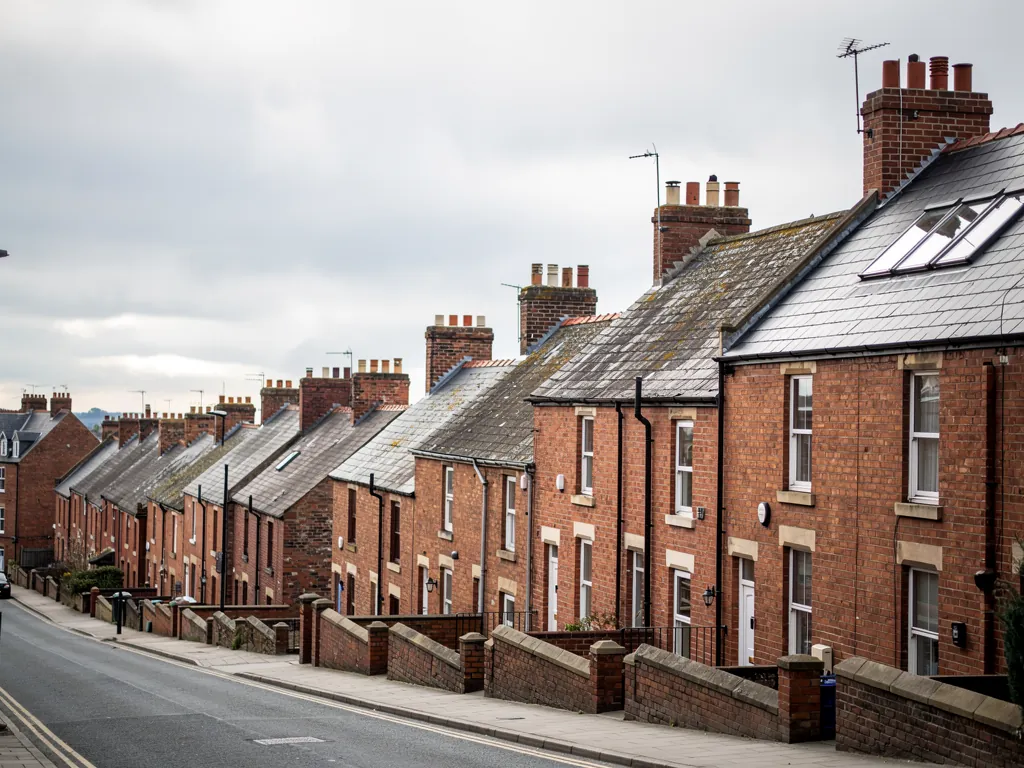
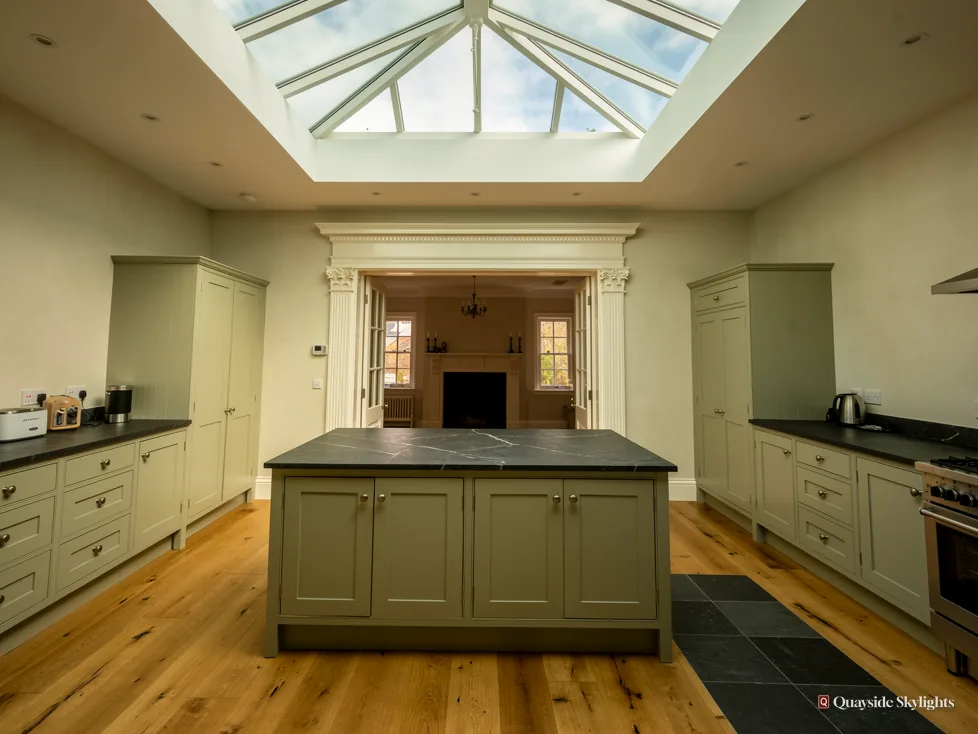
Dark stairs, shut-in bathrooms, no window
Jarrow sits near the southern portal of the Tyne Tunnel, three miles from the coast, with a borough that grew in 1936 when it absorbed Monkton. Whatever kind of home you have there, one interior space may have no outside wall. A stairwell, a bathroom or a box room can go without daylight, and the roof overhead is the way to give it some.
Skylights and rooflights for Jarrow roofs
Each product below is offered after we have surveyed your roof, and not before. Roof lanterns, Flat roof rooflights, Roof windows, VELUX windows, Electric rooflights, Energy efficient rooflights, Misted rooflight replacement, Walk-on rooflights, Conservation rooflights, Sun tunnels.
Jarrow, rule by rule
Permission first, then the product, then the day
South Tyneside Council decides some jobs and none at all in others. This long read begins with that question, moves on to house types, gives sun tunnels a chapter of their own for landings and inner rooms, and ends on what a survey and a fitting look like.
Do I need South Tyneside Council, or can I just go ahead?
Short answer
It turns on what you live in. A rooflight on a house generally falls within permitted development, but a flat needs planning permission from South Tyneside Council, and a listed building needs listed building consent. Tenure matters too, because a shared roof means a second owner.
Start with the building, not the product. In Jarrow the authority is South Tyneside Council, and what it has to say depends on which of three things your home is, which is to say a house, a flat or somewhere listed. The cases are compared at a glance, and the text explains the reasoning.
Houses
A rooflight on a house generally counts as permitted development within set national limits, so a planning application is not normally required. We do not list those limits here, because our planning permission guide covers them in full, along with the situations that remove the allowance, such as an Article 4 direction or a condition attached to an older permission.
Flats
Flats and maisonettes sit outside householder permitted development. Own either level of a Tyneside flat, or a flat of any other kind, and the council must grant planning permission before a new rooflight is added. In Jarrow that council is South Tyneside. Tenure comes into it as well. What the lease or title says settles whether you hold the roof, the loft above you or neither, and whether a co-owner has to agree to any work up there. Legal advice is not ours to give. Read the paperwork and have a word with your neighbour before an order is placed.
Listed buildings
The town includes Jarrow Hall, a grade II listed building and a local landmark. Listing changes the sums. A listed house still has its permitted development on the planning side, but almost any rooflight needs listed building consent, and that consent decides what can be fitted. If your home is listed, begin with South Tyneside Council before anything else.
Building Control
Separate from planning, cutting a new opening in a roof counts as building work and goes to Building Control, either the local authority or a registered building control approver. We handle that notification where it applies.
| Your home | Route | First port of call |
|---|---|---|
| A house | Householder permitted development, as the national limits allow | Nobody, unless an Article 4 direction or old condition applies |
| Upstairs or downstairs Tyneside flat | Planning permission | The other owner, then South Tyneside Council |
| Any other flat | Planning permission | Whoever your lease names, then South Tyneside Council |
| A listed house | Listed building consent | South Tyneside Council |
Does my kind of house change what can go in the roof?
Short answer
Yes. A terrace, a semi, a flat and a new build each give the roof a different shape, a different owner and a different set of constraints. We sort out which one is yours at the survey, then match the rooflight to that roof.
Wherever you are in Jarrow, the kind of building you own sets the questions we ask, and the structure is the second thing we look at after ownership. How each type shapes a rooflight job, and what we look at for each one.
Terraces and semis
If you own a house, the roof is yours and the decision is mostly yours. The questions are about the structure. We look at how the rafters are laid, how deep they are and how the slope meets the ridge and the eaves. Those details decide the size of roof window that fits without moving timbers about, and whether a sun tunnel can pass through the loft in a straight line.
Flats and shared roofs
A flat brings in the lease. In a Tyneside flat it is the title or lease that says where the boundaries lie, and we never assume them. A downstairs flat with a back extension may carry its own flat roof, which opens up flat rooflights and lanterns, though planning permission is still needed and the first-floor owner may have views about what happens above.
New builds
A recently built house may have a roof of manufactured trusses, and it can come with conditions or a warranty from the developer. Before anything is cut into a truss, we want to know how the roof is made and who has to sign off a change to it. The survey looks at that closely.
What this means in practice
Whatever the house, the sequence is the same: identify the type, find out who owns what, look at the structure and only then choose a product. You will find the broader reasoning on our roof windows page, which sets out sizes and opening styles for pitched slopes. In a few cases the sums favour a flat rooflight over a window, and we explain that at the survey instead of steering you to one product.
Can a sun tunnel light my landing or an inner room?
Short answer
Yes, where there is a roof void above. A sun tunnel passes daylight from a small roof dome along a reflective pipe to a ceiling panel, which suits a landing, a hall or an inside bathroom under a loft. It gives light with no view and does not open.
Some rooms cannot take a window of any size. A landing between bedrooms has no outside wall, and a bathroom sandwiched between other rooms has none either. A sun tunnel is built for exactly these spaces. The sun tunnel hub compares the types; here we look at where they earn a place in a Jarrow home.
How the light travels
A compact dome catches daylight at the roof. Mirrored tubing runs it down through the loft, with elbows where the route demands, and a diffuser panel then scatters it across the ceiling and walls. The ceiling opening is small, often the width of a dinner plate, so cutting is limited and the work is quick compared with a roof window.
When a tunnel is the better pick
If a loft is full of storage, there may be no space for the deep well that a roof window needs. A tunnel threads through. If the roof is tiled in a way that makes a large opening awkward, a tunnel needs only a small one. If the landing is narrow, a tunnel can drop light where a window could not.
The limits
Be clear about what you are buying, because a sun tunnel is good at one job and poor at another. A tunnel gives daylight, not a view, and it does not provide ventilation. A long run with several bends delivers less light than a short, straight one, and the loft measurement at survey tells us how much light to expect. Where a room needs fresh air as well, a roof window or an opening rooflight may be the better answer.
Flats and rules
A tunnel is a rooflight in planning terms. On a house it falls under the same permitted development as any other, and a flat must have South Tyneside Council's planning permission, like any other type. The size of the opening is small, but the rule does not change with size.
Does this room suit a sun tunnel?
- The room has no outside wall for a window to sit in
- There is a loft or roof void above, with a clear path up to the slope
- Plain daylight will do, with no need for a view or an opening
- Roof to ceiling is a short drop, and close to vertical
- You can reach the roof side of the dome when the day arrives
What do you do when you visit, and what does the fitting involve?
Short answer
We survey the roof and the room for free before any price, then send a fixed written quote. On the day, we strip back the roof covering, fit and seal the unit, and finish the lining. Our workmanship carries a written guarantee of ten years.
The survey comes first and it costs nothing. A visit to your Jarrow address begins outdoors, with the slope, the covering and the eaves, and moves inside to the room and the loft. What we are after is the build of the roof over your ceiling and a sensible way up to it, along with where the dome or frame would sit.
The written quote
Once the survey is done, a fixed price arrives on paper. It spells out the product, its dimensions, the glass specification and the surrounding work, and the price holds as written for as long as the job holds. If you want to understand what moves a price one way or the other, our costs page talks it through without numbers.
Fitting day
The covering is lifted, the timber around the opening is strengthened where it needs it, and the unit is fixed down and made weathertight. Pitched roofs get flashings that suit the slate or tile, and flat roofs get a formed upstand. Indoors, the splay and lining are finished off to a clean edge against the ceiling. Where the work needs notifying, we deal with Building Control.
Afterwards
Ten years of workmanship cover is yours in writing. It is separate from whatever terms the maker attaches to the unit. Neighbouring places such as Hebburn follow the same sequence, because the method does not change with the postcode, even though each roof does.
Jarrow rooflight queries answered
Who gives planning permission for a rooflight in Jarrow?
South Tyneside Council. Jarrow is in that borough, not Newcastle, so any application for a flat or a consent for a listed building goes there. A rooflight on a house usually needs no application at all, and our planning guide explains when that changes.
I own the top flat in a Tyneside pair. Is the loft mine to light?
That depends on what the lease or title says on ownership of the roof and anything under it. You will also need planning permission from South Tyneside Council, since a flat has no permitted development. Have a conversation with them first.
Is Jarrow Hall a reason to worry about my own roof?
No. Jarrow Hall is a grade II listed building and a local landmark, but that listing covers that building alone. Your home is only subject to listed building consent if it is listed itself, and the council can confirm that for your address.
How narrow can a sun tunnel run through the loft?
Tubing comes in a few widths, and a flexible one can bend around obstacles, though each bend takes some light away. A short, straight run works best. We measure the path through your loft at the survey and tell you which type will suit.
Do you cover Jarrow and the villages round it?
Yes. Jarrow is 8.9 road miles east of Newcastle, comfortably inside the area we cover. To arrange a survey, WhatsApp 07880 284133 or email info@quaysideskylightsnewcastle.co.uk giving your address and the room you want lit.