Skylights and rooflights in North Shields, fitted to the roof you have
North Shields is a town on the Tyne's north bank, 8.3 road miles east of Newcastle. Tell us what covers your dim room, slate, felt or a flat deck, and we will pick a skylight that suits it.
A room on the plateau with no daylight of its own
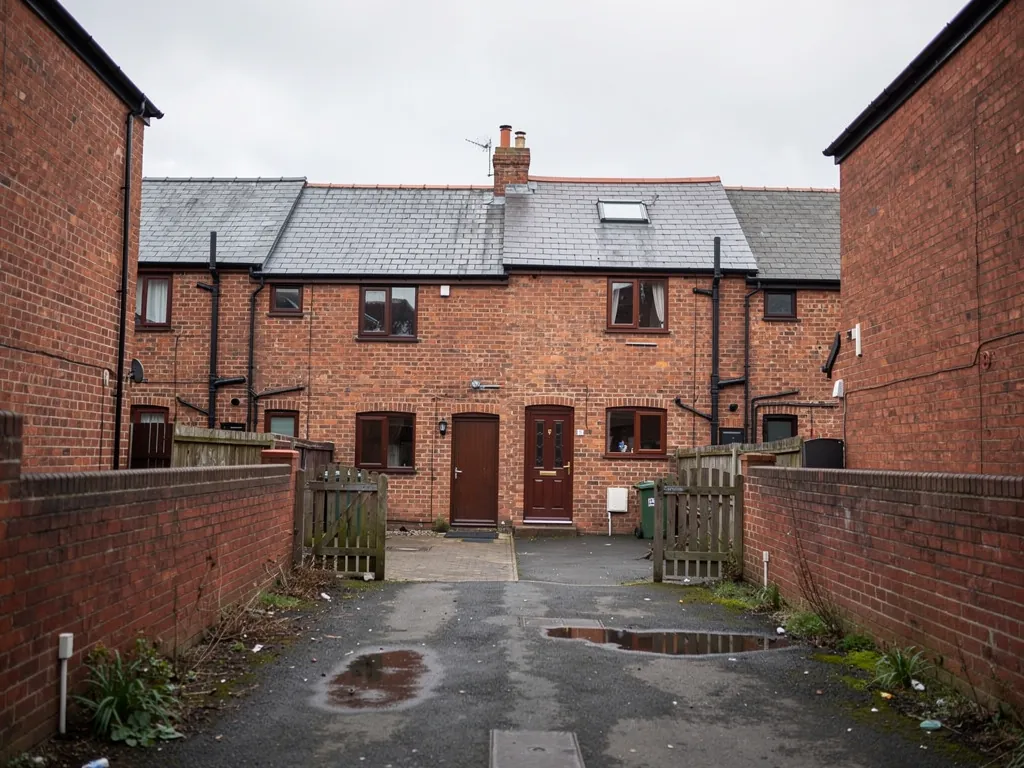
Building in North Shields climbed from the old riverside up onto higher ground in the 18th century, and the town later swallowed Chirton, Preston and Percy Main. A house here may be old, newer, or squeezed into a plot beside either. Whatever its age, it can hold an inner landing, a cloakroom or a loft room that has no outside wall. The roof above is the answer, and it is also where the rules begin.
What we put in North Shields roofs
Every product below is picked after a free survey of your own roof. Roof lanterns, Flat roof rooflights, Roof windows, VELUX windows, Electric rooflights, Energy efficient rooflights, Misted rooflight replacement, Walk-on rooflights, Conservation rooflights, Sun tunnels.
The roof and the warmth
Slate, felt or flat deck: what goes in, and how warm it stays
Four questions, asked the way a North Shields householder asks them: what is on the roof, which rooflight goes into it, how the survey deals with heat loss and damp, and what is left to do after fitting.
What does the roof over my North Shields room change about the job?
Short answer
Everything starts with the covering. Slate or tile on rafters takes a window set into the slope. Over a rear extension with a flat deck, the choice runs between a flat rooflight and a lantern. We choose from what is actually up there, never from a catalogue page.
Step into the street or the garden and look up at whatever covers the room you want to brighten. One glance sorts the work into a sloping case or a flat case, and the two are fitted in quite different ways.
Sloping roofs in slate and tile
Under every slate or tile there are battens, and under the battens there are rafters. To put a roof window in, a fitter lifts out a patch of covering, trims the timbers, frames the new opening and weaves flashings back into the courses around it. What lies behind matters too. An empty loft gives easy access. A boarded storage loft or a finished bedroom means working round linings, furniture and insulation already in place.
On a steep roof, a window mounted low brings the street or garden into view and lights the room well. On a shallow pitch, a window set higher gathers more sky. The survey settles which of those your roof wants.
Flat roofs over extensions
Think of a flat roof as a deck, a waterproof skin and a layer of insulation, with the rooflight standing on a raised kerb fixed to that deck. Manufacturers set the height of the kerb, and around 150mm above the finished roof is commonly the minimum. A kitchen or dining area built out behind the house is where one tends to go. A lantern, with its raised glass crown, suits a wide opening. A single flat unit suits a narrow one.
Houses that have both
Where a sloping main roof carries a flat-roofed back extension, one address holds two separate jobs. The landing may want a roof window while the kitchen beneath wants a flat rooflight. We treat the two in turn, each with its own survey notes and its own line in the written quote.
Read the roof, then pick the glass. The second case is laid out in full on our flat roof rooflights page, including how the kerb and the lantern frame are built up.
Our view: look at the covering over the room first, because slate, felt and flat deck each lead to a different rooflight.
Which rooflight suits a North Shields house or flat roof?
Short answer
Pitched slate or tile points to a roof window. Where a boarded loft sits between slope and ceiling, a sun tunnel is the fit. A flat deck points to a flat rooflight or lantern. Every one must reach the Part L thermal limits, and the survey fixes which your roof can take.
Four products between them light nearly any gloomy room, and the right pick depends on what sits above that room. In the abstract none beats the rest. The roof and the room decide.
Roof windows
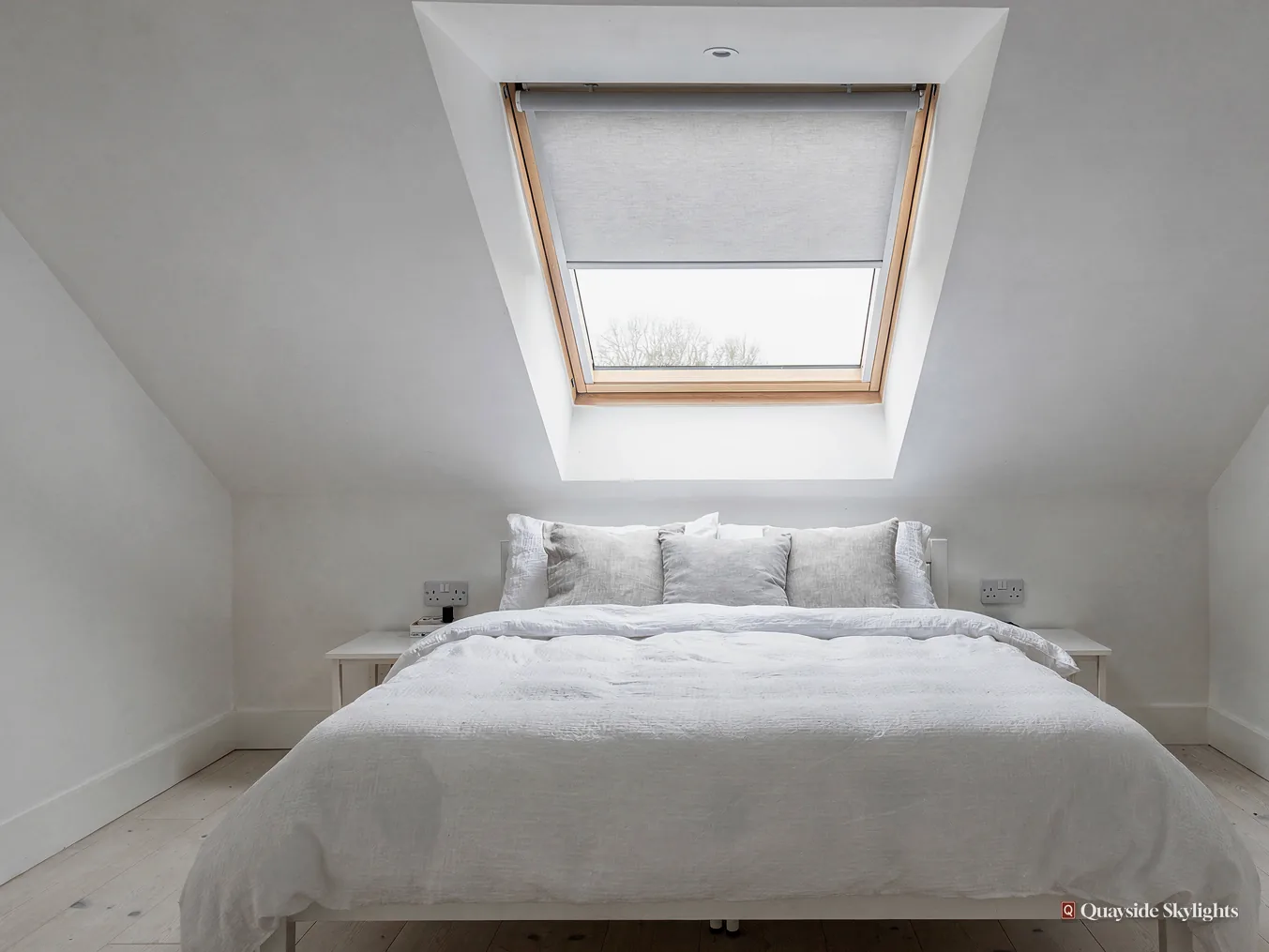
This sits in the plane of a pitched slope and opens, so a loft bedroom or a landing gets fresh air along with daylight. On many models you can turn the sash and reach the outer pane from inside. If you are weighing VELUX against another maker, our VELUX windows page explains the size codes and the ways the sash can open.
Sun tunnels
Where a boarded loft or a long stretch of rafters stands between room and sky, a sun tunnel carries light down a mirrored tube. It suits an inner bathroom, a hallway or a landing. It cannot open and gives no view, but it needs a far smaller hole in the roof than a window does.
Glass for the flat deck
A fixed flat rooflight answers a slim opening over a rear kitchen. For a wider room a lantern adds height under the ceiling as well as light. A walk-on unit can be let into a flat roof that people also stand on, which helps when a ground floor space needs daylight from a roof that serves as a terrace.
Sizing the opening
A bigger pane is not always the better one. Oversized glass can overheat a small room in summer, and an undersized pane leaves the far corner as gloomy as before. The width of the rafter spacing, the height of the ceiling and the size of the floor all feed into the answer, and we measure them on the day we visit.
How the light spreads
One tall window at the end of a landing leaves the middle dim. Two smaller units, or a window plus a tunnel, share the light more evenly across the floor. We talk this over standing in the room, so the layout you agree to is one you can picture.
After the visit, a fixed written quote follows, and its total holds unless the work is altered. You can begin from our quote page and the survey gets arranged from there.
How warm will a rooflight keep my North Shields room, and what about condensation?
Short answer
A pane passes heat outward faster than a made-up roof, which is why the ratings count. For an existing home, Part L sets a limiting U-value of 2.2 W/m²K for a rooflight and 1.4 W/m²K for a roof window. Careful fitting and ventilation keep condensation down.
A skylight swaps a thick insulated roof for a thin sheet of glass. So the survey has to weigh warmth as well as brightness, and this is where the regulations and the physics meet.
The figures that count
A U-value tells you how fast heat passes through a surface, and lower is better. For work on an existing dwelling in England, Part L of the Building Regulations sets a limiting U-value of 2.2 W/m²K for a rooflight and 1.4 W/m²K for a roof window, or Band B on the window energy rating. Whatever we quote must meet the figure for its kind. Our energy efficient rooflights page explains the glass and frame choices that bring the number down.
Why water forms on glass
Steamy air touches a cold face and drops its water there. A bathroom or kitchen is the likeliest room, because it makes the steam. A rooflight with a chilly frame, or one set in a hole where the insulation stops short of the frame, hands that water a place to gather. Laminated inner panes suit rooflights over rooms, and the frame and the reveal around it decide how warm the inner surfaces stay.
What the survey can settle
While we survey, we ask how the room gets used and where its damp air ends up. A kitchen under a flat roof needs an extractor that truly clears steam. An inner bathroom with a sun tunnel needs the same. If a ceiling already shows damp, a new opening will not cure it alone.
That is the straight answer on warmth: a rooflight trades some heat for light, and the trade is kept inside the limits above. The rating of the proposed unit is written on the quote, so you can set it beside those figures before agreeing.
Warmth questions for the survey
- Ask for the U-value of the exact unit, not of the range
- Say how much steam the room makes on an ordinary morning
- Find out whether insulation will run right up to the frame
- Think about where an extractor could vent to outside
- Look at whether the room already shows damp on its ceiling
When the last pane is in, what is left for me to sort out?
Short answer
Very little. We handle the Building Control notification where the work is notifiable, you receive a 10-year workmanship guarantee in writing, and the sum you pay is the fixed one on your written quote.
A rooflight job does not end at the last screw. A few matters follow it, and they are better known before you order than after.
The council paperwork
Cutting a new opening in a roof is building work, and it is notified to Building Control, either the local authority or a registered building control approver. In North Shields the local authority is North Tyneside Council. Where the notification is needed we deal with it, so the forms do not end up on your doormat.
Who has to say yes
Most rooflights on houses fall under permitted development within set limits, and our planning permission guide walks through them. Two cases sit outside that. Flats are a separate case. For a Tyneside flat, up or down, an application has to be granted by North Tyneside Council before work. A house on the statutory list is judged through listed building consent. The conservation area around Howard Street and Northumberland Square does not, on its own, remove permitted development for a rooflight on a house.
The guarantee on paper
The 10-year workmanship guarantee covers our fitting work and arrives in writing. It is a workmanship guarantee and nothing broader, so the maker's own terms on the glass stay a separate document.
Choosing the glass finish
Some rooms catch strong afternoon sun through the roof. For those, the glass can carry a coating that softens the glare, and a blind fitted to the frame can do the rest. Ask about both when we survey, since a bedroom and a stairwell want different things from the same sky.
Living with the new window
There is little to do afterwards. Open the sash now and again so its seals stay supple, and wipe the glass inside and out. If water beads in a steamy room, run the extractor for longer before blaming the unit.
If you would like to know what moves a price, the costs page lists the factors one by one and never guesses at yours.
Odd corners, cold glass and council forms
Does planning in North Shields go to Newcastle City Council?
No. North Shields falls under North Tyneside Council, not Newcastle City Council. If your flat needs permission for a new rooflight, the application goes to North Tyneside. We name the right council when we survey the address.
My home is a flat near Tynemouth. Can I have a roof window?
You can ask for one. A flat has no householder permitted development, so a new rooflight needs planning permission, and the title or lease says who owns the roof and whether the other owner must agree. Read that and speak to them before ordering.
Can you light a first-floor room that has no outside wall?
The roof is the only way in. If a loft sits over the room, a sun tunnel runs the light down. If the room is directly beneath a slope, a roof window does the job. We study what lies above the ceiling before proposing either.
Will a skylight leave my house colder?
A rooflight sheds more heat than a solid roof, yet the units we quote must meet the Part L limits for an existing home, and a laminated, well-fitted unit narrows the gap. The survey names the rating of the exact unit proposed.
Do you cover Tynemouth and Whitley Bay as well?
Yes. Both sit close to North Shields and fall inside our survey area, so Tynemouth and the coast beyond are covered. Send the address and name the room; a free survey always precedes a price.