Rooflights and skylights in Rowlands Gill
Rowlands Gill is a village on the Derwent's north bank, 8.6 road miles south-west of Newcastle. A skylight here starts with your own home: its roof, its owner and the council that rules on it, which is Gateshead Council.
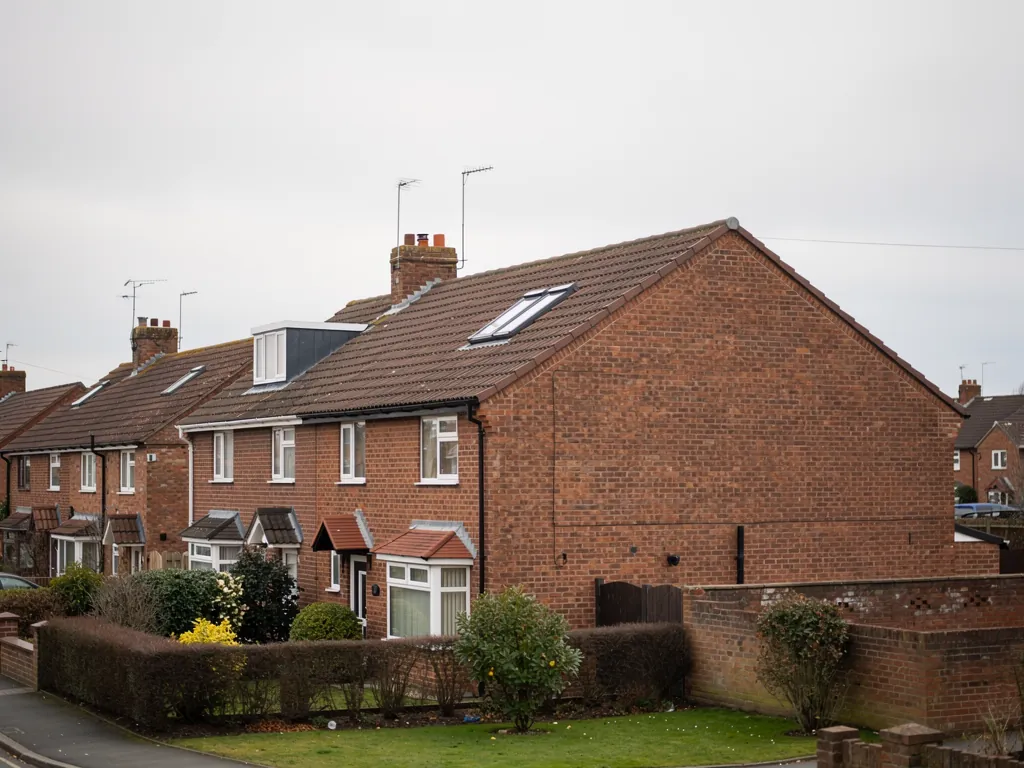
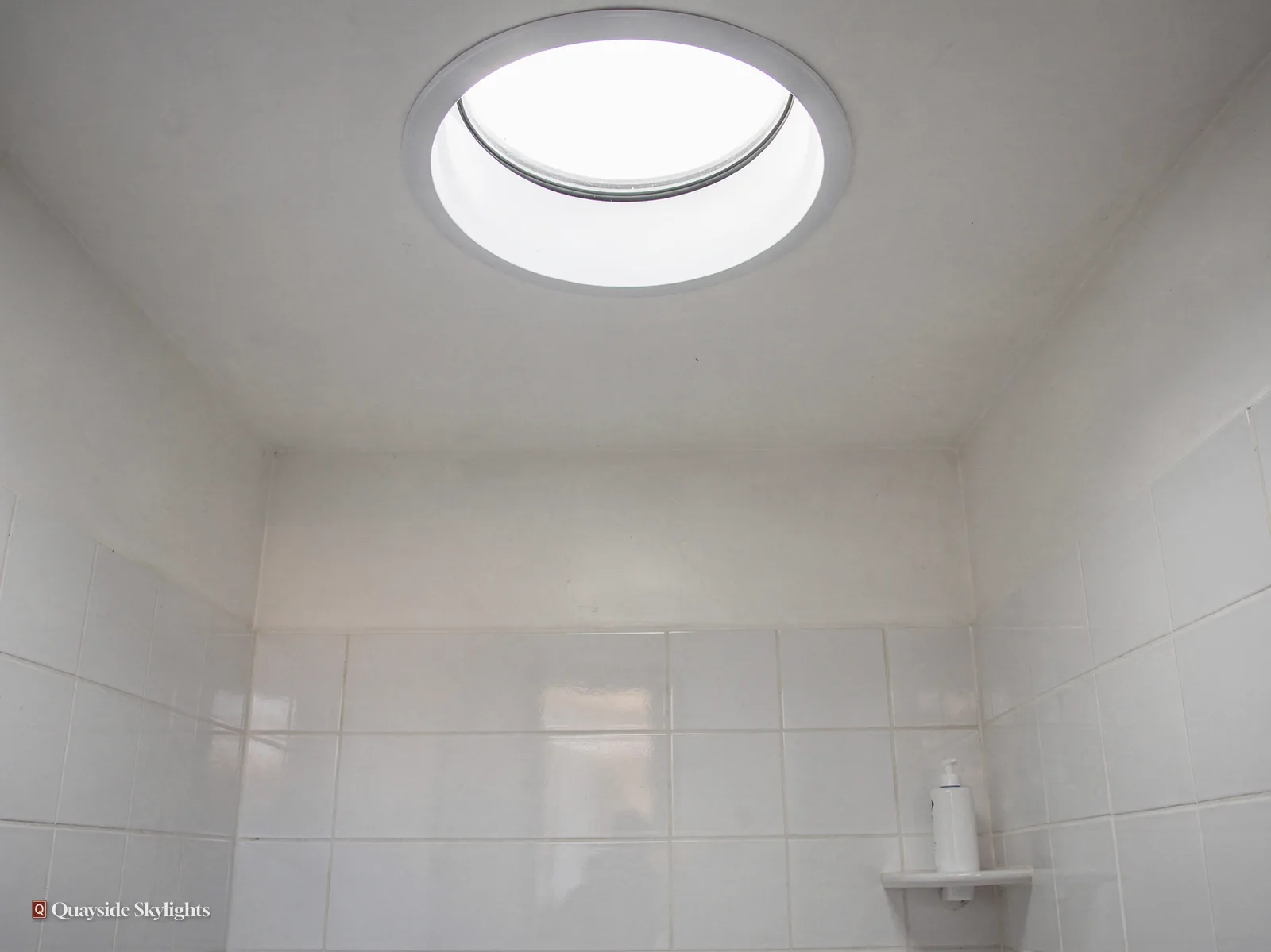
The stairwell with no window to borrow from
Walls feed a house with daylight, and any room set deep in the floor plan goes without. In a Rowlands Gill home that can mean the landing, an internal bathroom or a corridor to the back door. Only the roof looks up at the open sky all day. Putting a window in it is simple for some houses and needs a council decision for others, so we begin with the building.
Products for a Rowlands Gill slope or flat deck
Open any product below for detail, or arrange the free survey and let the roof choose. Roof lanterns, Flat roof rooflights, Roof windows, VELUX windows, Electric rooflights, Energy efficient rooflights, Misted rooflight replacement, Walk-on rooflights, Conservation rooflights, Sun tunnels.
Village homes, overhead light
A skylight job in Rowlands Gill, from the doorstep to the sign-off
Four questions in village order: what we should know about your home, what the visit covers, how each product meets each room, and where Gateshead Council or the rules for houses come into it.
Which facts about my Rowlands Gill home come before any talk of rooflights?
Short answer
House or flat, the person who holds the roof, the way it is built and the room that is starved of light. With those four facts the choice of product and the route through Gateshead Council become clear, whatever the age of the building.
Your home is the starting point, and a few plain facts about it do most of the work. Tell us the sort of home you have, the room starved of daylight, whatever you know of the roof, and who else has a say. Roof ownership is worth settling early. That is plenty to begin with, and the visit supplies what is missing. If you have photographs of the loft or the ceiling of the dim room, send them along, because they save a question or two later.
A village shaped by the Derwent
Rowlands Gill lies on the north bank of the River Derwent and belongs to the Metropolitan Borough of Gateshead. The railway reached the valley in 1867 and the place became a coal mining village. Boundaries moved in 1974, when it came under Gateshead from Blaydon Urban District. For you, the practical result is a single address for planning questions: Gateshead Council, not Newcastle.
No guessing from the postcode
Knowing a village's history tells us nothing firm about the loft above your bedroom. Houses here may have been altered, extended or rebuilt by earlier owners, and a home on one road can differ from the one round the corner. So we do not assume. A short conversation about the building tells us whether we are looking at a pitched roof with a loft, a flat deck on an extension, or a flat that shares its roof with another household.
Flats and shared roofs
For a flat, including one half of a Tyneside flat, the roof might not belong to you alone. The paperwork you hold, lease or title deeds, records who holds the roof and what consent, if any, the neighbouring flat must give. Go through them early. An order placed before that conversation can fall apart when the other owner refuses, and that is a poor moment to learn it.
How does the survey go, and where does my price come from?
Short answer
One visit to the house: the roof seen from outside and again from inside, a talk about what you want, and then a fixed written quote sent to you. Free survey first, quote second, never the reverse.
The survey is a visit to the house, and it is free. Nobody quotes a rooflight price from a photograph, because the roof decides it. Seeing a roof beats guessing about it, and a visit is a few minutes' work.
What we look at
Outside, we look at the roof finish, be it slate, clay tile or a felt-or-membrane flat deck, and at the way the roof meets its neighbours. Indoors, our attention goes to the loft floor, the rafters and the ceiling of the dim room. We measure the opening you are picturing, then sketch other ideas wherever the timbers rule the first one out. Questions about the room follow: who uses it, when in the day, and whether air matters alongside light.
Why prices differ
Two jobs that look alike can cost quite different amounts. Roof, product and access are what lift or lower a price, and the notes here cover each. Real figures only come after the visit, and the fixed written quote is where they appear. If you want the wider picture first, read the costs page, where the factors behind a price are described without any figures.
What you get at the end
The quote reaches you in writing, naming product, size and work. If the job changes, the price can change, and for no other reason. If it does not change, neither does the number. You can sleep on it, take it to a partner or a landlord, and ask the other owner of a shared roof to read it. Nobody asks you to decide on the doorstep, and a few days to think is fine.
Why two Derwent-side quotes differ
Keeps it lower
- A plain fixed rooflight rather than an opening or electric one
- A roof of simple build with clear rafter spacing
- A standard size that matches an existing opening
- Easy access to the loft or the room underneath
Pushes it higher
- A unit that opens, manually or electrically
- A larger or custom size that needs structural change
- A roof covering that needs careful lapping to make it watertight
- Difficult access to the roof or a small working space inside
Numbers belong to the written quote and appear nowhere before the survey.
Which rooflight suits which room, and where does Gateshead Council come in?
Short answer
Roof windows serve sloping ceilings, flat rooflights and lanterns serve rooms under a deck, and sun tunnels serve inner rooms. Each is a house or flat decision first, and the council decides for flats.
With the room and the roof known, the product nearly picks itself. That leaves approval, and approval turns on the building, not the glass.
Under a slope
A landing, a loft bedroom or a study tucked into the pitch can take a roof window. It lies along the roof slope, opens to air the room if you choose a model that does, and is cleaned from within. Browse the roof windows range to see the opening styles. Laminated glass, never plain, is the inner pane whenever a room lies underneath.
Under a flat deck
A flat-roofed extension, a utility room or a porch has a wider choice: a fixed pane, a pane that vents, walk-on glass for a terrace over a room, or a glazed lantern that raises the ceiling. The frame sits on an upstand, the raised kerb that keeps water off the joint, and manufacturers commonly set it at about 150mm above the finished roof.
Inner rooms
A bathroom or hallway with blank outer walls and a loft above can be lit by a sun tunnel. Light is collected by a dome outside, travels down a tube that passes the loft, and is spread across the room by a diffuser panel. It gives daylight but no view, and of the three products it needs the smallest hole in the roof, which keeps the work around the tube modest.
Which route each one takes
If your home is a flat, Gateshead Council must grant planning permission for a new rooflight, whichever product you choose. If it is a house, the product generally sits inside permitted development within set limits, as the next chapter explains. A listed house is separate again, and it calls for listed building consent first.
Do I need permission from Gateshead Council for a rooflight at home?
Short answer
Flats need it: planning permission, applied for to Gateshead Council. For a house, the work generally falls under permitted development within set limits. Listed houses need listed building consent as well. We deal with the Building Control notification where the work is notifiable.
The answer turns on what you live in, and Gateshead Council is the body that rules. Three cases cover it.
A flat
Flats and maisonettes have no householder permitted development. That includes the upstairs and the downstairs halves of a Tyneside flat. A new rooflight in a flat's roof needs planning permission, applied for to Gateshead Council. At the survey we explain what an application involves. Whether the other owner must sign up as well is written in your flat's own paperwork.
A house
Rooflights on a house fall under permitted development within a set of limits, which can mean no planning application at all. Those limits are listed in our planning guide, so we will not repeat them here. An Article 4 direction, or a condition attached to an earlier planning permission, can remove those rights from a particular house. Whether either applies to your house is a point to put to Gateshead Council.
A listed house
Listing makes a house its own case. Planning rights are not what decides it. Almost any rooflight on a listed building needs listed building consent, and that consent decides the job. Do not order anything until it is in hand, and expect the consent to shape the product, its frame and its position in the roof.
Building Control
Cutting a new opening in a roof is building work, and building work of that kind is notified to Building Control, either at Gateshead Council or with a registered building control approver. We deal with that notification where it applies. The same steps hold for Burnopfield and the other places near Rowlands Gill that we cover.
Before the order goes in
- Say outright whether you own a house or part of a flat
- Work out whose roof it is by reading the lease
- Ask Gateshead Council about any Article 4 direction on the street
- If the house is listed, wait for consent before ordering
Last-minute thoughts for Derwent-side householders
Is Gateshead Council the right body for Rowlands Gill?
Yes. The village sits in the Metropolitan Borough of Gateshead, so planning questions, and Building Control if you choose the local authority route, go to Gateshead Council. Newcastle City Council has no say here, even though the city is only 8.6 road miles away.
What if my roof is shared with the flat next door?
Then your lease or title deeds matter first. Read together, they reveal the roof's owner, the owner of the void beneath, and whether the other household has to be asked before you proceed. It is worth reading them twice. Talk to that owner before ordering, as a refusal arriving after the order is a costly lesson.
Can a bathroom with blank walls get daylight from a tube in the roof?
It can bring daylight into one, which a small bulb or an extractor cannot. Daylight enters a roof dome and travels the length of a tube to a diffuser overhead. It needs a roof above the room and a path for the tube past any loft. The survey shows whether that path exists. See the sun tunnels page for how it works.
Who deals with the Building Control paperwork?
That falls to us, in every case where the work has to be notified. That means the notification goes to the local authority or a registered building control approver, and you do not have to chase it. We name the route on the quote, so you know which body is involved before you agree to anything.
Does the price change if the roof turns out different from what I expected?
Our quote is fixed once the roof has been seen, and the seeing happens at the survey. The figure shifts only when the job shifts, say because you ask for a second window. A surprise on the day is the thing the visit is there to prevent.