Skylights and rooflights for New Hartley homes, new or old
New Hartley is a village in south-east Northumberland, 13.4 road miles north-east of Newcastle. Some householders here want a skylight where there is none, and some want a tired rooflight taken out and replaced. We deal with both.
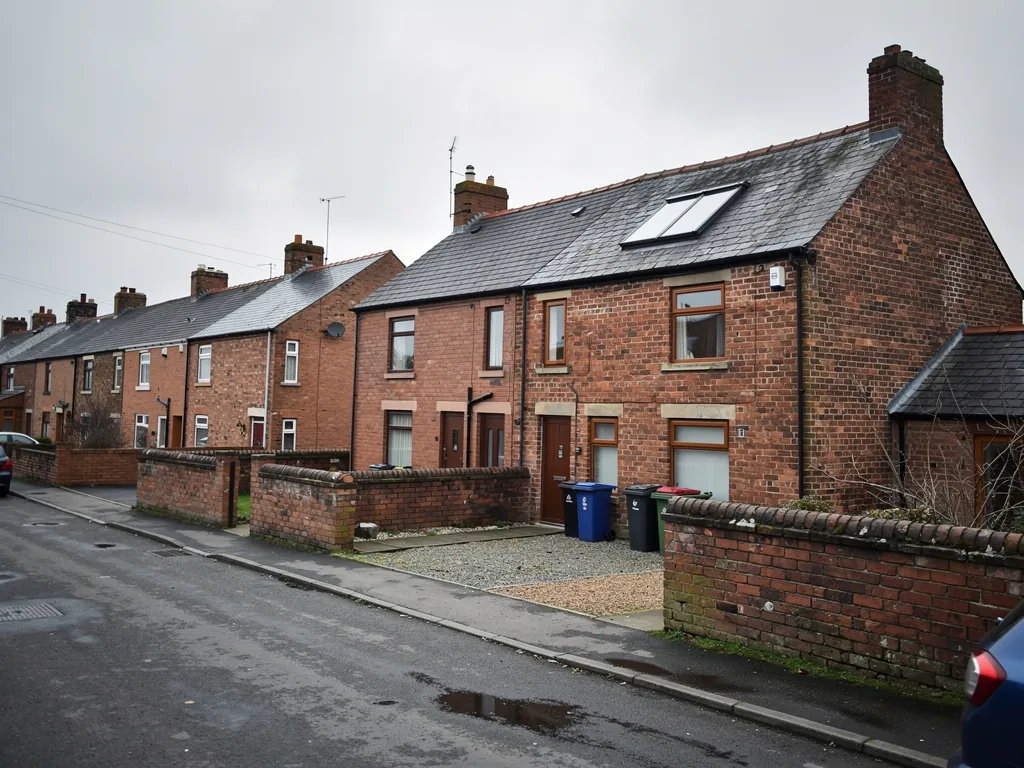
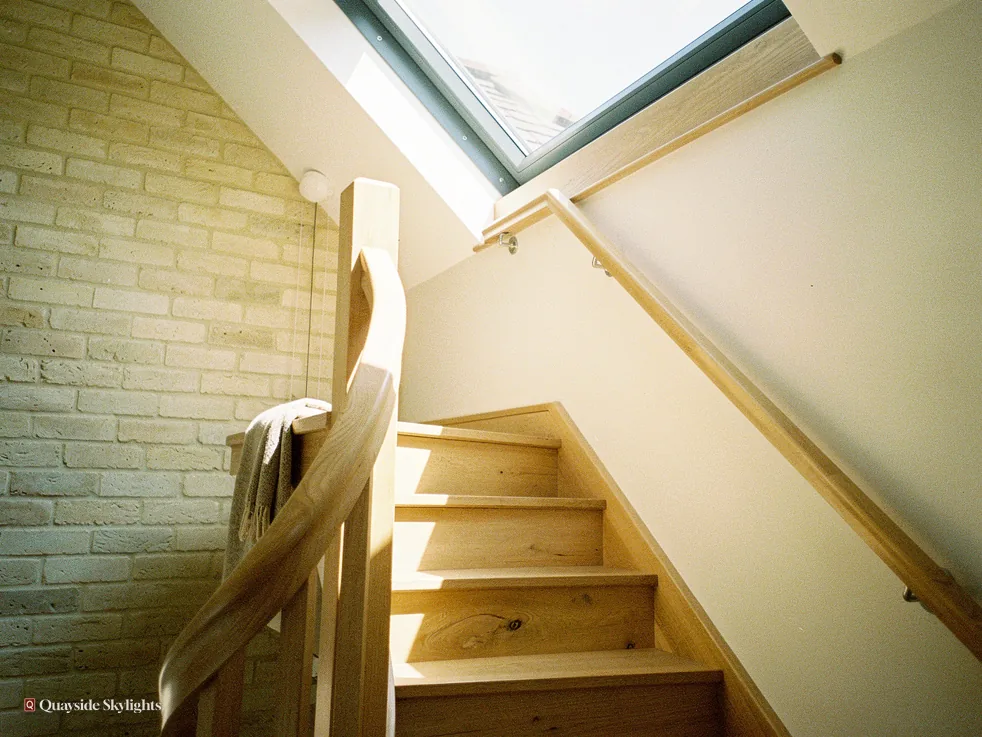
The upstairs hallway that never saw the sun
New Hartley lies just off the A190, tucked between Seaton Delaval and Seaton Sluice. The village has a 2008 development of 64 homes as well as older ground, and a hallway or landing in any home can turn gloomy. Where an older rooflight is already fitted, its seals may have clouded the glass. In either case the roof is where the extra light comes from.
Rooflights we can fit above New Hartley rooms
We choose after seeing your roof, never from a catalogue page. Roof lanterns, Flat roof rooflights, Roof windows, VELUX windows, Electric rooflights, Energy efficient rooflights, Misted rooflight replacement, Walk-on rooflights, Conservation rooflights, Sun tunnels.
New Hartley rooflights
Light for a dim room, then the glass, the old unit and the day itself
Four questions that arise in a New Hartley home: which room wants more daylight, what product belongs over it, what to do about an old rooflight that has clouded over, and how the council question and the fitting day work out.
Which room in my New Hartley house should get the skylight?
Short answer
Start with the room where the lights stay on all day. In a village of mixed homes that might be a hallway, a stair head, a bathroom, a bedroom in the roof or a rear kitchen, and each can be reached through the roof overhead.
New Hartley is a small village in south-east Northumberland, next to Hartley, Seaton Delaval and Seaton Sluice, and the A190 passes close by. The place has a mining past, with the Hester pit sunk here in 1845, and a modern layer on top of it, including a 2008 development called The Brambles that put 64 homes on the map. We never assume what is under your roof from where it stands. The room does the talking.
The room test
Do a lap of the house at noon, switches all off. The room where you reach for a switch first is your candidate. A hallway with the front door closed, the top landing, an inner bathroom and the middle of a long kitchen can all fail this test. Roof glass solves them because it needs no outside wall.
The room under the roof
If the room is on the top floor, the roof is directly above it, and a window in the slope can brighten the whole space. If it is a bedroom in a loft, one or two windows can turn a cramped space into a place you want to stay. A room at the heart of the layout may have a loft or another room above it, and then a sun tunnel is the likelier route.
Home age and its effect
A home from the 2008 development and one from an older street will be built differently, and the survey tells us which sort of roof you have. An older roof may hide surprises in its timbers, a newer one may have trusses that restrict the opening. Neither is a barrier. We allow for them in the plan and in the quote.
If two rooms tie, think about the one you pass through most often. A landing is crossed a dozen times a day without anyone lingering, while a bedroom is where you notice a dull ceiling. Choosing the room is also the moment to decide whether you want air as well as light, because that settles whether the unit opens. Use this checklist to decide which room to put first.
Before you pick the room
- Visit each candidate room around noon with every light off
- Decide whether the room wants air and not just daylight
- Look for loft space or another room directly overhead
- Check whether the roof above the room slopes or lies flat
- In a flat, find out whose roof it is
Which product belongs over the room I have picked?
Short answer
Sloping roofs take roof windows, level roofs take a rooflight pane or a lantern, and rooms with loft space above them take sun tunnels. Every new unit has to meet the Part L limits for an existing home.
Four products cover the roofs we meet. Which one fits depends on the shape and construction above your room, not on a taste for any particular style.
Roof windows in a pitched slope
Set in the slope, level with the covering, a roof window and behaves like a wall window: it lets in light, it opens for air, and it frames a view of the sky. VELUX is the best-known name. Product codes carry sizes, so the survey translates them for you. Our roof windows hub goes through top-hung and centre-pivot styles.
Lanterns over flat roofs
Above a kitchen or extension with a level roof, a flat pane sits on a raised kerb and delivers a broad, even light. A lantern is taller and shaped like a small glazed roof, so it fills the room from above and lights the corners. Walk-on versions suit a roof terrace or a link between buildings. Look at roof lanterns for the frame shapes on offer.
Sun tunnels for the rooms in between
A tunnel gathers daylight in a small dome and sends it down a reflective shaft. The diffuser in the ceiling looks like a ceiling light that happens to be on in the daytime. It is a neat answer for a bathroom or hallway with a loft above.
Glass, warmth and brightness
Part L sets the ceiling on heat loss for an existing home: a limiting U-value of 2.2 W/m²K for a rooflight and 1.4 W/m²K, or WER Band B, for a roof window. Laminated inner panes are the usual choice over a room that people use. Beyond that, we tailor the specification, with tints and coatings to suit the direction of the slope.
The unit should fit the roof exactly. Before we order anything, the survey gives us the sizes, the pitch and the construction, so the glass arrives made for the opening and not trimmed to suit it. Where you want opening, electric or rain-sensing models, we explain how each is controlled and what it adds to the quote.
Mine has misted up. Can an old rooflight be swapped for a new one?
Short answer
Yes. A clouded or tired rooflight can come out and its successor go in, often within the same opening. We look at the frame, the upstand and the surround at the survey so the new unit sits properly.
Not every job here begins with a blank ceiling. You may already have a rooflight, and the glass may have gone cloudy between the panes, or the unit may look dated, or the room may feel cold beneath it. We fit new units to take over from the old ones.
What the old unit tells us
Condensation trapped between two panes means the sealed unit has stopped doing its job. It does not mean the whole structure is at fault. Often the frame around it, the upstand or kerb, and the weatherproofing are in a state that can be reused, and sometimes they are not. A look from inside and out sorts that out. Our guidance on misted rooflights explains the difference between a failed pane and a failed frame.
Like for like, or a change
The simplest swap puts a new rooflight in the same opening, at the same size. That keeps the roof structure as it is. A bigger or different window needs the opening altered, and that changes the work, the quote and sometimes the permission. If you are tempted to go bigger, we will tell you what it involves before you decide.
A better pane than the one that went
A modern replacement can hold a lower U-value than a unit fitted some years ago, which means a warmer room underneath it. Double or triple glazing, a coated outer pane and a thermally broken frame are all available. Over a bedroom, a laminated inner pane stays standard.
Notifying Building Control
We confirm at the survey whether your swap is notifiable, and where it is, we make the Building Control notification ourselves. The decision rests on what is changing, so we judge it from the survey and not from a rule of thumb.
Swap costs: kerb, size, opening
Keeps it lower
- Putting a new unit in the opening the old one occupied
- A kerb or upstand that is sound enough to be kept
- A size that matches the frame already there
Pushes it higher
- Altering the opening to a different size
- A kerb that needs rebuilding in place
- An opening or electric rooflight in place of a fixed one
- Rafters trimmed to take a wider unit
No figures here. The quote you receive after the visit is fixed and lists what is included.
Who decides if I can have it, and what happens on the day?
Short answer
Northumberland County Council decides any application. Ordinary houses mostly proceed under permitted development, flats need a planning application, and listed houses need listed building consent. We survey first, quote on paper, then fit.
Two questions come together at the end of any job: who needs to say yes, and what the fitting day looks like.
Who decides
In New Hartley, the council is Northumberland County Council. A rooflight on an ordinary house mostly falls under permitted development within set limits, and the planning guide explains what they are. A flat is different. The council's planning team must approve a new roof opening in any flat, either flat in a Tyneside pair included. Listed houses need listed building consent as well. If you share a roof, the title or lease will tell you who else must agree, and that conversation should happen before an order.
The survey
Nobody charges you for the visit, and it comes before the figure. We inspect the roof, measure the room and note anything that affects the plan. The quote we then write is fixed, and only a change to the work would move it.
Fitting day
On the day, a section of roof is opened for the new unit, the frame is set and made watertight, and the inside is finished around the opening. The room under the work is part of the plan, so the finish at the ceiling is agreed with you beforehand. Where the roof slopes, the work is done from outside with the necessary access arranged in advance.
Once the glass is in
The new unit needs little attention. An opening model benefits from being worked now and then, and the glass wipes clean from either side like any other window. Should you opt for a motorised or rain-sensing version, the controls come with plain instructions, and you can ask us about them whenever you like.
Afterwards
Our guarantee on the workmanship lasts ten years, on paper. We also deal with the Building Control notification where the work needs one. Nearby, our Seaton Delaval page covers the neighbouring village, and our costs page walks through what drags a quote down or lifts it.
Plain answers for New Hartley roofs
Do you cover New Hartley as well as Seaton Delaval and Seaton Sluice?
Yes. All three villages sit within our working area, and the survey and quote follow the same pattern in each. Northumberland County Council is the council for planning in all of them, so one office takes applications for flats and listed houses in all three.
My rooflight has fogged between the panes. Must the whole thing be replaced?
A fogged sealed unit points to failed glazing, not necessarily a failed opening. The survey shows whether the frame and kerb can stay, which keeps the job smaller. We then fit a new rooflight and give you a fixed written price for it.
Can a sun tunnel brighten a hallway under the loft?
Often, provided the tube can run reasonably straight from the roof to the ceiling. We measure that run at the survey. A short, direct tube brings in the most light, and a diffuser blends into the ceiling.
Is a newer-build home easier to fit than an older terrace?
Not necessarily. Each has its own construction. A newer roof may have trusses that limit where an opening can go, while an older one may have heavier timbers to trim. Only the survey tells us which applies, so the price follows it and not a guess.
How do I request a survey for a New Hartley address?
WhatsApp 07880 284133 or write to info@quaysideskylightsnewcastle.co.uk, and include your address, the room and a photo if you have one. You can also use the quote page. The visit is unpaid, and a written quote follows it.