Skylights and rooflights that keep a Hebburn room warm
Hebburn is a town on the south bank of the Tyne, 5.6 road miles east of Newcastle. Whatever roof covers your dark room, we start from the roof, then choose glass that keeps the room warm as well as bright.
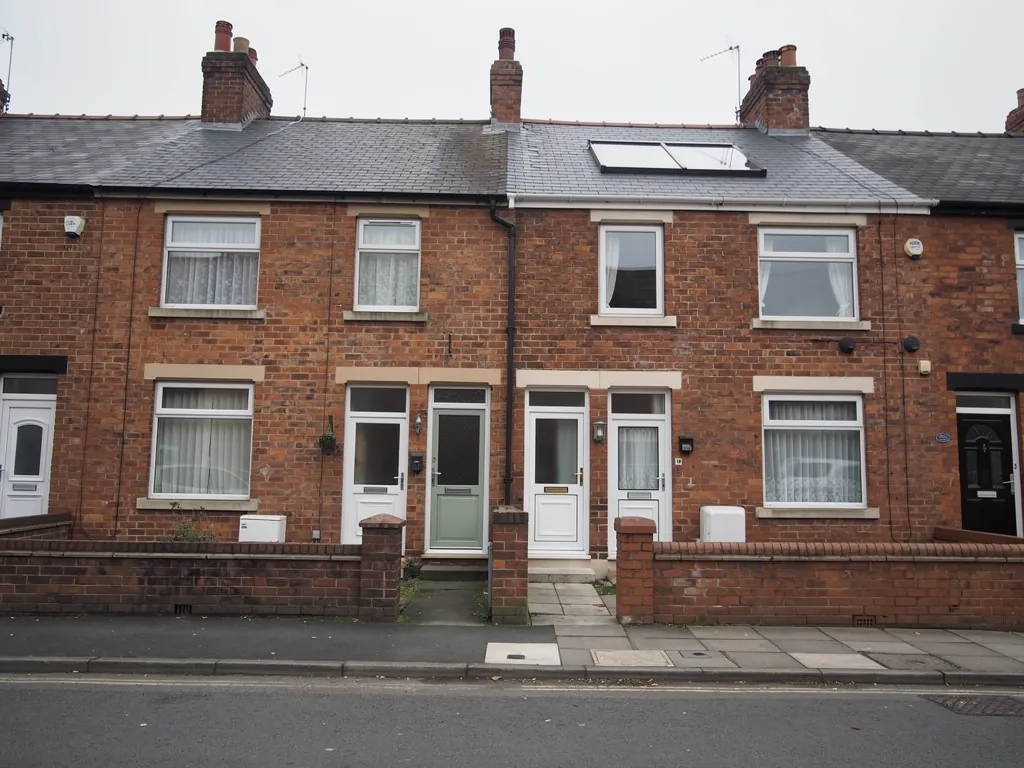
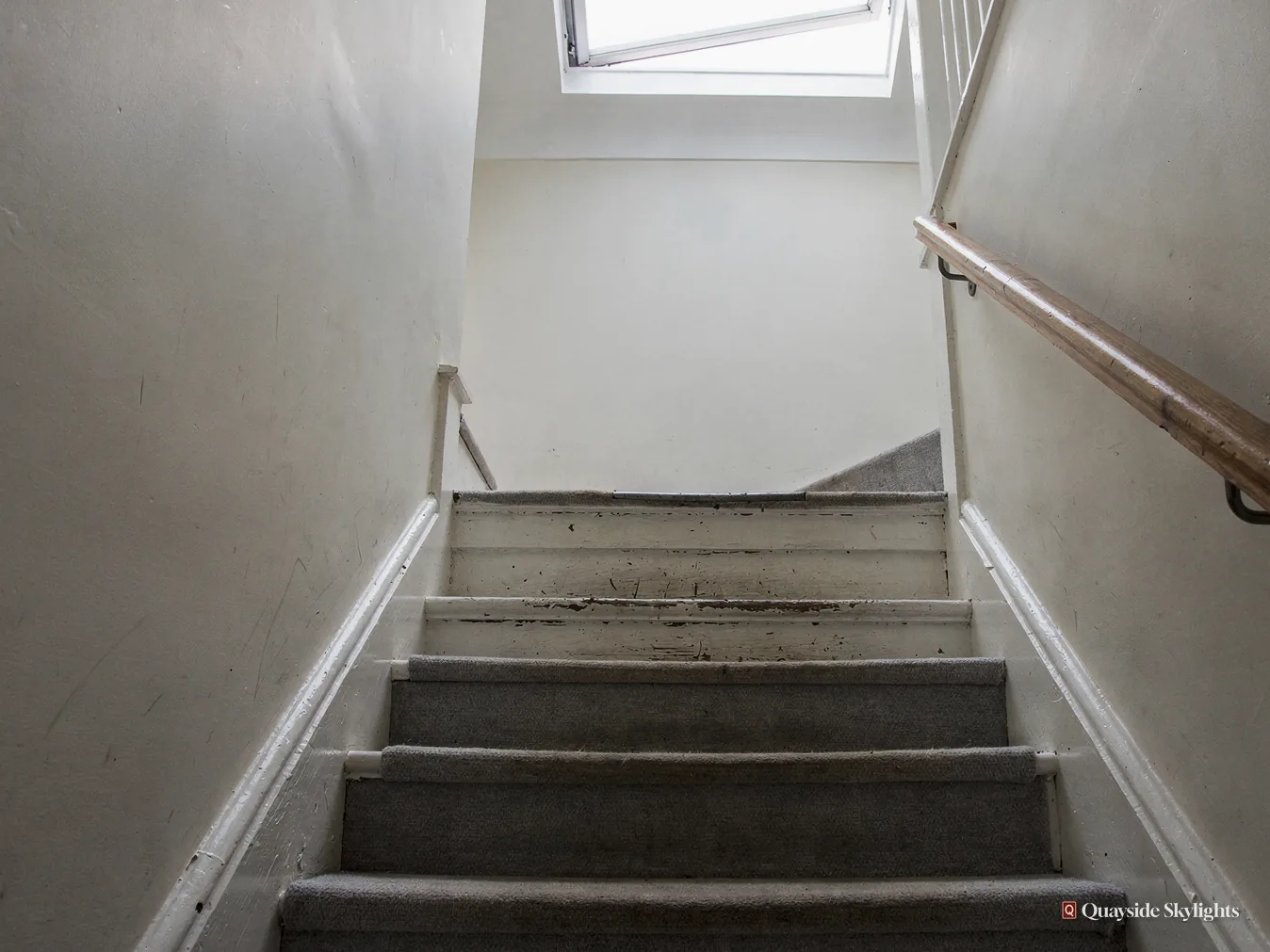
A bright room that turns cold by evening
Daylight from above is the easy part. The harder part in a Hebburn house or flat is keeping that room comfortable once the sun has gone, because glass in a roof loses heat faster than a wall does. A poor choice shows up as a chilly ceiling and damp streaks on the frame. So we weigh the glass and the frame as carefully as the size of the opening.
Rooflight types we put in at Hebburn
Each type is chosen after the survey, to match the roof and the room you want to improve. Roof lanterns, Flat roof rooflights, Roof windows, VELUX windows, Electric rooflights, Energy efficient rooflights, Misted rooflight replacement, Walk-on rooflights, Conservation rooflights, Sun tunnels.
Hebburn, roof first
From the slate or the felt to a warm, bright room
A Hebburn job in the order it unfolds: what the roof is made of, which unit suits it, how the survey tests the room for warmth and condensation, and what you are left with when the job closes.
Is the roof above my Hebburn landing or kitchen sloping or flat?
Short answer
Usually one of two: a sloping roof with slate or tiles on it, or a flat roof over a rear kitchen. Each takes a different kind of rooflight, so the roof is where every Hebburn job begins, long before we talk about sizes or glass.
Go up to your landing or out to the back kitchen and look at the ceiling. Above it sits one of just a few roof types, and knowing which one it is cuts the choice down before any catalogue comes out. Hebburn lies along the south bank of the Tyne, between Gateshead and Jarrow and facing Wallsend and Walker across the water. We do not guess at what you have. We ask, and then we go and look.
The pitched slope
Slate and tile roofs slope, and a rooflight for a slope is a roof window. It lies flush with the covering around it, and is fixed in place with flashings made for that covering. The rafters are cut and trimmed around the opening, and a lining finishes the shaft between the roof and the ceiling. Loft bedrooms, landings and stairwells under a slope all belong to this group.
The flat roof
A back extension or a flat-roofed kitchen is the other common case. Here the rooflight sits on an upstand, usually called a kerb, above the finished surface of the roof. That opens up more choice: a single flat rooflight, an opening one for air, a walk-on pane, or a glazed lantern that brings in light from every side. The deck, the fall of the roof and the condition of the covering all decide what is safe to fit.
When the room has no roof of its own
Some rooms sit under another storey, and daylight cannot come straight down. A sun tunnel can sometimes carry it past a loft, and in a flat the position of the other owner matters as well. Tell us what you can see from the loft hatch or the back door, and we will say which group your roof belongs to before the survey is even booked.
Our view: name the roof first, because a slope and a flat roof lead to different products, different upstands and different rules.
Which unit goes on which roof, and what will it give the room?
Short answer
Roof windows go in slopes, flat rooflights and lanterns go on flat decks, and a sun tunnel serves a room with a loft or storey above it. Each has a glass specification and a frame to match, and the survey settles the exact size.
With the roof named, the product follows quickly. We fit roof windows, flat roof rooflights, roof lanterns, walk-on units and sun tunnels, and the aim is always the simplest one that does the job in your room.
Windows for slopes
A roof window opens, so it ventilates a bathroom or a loft room as well as lighting it. Its dimensions are packed into a short code, with the letters standing for how wide it is and the digits for how tall. A bigger window gives more light but costs more heat, so size is a trade, not a race. Our roof windows page sets out the opening styles and where each suits.
Glass for flat roofs
A fixed flat unit is the plain option and gives the cleanest line on a kitchen extension. An opening one lets steam out. A lantern lifts the glass above the roof so the room gets side light as well as overhead light, which is useful in a deeper space. All of them can be made with solar control glass if the room faces the afternoon sun.
The sun tunnel
Where a loft is full of boxes and a bathroom has no window, a sun tunnel is a slim answer. A small dome outside gathers daylight, and a reflective tube delivers it to a bright disc in the ceiling. It needs no planning view into the room and no structural opening as large as a window, though the run should be short and as straight as the loft allows.
Every unit is built from glass layers, a frame and a seal. Those parts decide whether a rooflight stays warm, and they lead into the next question.
How will the survey keep my new rooflight warm and free of condensation?
Short answer
The survey notes the roof build-up, the size of the opening and how steamy the room gets. We then choose glazing that meets the Part L limit for an existing home, which is 2.2 W/m²K for a rooflight and 1.4 W/m²K for a roof window.
Heat loss is where a skylight chosen from a picture goes wrong. The survey is where we test the room for it, and the survey costs nothing and happens before a price is named.
What the numbers mean
A U-value says how quickly heat passes through a material. A lower figure is better. For an existing dwelling in England, Part L of the Building Regulations sets a limiting U-value of 2.2 W/m²K for a rooflight and 1.4 W/m²K for a roof window, or a Window Energy Rating of Band B. Any unit we fit must meet the limit that applies to it. Our energy efficient rooflights page covers how glazing layers, edge spacers and gas fills reach it.
Where condensation comes from
Condensation is moist indoor air landing on a surface that is colder than it is. A bathroom or kitchen under a rooflight produces plenty of damp air, so the inner pane and frame need to stay warm enough to avoid streaks and mould. A poorly fitted frame, a cold bridge at the upstand or a lining that leaves a gap can all start it. That is why we look at the shaft and the insulation around the opening, not only at the glass.
What we note on the day
Our visit takes in the opening size, the roof covering and the deck, plus how the room gets used and by whom. A bathroom for a large family needs a different frame from a spare room. We also look at which way the roof faces, since a south-west slope may call for solar control glass.
The result is a fixed written quote, with the glazing described in it, so you can compare it with any other quote on the same basis.
| Point noted | Why it matters | Effect on the order |
|---|---|---|
| Roof build-up | Insulation around the opening limits cold bridging | Lining and insulation detail |
| Room use | Steam raises the risk of condensation | Frame and glass specification |
| Roof direction | Afternoon sun can overheat a room | Solar control glass or not |
| Size of opening | A larger unit loses more heat | Number and size of units |
When the glass is in, what is left to do?
Short answer
Building Control is told about the job where that is required, you hold a 10-year workmanship guarantee on paper, and the new opening has its completion record.
A rooflight job is finished when the paperwork is, not only when the glass is in. The last stage is short, but it is the one you will want to find in your files in ten years.
Notification and sign-off
Cutting a new opening in a roof is building work, so it is notified to Building Control. In Hebburn that means South Tyneside Council or a registered building control approver. We make the Building Control notification when the opening requires one, and the completion record that comes back is yours to keep for any future sale.
Planning, in outline
Most rooflights on houses fall under permitted development within set limits, and the planning guide explains where those limits sit. A flat is different. Either half of a Tyneside flat needs planning permission from South Tyneside Council before a new rooflight goes in, and a house that is listed needs listed building consent as well. We raise all of this at the survey, so nothing is ordered until the route is settled.
Your guarantee
Our installation work carries a decade-long guarantee, set down in writing. Whatever figure appears on the quote is what you settle, so long as the job stays as surveyed. If you are weighing options, the cost factors page lists what pushes a Hebburn price higher or lower, with no figures that could mislead you.
Neighbours in Jarrow and Gateshead are covered the same way, with the same steps and the same paperwork. A WhatsApp message gets it moving.
Looking after the new opening
Once the room is in use, the glass needs very little. Wipe the inside with a soft cloth and a mild cleaner, and open the unit now and then if it opens at all, so moist air has somewhere to go. The outer pane gets rinsed clean by ordinary rain on a steep slope, and a flat roof only needs the debris cleared from its edges. Keep the lining clear of stored boxes so air can move around it. If you ever sell, hand the guarantee and the completion record to your solicitor, so the next owner knows what went in and when.
Practical points for a Hebburn roof
Which council deals with a Hebburn rooflight application?
For Hebburn, planning sits with South Tyneside Council, and that is the body receiving any application relating to a flat, or to a house on the statutory list. Building Control can be the council's own team or a registered building control approver, and we handle that notification where the work needs one.
Can I have a rooflight in a flat-roofed kitchen extension?
Yes, it is one of the easiest places for one. A flat rooflight or lantern sits on an upstand, and the survey checks the deck and the fall of the roof first. If you own a house, permitted development usually covers it. If it is a flat, you would need planning permission.
Do double-glazed rooflights stop condensation completely?
They reduce it a great deal, but nothing stops it in a room that makes a lot of steam. Warm edge spacers, a well-insulated shaft and some ventilation do the rest. A roof window that opens gives you a quick way to clear the air after a shower.
Do you only work on the Hebburn side of the river?
No. We cover Newcastle and a wide ring of towns and villages around it, Jarrow next door and the north bank towns among them. Every address is surveyed on its own, and the council that decides is whichever one your street falls under.
How do I get someone out to look at my roof?
WhatsApp 07880 284133, or send an email to info@quaysideskylightsnewcastle.co.uk. Give the Hebburn street, say if you live in a house or one half of a flat, and name the dark room. A couple of snaps of the ceiling and the roof save time. After the visit, the quote arrives in writing at a fixed price.