Skylights and rooflights for Wideopen's gloomy back rooms
Wideopen is a village 5.8 road miles north of Newcastle, alongside the old Great North Road. Whether your house is older or part of a newer estate, we study the building and its roof first, then settle on the rooflight.
A good house with one gloomy room
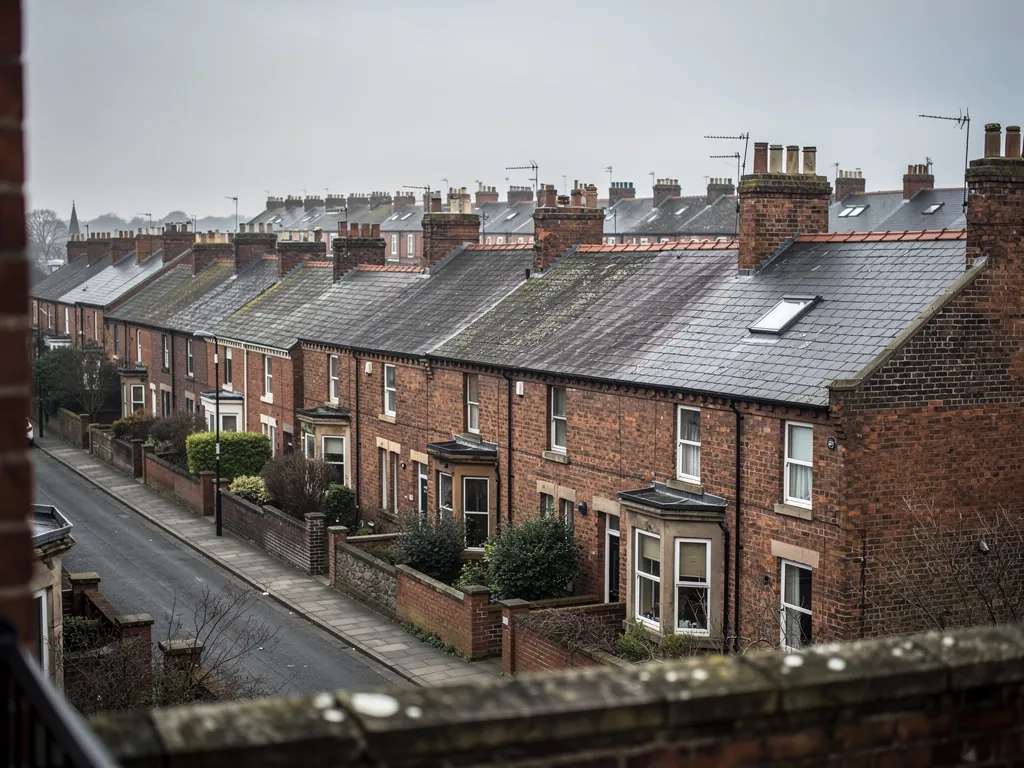
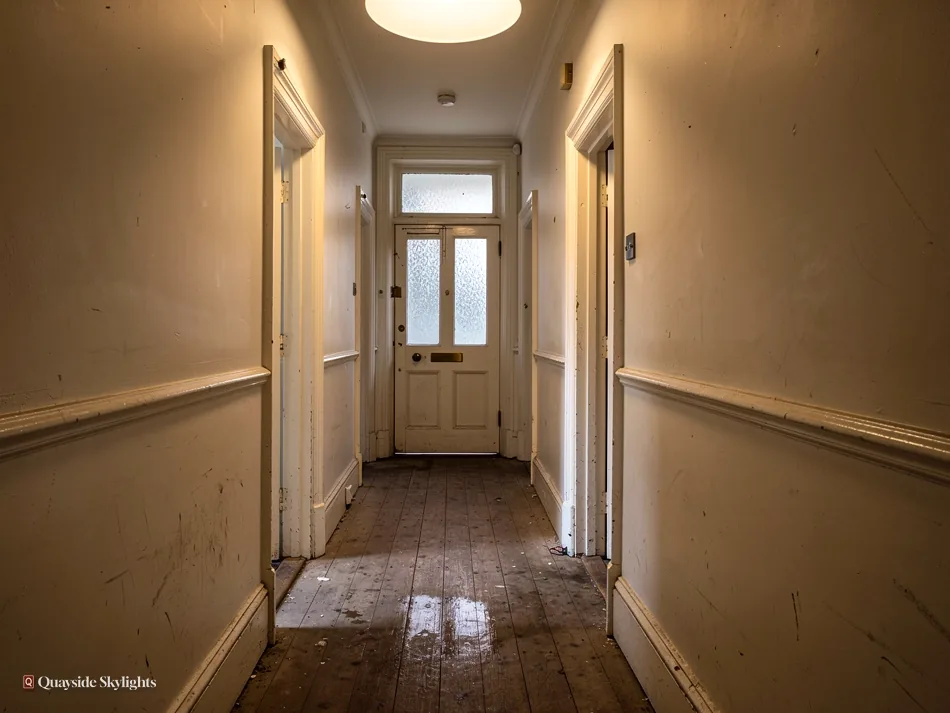
Wideopen has a long mining past and newer housing besides, among it the Five Mile Park estate that Bellway began building in 2012. Houses of every age share one weakness: a room that never got a proper window. It could be a stair landing, a shower room at the heart of the floor plan or a loft bedroom. The roof is the way to light it, and the route depends on the house.
The rooflights we fit around Wideopen
Every unit is picked once we have surveyed the roof over your room, at no charge. Roof lanterns, Flat roof rooflights, Roof windows, VELUX windows, Electric rooflights, Energy efficient rooflights, Misted rooflight replacement, Walk-on rooflights, Conservation rooflights, Sun tunnels.
Wideopen daylight
Letting daylight into a Wideopen house
Taking a Wideopen job from start to finish raises four questions. Which room needs the light? What can the roof over it hold? Who must agree, whether you are replacing a tired unit or cutting the first opening? And what happens when we visit and when we fit?
Which room in my Wideopen home should get the daylight first?
Short answer
Start with whichever room has the lamp on at lunchtime. In a Wideopen house that could be a landing, a windowless bathroom or a loft room. Once you have chosen the room, the roof above it tells us what can be fitted.
Walk the house at lunchtime with the lamps switched off. Rooms that stay dim are your candidates. Wideopen has houses from its mining years and a newer estate dating from 2012, and the two can give different answers, so look at your own plan before you look at a brochure.
Landings and inner rooms
The landing is the simplest room to improve. Light from above drops down the stairwell and brightens the hall too. A shower room tucked into the centre of the floor plan is another case, because its only opening may be an extractor fan. Either space may take a light tube or a window in the slope, depending on what sits over the ceiling. The survey settles which, because the loft has the final say.
Loft rooms and extensions
A loft bedroom or study may have one small gable window and nothing else. A roof window set into the slope adds height to the room as well as light, because you can see sky from a chair or from the bed. A flat-roofed kitchen extension is a different animal. A flat rooflight or a lantern brings daylight over the worktops and the table, and it spills back into the older part of the kitchen.
Light, air or both
Ask whether the room also has to be aired. A bathroom and a kitchen both do. An opening rooflight can manage that if you can reach it, or if it is electric, with a wall switch and a rain sensor. A bedroom may want nothing more than sky and a little height. A study may want glare control as well, which is worth saying at the survey, since blinds and glass choice can handle it.
Before the visit, jot down the room, what lies above its ceiling and whether anyone else has a stake in that roof. A short note like that speeds the survey and sharpens the quote, and it gives you something to hold up against what each firm proposes. Live in a flat and your neighbour may have a say before any order is placed, so open your lease or deeds and see what they say about roof space.
Before you pick the room
- Note which corners stay dim when you visit the room at noon with the lamps off
- Establish what lies over the ceiling: loft space, a flat roof or a second floor
- Ask whether the room also has to be aired, not only lit
- Work out whether the roof overhead is pitched or flat
- Flat owners: check the lease or title wording on who holds the roof
Which type of rooflight can the roof above that room carry?
Short answer
The roof decides. Roof window for a pitched slope, sun tunnel where storage fills the loft, and either a flat rooflight or a lantern for a flat extension roof. Anything fitted must meet the thermal limits for an existing home.
The product never comes first. Our starting point is the roof above your chosen room, and what that roof is able to accept. Four families of product cover almost every roof we meet.
Roof windows on pitched slopes
A roof window is set into a tiled or slated slope, flush with it, and it tilts or opens to let air in. Our roof window page goes through sizes, opening styles and loft use. If you want a particular brand, read a code like MK04 as width first, in the letters, then height, in the digits.
Flat roofs and lanterns
Think of a flat rooflight as a glazed unit standing on a raised upstand. Manufacturers set a minimum upstand height, commonly around 150mm above the finished roof, so the roof build-up matters. A lantern is the taller, framed cousin with sloping glass, and it gives ceiling height as well as light. On a modest back extension a flat unit may be plenty. On a bigger one a lantern can become the feature of the room.
Sun tunnels
A sun tunnel is three parts: a dome outside, a mirror-lined pipe through the loft and a frosted panel in the ceiling. It suits a spot where a full window cannot go, such as a landing beneath a storage loft. You get daylight without a view, and nothing opens.
Warmth and glass
For an existing home in England the limiting U-value is 2.2 W/m²K for a rooflight and 1.4 W/m²K for a roof window. Over a living space, the glass facing into the room is laminated. We choose glazing inside those limits and name it on your written quote.
Fitting a unit where one already exists is simpler than cutting a fresh opening, because the hole is there. That leads to older units, and to the rules around replacing them.
Can I swap my old misted rooflight, and who has to agree?
Short answer
Yes, a misted or tired rooflight can be replaced, and on a house the rules for a like-for-like change are gentle. A flat or a listed house follows a different route, and North Tyneside Council is the authority in Wideopen.
A rooflight that has clouded between the panes, or that lets the warmth out each winter, is a reason to start looking. Replacing the unit is a smaller step than adding a first one, but the rules still depend on the building, so learn them before you order.
On a house
Most rooflights on houses fall under permitted development within set limits, so an application is not normally needed. Our guide to rooflight planning rules lays out those limits and the cases that alter them. Reusing the same opening is the tidiest job of all, and at the survey we check that the new unit suits the old upstand or frame.
Flats and listed houses
A flat has no householder permitted development. Upstairs or downstairs in a Tyneside flat, and in any other flat, needs North Tyneside Council to grant planning permission first for a new rooflight, and the other owner may have to agree to roof work. Read your title or lease before an order is placed. A listed house needs listed building consent for almost any rooflight.
The conservation area
Wideopen has a conservation area on the edge of the village, designated in January 2007, with a character appraisal that North Tyneside Council adopted in January 2009. Living in a conservation area does not, on its own, remove permitted development for a rooflight on a house. An Article 4 direction or a condition on an earlier permission can, and North Tyneside Council can tell you whether either covers your address. Where a slim-framed unit suits the roof, our conservation rooflights page shows the choices.
Building Control
A new opening in a roof is notified to Building Control. Exchanging a unit within an existing opening is a smaller job, and the survey tells you what applies. Where notification is needed, we handle it.
Our view: settle your title, your lease and the council answer before you order. The like-for-like swap is the easy part.
What will you look at on the visit, and how does fitting day go?
Short answer
We visit before pricing anything, and that visit costs you nothing. We study the room, the roof and the loft, then send a fixed written quote. Fitting day brings the roof open, the unit set in and weatherproofed, and a neat lining round the hole indoors. The guarantee comes in writing.
No price is given until we have seen the house. We come out to Wideopen, climb into the loft if there is a loft, and study the slope from outside and from the room you want lit. We note the roof type, the structure beneath it and the way up to it, because the access we need on the day is worked out here, long before any scaffold or ladder arrives.
What the quote holds
A fixed written quote follows. It names the rooflight, its size, the glass and the work around it, and the price stays put unless the work changes. If you want to weigh up what raises or lowers a bill, the costs page explains it, with no figures given.
On the day
On fitting day we open the roof, cut and support the structure where it needs help, set the unit and seal it, then line the opening inside so it meets the ceiling cleanly. Pitched roofs get flashing matched to the slate or tile. Flat roofs get a formed upstand with the membrane dressed up its sides. Where a new opening is cut, we deal with the Building Control notification, so the paperwork is not left to you.
After the job
The 10-year workmanship guarantee is handed over in writing. It covers our work and sits beside the manufacturer's own terms on the unit. A neighbour may have had a skylight fitted and you may want the same, but each house gets its own reading, because roofs differ even on one street. For a nearby place with the same questions and the same approach, see Killingworth.
Wideopen rooflight loose ends
Is Wideopen in the Newcastle council area?
No. Wideopen lies in the North Tyneside borough, so North Tyneside Council handles any planning application or listed building consent here, even though the village is only 5.8 road miles north of Newcastle. The national rules on rooflights are identical across England.
Does the Wideopen conservation area stop me fitting a roof window?
Not on its own. For a rooflight on a house, a conservation area leaves permitted development in place. A flat still needs planning permission, and a listed house needs listed building consent. North Tyneside Council can say whether an Article 4 direction applies to your address.
My newer-build has a little flat roof above the bay. Could it hold a rooflight?
A modest flat roof can sometimes carry a unit of this type, provided the structure is sound and there is room for an upstand. The survey checks the build-up, the fall and the route water will take off the roof, and the quote then states exactly what goes in.
How can I tell whether my rooflight needs replacing or only new glass?
Look for moisture trapped between the panes, a failed seal or a warped frame. With an older unit, a whole new rooflight usually serves better than new glass, because current glazing is warmer. We weigh both routes up at the survey.
How do I book someone to look at my roof in Wideopen?
WhatsApp 07880 284133 or write to info@quaysideskylightsnewcastle.co.uk. Give the address, name the room short of light and tell us whether the roof is yours alone or shared. Photos help. The visit carries no charge, and a price comes only after it.