Skylights and rooflights for Shotton Colliery rooms short of daylight
Shotton Colliery is a County Durham village, 22.8 road miles south-east of Newcastle. If one room in your home stays dim all day, a skylight or rooflight can fix it, and a free survey tells you which kind and what the council needs.
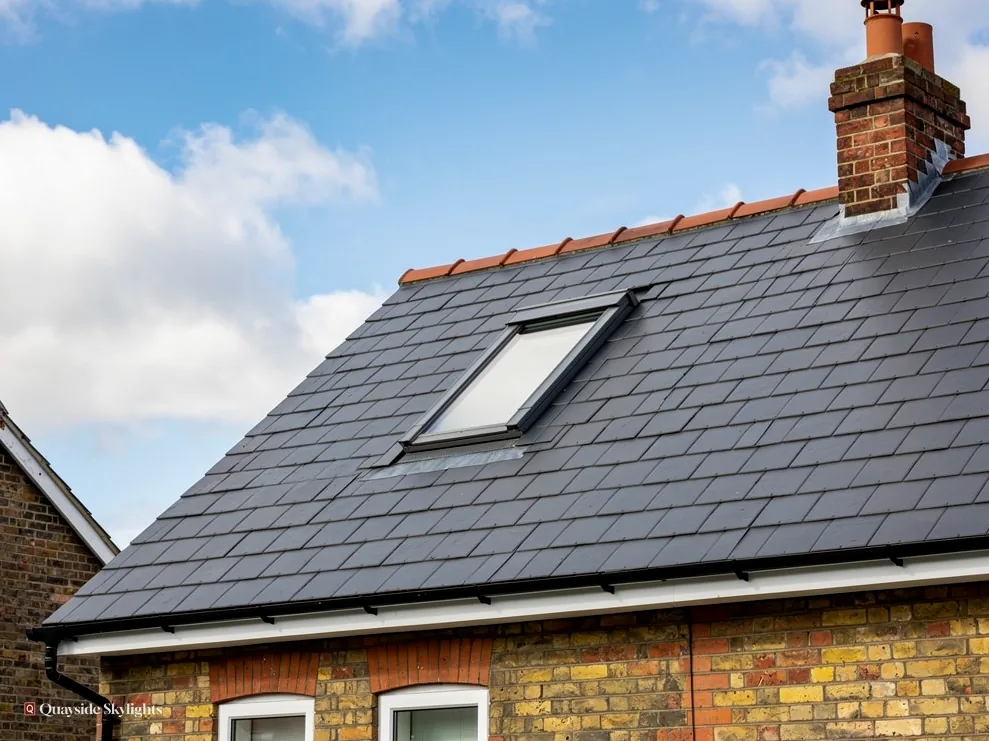
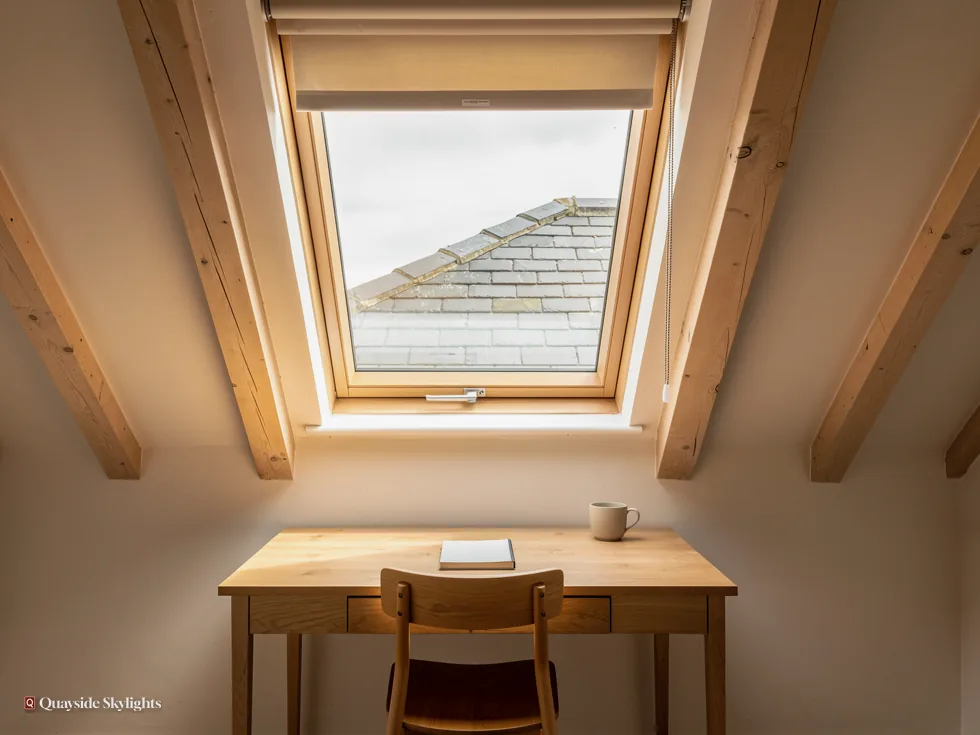
The room that never saw daylight
Shotton Colliery grew round its pit, with coke works, brick works and more housing built over time. Homes from different stages share one habit: somewhere inside is a room with no window to the outside, often the bathroom or the landing. The roof above is the one place left to let sun in, and the work is easier to plan once you know what that roof is made of.
Fitted in Shotton Colliery after a survey
We pick one of these for your roof and room once we have seen both, never from a catalogue page. Roof lanterns, Flat roof rooflights, Roof windows, VELUX windows, Electric rooflights, Energy efficient rooflights, Misted rooflight replacement, Walk-on rooflights, Conservation rooflights, Sun tunnels.
Light for Shotton Colliery
Finding the dark room and giving it a sky
Four questions on the way from a gloomy room to a bright one: how to spot the space that needs a rooflight, which product fits the roof above it, which room most needs the light and who must agree, and how the survey and fitting go.
How do I tell which room in my Shotton Colliery home needs a rooflight?
Short answer
Look for the room that needs the light on at noon, feels damp, or has no outside wall. A landing, an inner bathroom and a kitchen at the back are the usual candidates. The roof above the room then decides what kind of rooflight can go in.
Not every dim room wants a skylight. A bedroom with a small window can often be helped by a lighter paint colour, a mirror or a bigger window on the wall. A rooflight earns its place when the room has no wall to the outside at all, or when it is under the roof and the walls cannot take a window.
The noon test
On a bright day, turn off every light in the house and walk around. Rooms that stay dark are your candidates. Pay particular attention to the landing, the hall, the bathroom and any room in the middle of the layout. If you need the light switch on at midday, the room is a candidate.
Damp and air
A bathroom without a window can feel stale, because steam has no easy way out. An opening skylight lets air leave, and one with a rain sensor closes itself if it rains. In a kitchen with no window over the cooker, daylight from above also makes the room easier to work in.
Above the ceiling
The next step is working out what is above. A loft means a roof window or sun tunnel is possible. Over a flat roof, the choice is a flat rooflight or lantern. If another room sits above, such as an upstairs bedroom, a skylight cannot reach, and we say so at once. A visit takes the guesswork away.
Space around the dark room
The dark room also has neighbours. A hallway at the foot of the stairs can borrow light from a landing that has a rooflight above it, if the stairwell is open. Sometimes lighting one room well solves the problem for two.
What we do not assume
We do not assume a house has a loft, or that the loft is empty, or that the ceiling will take a new opening easily. Each of those is checked from inside and outside, and we explain the result in plain words so the decision is yours.
Is this room a rooflight candidate?
- It has no outside wall, or the wall cannot take a window
- The light is on at noon on a bright day
- A loft or flat roof sits directly overhead
- Steam or cooking smells linger because air has no exit
- A brighter room would change how you use the space
What kind of skylight goes into a colliery-village roof?
Short answer
Pitched roofs suit a roof window or sun tunnel; flat ones suit a flat rooflight or lantern. The roof covering, the rafters and the space above the ceiling decide the choice, and we confirm all three on site before recommending anything.
Roofs in a village that grew over several stages differ from home to home. We choose by what we find, and this chapter sets out the range.
Roof windows
In a pitched roof the window frame is flashed to the covering, so water runs over that joint and away. It gives light, air and a view of the sky, and it is a good fit for a loft room or landing. See our roof windows page for the sizes and the pivot and top-hung styles.
Sun tunnels
If the room is small and the roof is pitched, a sun tunnel is a neat option. On the roof is a round cap, and a mirrored tube joins it to a diffuser overhead. It is quick to fit, it takes little from the roof structure, and it lights a bathroom or landing well.
Level roofs
A single-storey kitchen at the back, a porch or a converted garage can take a flat rooflight on an upstand. A lantern is a glazed box standing proud of the roof, bringing height and light from several sides. Manufacturers set minimum upstand heights, commonly around 150mm.
Glass and ventilation
Rooflights over rooms are normally fitted with laminated inner panes. Opening units add ventilation for a bathroom or kitchen, and fixed ones are simpler. Over a south-facing room, solar control glass keeps summer heat down.
One product or several
Sometimes a house needs two answers. A roof window on a landing and a flat rooflight at the back, for instance. We write each into the quote as a separate line, so you can see the purpose of each, and agree to both or just one.
None of this needs to be settled before we visit. Tell us what room is dark and what you can see of the roof, and we bring the rest to the survey.
Looking after the new unit
A rooflight needs little attention. Wipe the inside glass as you would a window, and rinse the outside when you can reach it. Opening units benefit from being used, so the hinges and seals stay supple. We leave a short note on the care of the type we fit.
Which room most needs the light, and who has to agree to the opening?
Short answer
In homes like these the landing or inner bathroom usually gains most from roof light. For a house, permitted development generally applies within set limits. Flats need planning permission, granted by Durham County Council, and a listed home needs consent.
If one room in a house has to go first, it is the one people pass through every day and never enjoy: the landing, the stair, the bathroom. Light there changes how the whole home feels. The question that follows is whether you need anyone's agreement.
For a house
A rooflight on a house generally falls under permitted development within set limits, which means you do not need to apply to the council in the usual case. Our planning permission guide sets out the limits and the situations that change them. Two things can remove the allowance from a house: an Article 4 direction and a condition on an earlier planning permission.
For a flat
Householder permitted development is simply not available to a flat. That covers a flat in a converted house and either half of a Tyneside flat. A new rooflight there calls for planning permission, with Durham County Council as the authority in Shotton Colliery. With a shared roof, your title or lease answers it: owner of roof and roof space, and any consent the other owner must give. Look it up, and speak with them ahead of any order.
Listed buildings
Listed houses need listed building consent for almost any rooflight, and the consent decides the job. The parish has just one listed building, the war memorial on Front Street, so this will rarely touch a house here. We still check each address.
Building Control
Cutting a new roof opening is building work, notified to Building Control, either the local authority or a registered building control approver. You do not need to file it: where notification applies, we do it.
Asking the council
Ask Durham County Council whether a direction or condition covers your address. If you are in any doubt, we suggest asking before accepting a quote, and we will wait for the answer. A quote can be written while you wait, with the order held back until you know where you stand.
If your plans are bigger
A loft conversion is a bigger project with its own rules on stairs, escape routes and fire safety. If you are heading that way, tell us at the survey, and we will say what a roof window can and cannot do in that context.
What will the survey and the fitting involve for my home?
Short answer
A free survey of the room and roof, then a fixed written quote. On the day we fit the unit, handle any Building Control notification, and leave you a 10-year workmanship guarantee in writing. The price you are quoted is kept, provided the job is not altered.
The process is short and plain. We visit, we look and we measure. Only then do we put a price in writing.
At the survey
We stand in the dark room first and ask what you want from it. Then we go up to the roof, or into the loft, and look at the covering, the timbers and the position where the opening would fall. We take measurements and notes, so the unit we recommend is the right size for the gap, not an approximation.
The quote
Written and fixed: that is how the quote arrives. It names the product and how it will be fitted. Your price is unaltered until the job is, as when you ask for a larger size. Our quote page is the way to book a visit, and the costs page explains what raises or lowers a price without figures.
The fitting day
First the covering round the opening is lifted; then comes the frame, flashed in, and last the glazing. Inside, we make good the lining, so the shaft or reveal is neat. We tell you in advance which rooms are affected and for how long.
Afterwards
We handle the Building Control notification where the work is notifiable. Your written guarantee lasts 10 years and covers our workmanship, and we demonstrate any opening or blind.
A word on timing
Roof work depends on the weather, so we keep flexible. If rain is forecast, we agree a new day with you in good time. Nothing is rushed, and the roof is left sealed before we go.
Once the survey is done, the job usually becomes a short, clear list of steps, each with a name against it.
What to have ready
Know where your loft hatch is and whether it is clear. If you are in a flat, have your lease or title to hand. If you have paperwork from an earlier planning permission or extension, keep it near the front of the pile, since it may carry conditions.
Our view: light the room people pass through daily first, then judge the rest of the house.
What Shotton Colliery households ask
Which council covers Shotton Colliery for planning?
Durham County Council. It decides planning permission for flats and listed building consent, and it can tell you if an Article 4 direction or an old condition applies to your address. We name it in your quote.
Is a sun tunnel enough for a windowless bathroom?
It gives good daylight if the run from roof to ceiling is short and fairly straight. It does not move steam, so a fan is usually still wanted. A roof window opens, which helps with air as well as light.
Can a rooflight go over a kitchen at the back of the house?
Yes. Flat-roofed back kitchens welcome a flat rooflight or lantern. A pitched roof calls for a roof window instead. The survey sorts out which one suits the structure.
Do you cover villages near Peterlee and Easington too?
Yes. Places such as Peterlee and Easington sit within our area, and the same terms apply: a free survey, a fixed written quote and a 10-year written workmanship guarantee.
When does the price reach me once you have surveyed?
Once the survey is done we put the quote together and send it in writing. The figure is fixed, and you pay what the quote says provided the job is unchanged from the agreement.