Skylights and rooflights in the city of Durham
Durham is a cathedral city, 17.9 road miles south of Newcastle, with a conservation-area centre and a ring of former colliery villages. We fit skylights and rooflights across all of it, after working out what each building allows.
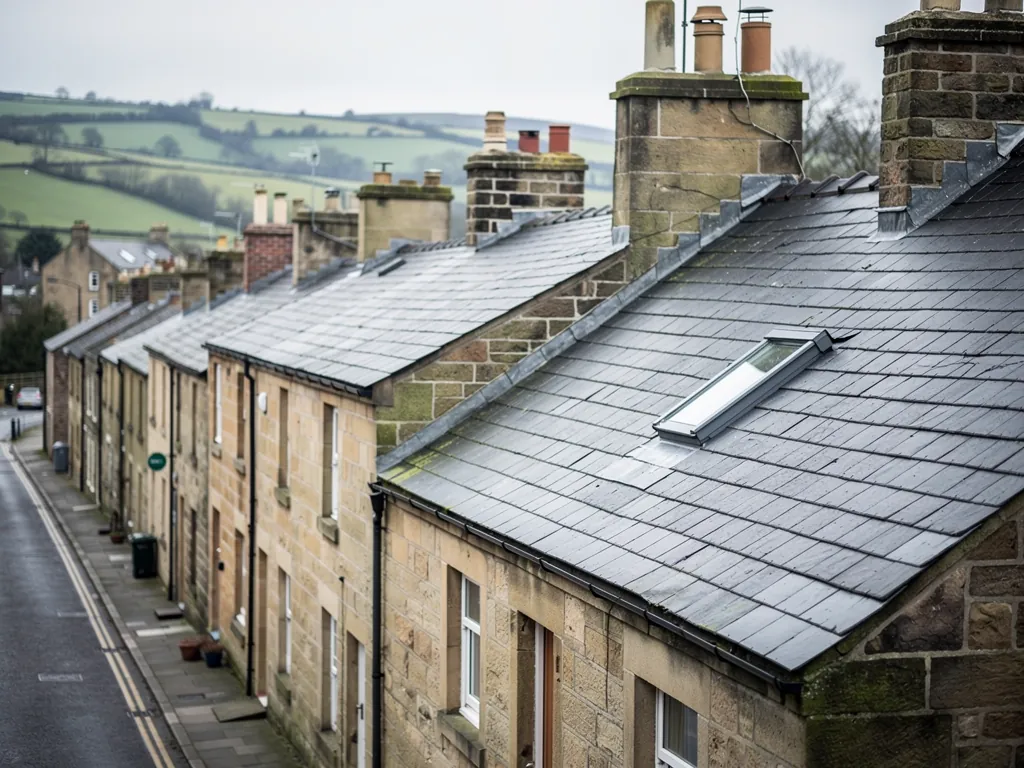
A house split between students and landlords
Durham's inner districts are home to many students in shared housing, and a house divided between tenants, owners and sometimes a landlord raises questions a single-family home never does. Who owns the roof? Who pays? Whose consent is needed? A rooflight can still light the dark landing or attic room, but the answers come before the product.
What we fit for Durham homes
Pick from the list, and we will tie the choice to your roof after a look up there. Roof lanterns, Flat roof rooflights, Roof windows, VELUX windows, Electric rooflights, Energy efficient rooflights, Misted rooflight replacement, Walk-on rooflights, Conservation rooflights, Sun tunnels.
Durham, house by house
A cathedral city, a river bend and a roof of your own
Durham asks more questions than most places: a conservation-area centre, flats and shared houses, and villages on the old coalfield. These four chapters take them in turn, ending with the product and the room it lights.
What kind of homes does Durham have, and what do they mean for a rooflight?
Short answer
Durham is a cathedral city on a bend of the River Wear, with a conservation-area centre, student housing in inner areas, and colliery villages around it. A house, a flat or a shared house each take a different route to a rooflight.
Durham is a cathedral city built on a meander of the River Wear, which wraps round the centre on three sides. The whole of that centre is designated a conservation area. Beyond it, many inner districts are home to students in shared housing, and the city sits among villages that grew when the Durham coalfield was worked, with collieries operating around the city and in nearby settlements.
What the centre being a conservation area does
It does less than people assume. A conservation area on its own does not take away permitted development for a rooflight on a house. What it can sit alongside is an Article 4 direction or a condition on an earlier permission, either of which can remove that right, and neither is something we would guess at. A listed building is another matter: almost any rooflight on it needs listed building consent. We read these things off the property, never off the postcode.
Shared and divided houses
A house that has been shared among students, or divided into flats, may have one roof and several occupiers. Before any rooflight, you need to know who holds the roof. If you are the freeholder of a whole house, the roof is yours. If you own or rent one flat in it, the lease or tenancy matters, and the landlord or neighbour may need to agree.
Villages on the old coalfield
Outside the centre, the places around Durham, such as Bowburn, are ordinary residential settlements. We approach their houses the same way as any others, asking what you live in before offering a product.
Cost depends on the building
The building also changes what a job costs, which the module below lays out in general terms.
Why one Durham quote differs from another
Keeps it lower
- A whole house you own, with a clear loft beneath the slope
- A standard-size window with ordinary access
- Slates or tiles that lift and relay without fuss
- No consent needed beyond permitted development
Pushes it higher
- A flat, with a planning application to prepare
- A listed house, where consent shapes the choice of unit
- Roof access that needs extra scaffold or care
- A bespoke conservation-style unit
These show what moves a price, never how much. The fixed written quote follows the visit.
What will you want to see when you come to look at my Durham property?
Short answer
Which room is dim, what roof covers it, what the loft looks like, and which documents show who holds the roof. Looking is free, and numbers come afterwards.
Much of the work is looking, and that surprises people. A rooflight is easy to discuss and awkward to relocate once fitted, which is why the first hour at the property counts for so much. Rushing it is how a unit ends up over the wrong rafter or the wrong part of the ceiling, and nobody wants that.
The room and the roof
We begin where the problem is. Which room is it, and how does it feel at different times of day? Next comes the loft, if there is a hatch, to see what lies behind the ceiling. Insulation depth, the spacing of the timbers and any pipes or cables all affect where a window or tunnel can go. We note the rafters, the insulation, any chimney breast or pipework. Outdoors we study the covering and the pitch and pick a spot where a unit would sit squarely with the roof lines.
The papers
In a city with shared and divided houses, ownership has to be established. If you hold a lease, bring it. If you own a whole house, we will want to know whether there is any planning condition on it, perhaps from an extension or a conversion. A decision notice from an earlier application will say. If the building is listed, tell us, and we will talk through listed building consent before going further.
The measurements
With the position chosen, we measure it, and we ask about the fit-out you have in mind: plaster, timber lining or a bare finish. Those details affect the quote, and it is easier to ask now than to guess.
The quote
A fixed written quote reaches you afterwards, and its figure stays put unless the job itself alters. If you are weighing options, the costs page shows which choices lift or lower a price. Take your time reading it through, and bring any question you have back to us on WhatsApp.
A word on pace
You are not asked to decide on the day. Take the quote home, show it to whoever shares the roof, and send your answer by message when you are ready.
Do I need the council's permission, or can I go ahead under permitted development?
Short answer
A flat falls outside householder permitted development and needs the council's consent. A house is usually covered by permitted development, within limits. A listed house needs listed building consent, and an Article 4 direction or earlier planning condition can change a house's answer.
This is the question that separates Durham jobs. The building decides the route, and the route decides the timetable.
A house
Most rooflights on houses fall under permitted development within set limits, which means the council does not need to grant permission first. The conditions are in our planning guide, and you should read them there. Two things can alter the answer for a house: an Article 4 direction covering the area, and a condition on an earlier planning permission. Whether either applies is something the council's planning team can confirm.
A flat
Flats and maisonettes have no householder permitted development. On either floor, a new rooflight means applying to Durham County Council, and a flat created by dividing a larger house counts the same as one in a purpose-built block. Roof ownership is a different question again. In a city of divided houses, landlords, freeholders and leaseholders can all be in the picture. Your title or lease answers it, so read it, and have a conversation with the other owner, before you order.
A listed building
A listed house keeps permitted development on the planning side, but almost any rooflight on it needs listed building consent, and that consent decides the job. We never presume which buildings are listed. Ask the council, or look at the national list, before setting a date.
Building Control
On top of planning, cutting a new opening in a roof is building work, notified to Building Control through the local authority or a registered building control approver. Where the work needs it, that notification is something we send.
This is general guidance and not legal advice for a particular address.
Settle these before you set a date
- Is it a whole house, one flat or a listed building?
- Does your title or lease say who owns the roof?
- Has the other owner been spoken to about roof work?
- Is there any earlier planning condition on the property?
- Does the council need an application, or does the house fit permitted development?
Which rooflight belongs in which room of my Durham home?
Short answer
Attic bedrooms go with roof windows. Landings and bathrooms beneath a loft go with sun tunnels. Kitchens and extensions under a flat roof go with flat rooflights or lanterns. Where looks matter most, a slim conservation-style unit is the one to consider.
Once the route is clear, the product is the enjoyable part. Match it to the room, then to the roof.
Attic and loft rooms
A roof window set in a pitched slope is the natural choice for an attic bedroom or study. It admits daylight across the room and gives a view of sky, and an opening version helps on a warm night. Our roof windows page lists the opening styles.
Landings and bathrooms
A sun tunnel suits the room with no outer wall. Its dome gathers light, the tube carries it through the roof space, and the diffuser sits flush in the ceiling. It is a good fit where the room is only used for short spells, such as a stair landing or a cloakroom.
Kitchens under flat roofs
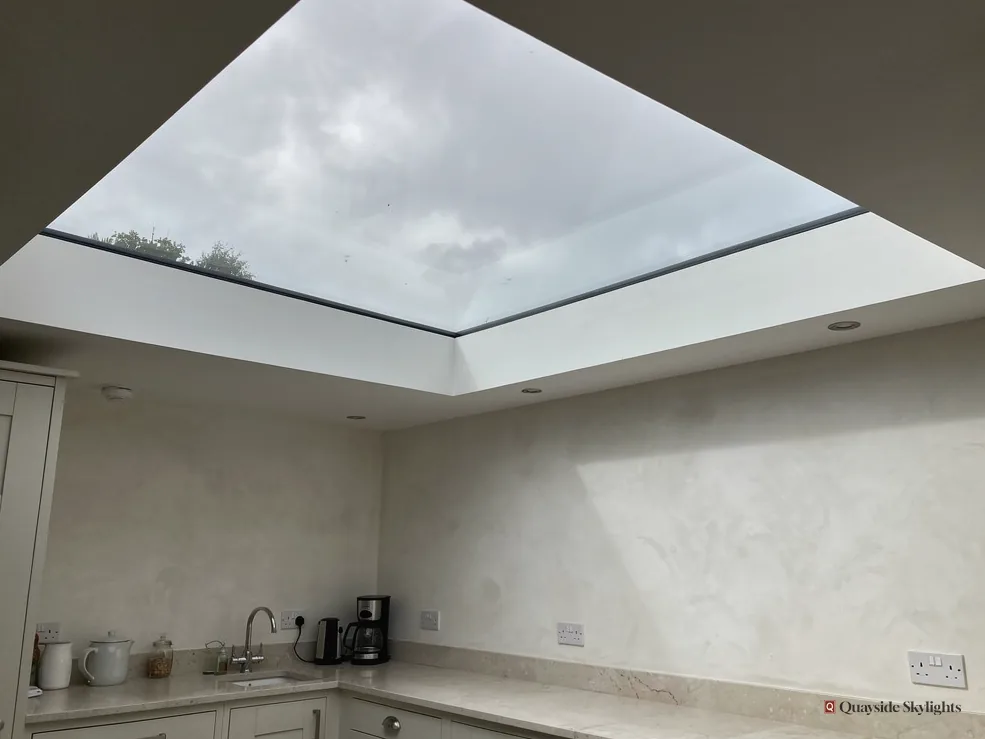
With a flat roof over the kitchen, the options are a slim flat rooflight lying close to the roof, or a lantern standing proud of it. A flat unit keeps the roofline quiet. A lantern lights the room from several sides and adds a feature to the ceiling. Your extension's width usually points to one or the other. The glass rests on an upstand, commonly around 150mm above the finished roof, though each maker sets its own minimum. A lantern, with sloping sides, gives more architectural light. A flat unit sits discreetly.
Where appearance counts
On a listed building, the look of the unit counts for more. A conservation-style rooflight is low, slim-framed and set close to the roof plane, often with a single central glazing bar. Our conservation rooflight page explains the type. For a listed house, consent decides which unit is acceptable, and we tailor the proposal to it.
Glass and warmth
Laminated inner panes go over rooms. For existing homes in England, the limiting U-value is 2.2 W/m²K for a rooflight and 1.4 W/m²K for a roof window, and our units are specified to meet it.
Durham property owners tend to raise these points
Does living in the centre of Durham mean I cannot have a rooflight?
No. A conservation area on its own does not take permitted development away from a rooflight on a house. A flat needs an application, a listed house needs consent, and an Article 4 direction can change things. We find out which applies at the visit.
I rent a room in a shared house. Can I ask for a skylight?
The landlord or owner makes that decision, since the roof is theirs. If you are the owner, we are glad to survey. If you are a tenant, ask the owner to contact us so a visit can be arranged with their agreement.
Will a conservation rooflight cost more than a standard roof window?
It can, because the frame is finer and the design more particular. Our costs page lists the factors without figures, and only the written quote that follows a visit puts a number on your roof.
Are the villages around Durham covered too?
Yes. Places such as Bowburn, Sherburn and Brandon lie within reach, and the process is identical: a free visit, a fixed quote, and the same attention to planning route and ownership. Start with the room and the building type.
How do I find out if my house has an Article 4 direction?
Ask Durham County Council's planning team, which holds that information for its area. Look also at the decision notice from any earlier permission for your house, since a condition there can remove permitted development. Tell us what you find.