Skylights, rooflights and sun tunnels in Seaham
Seaham is a seaside town in County Durham, 17.7 road miles south-east of Newcastle. Houses, flats and listed buildings each follow their own route here, so we sort out who decides before any talk of glass.
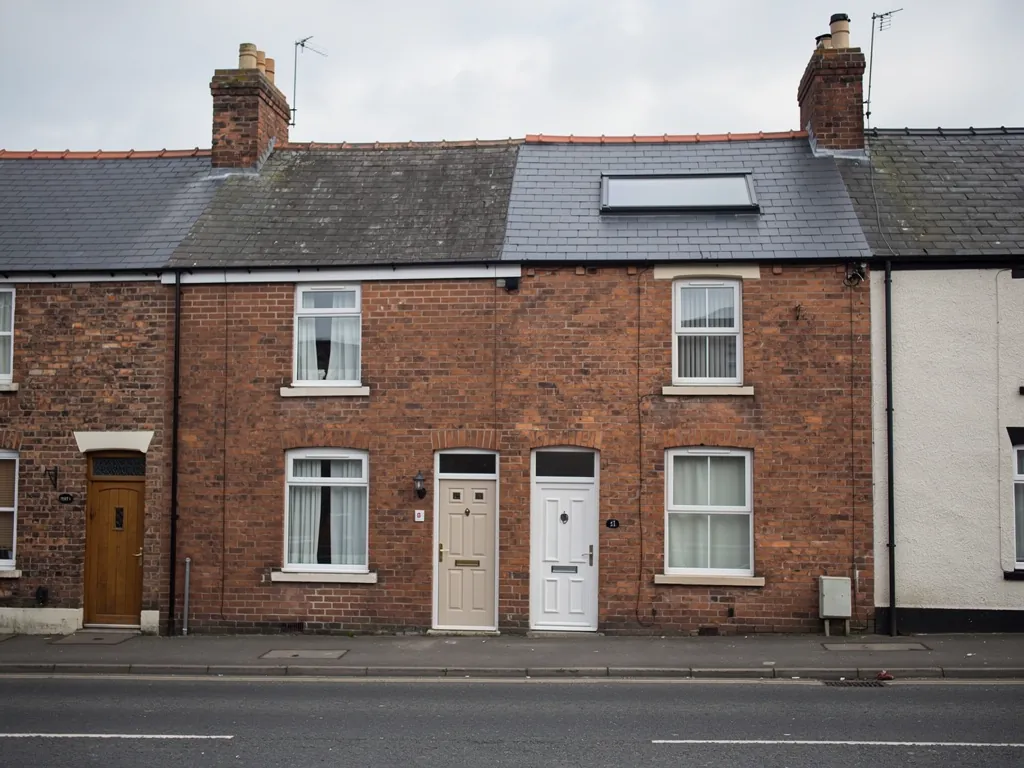
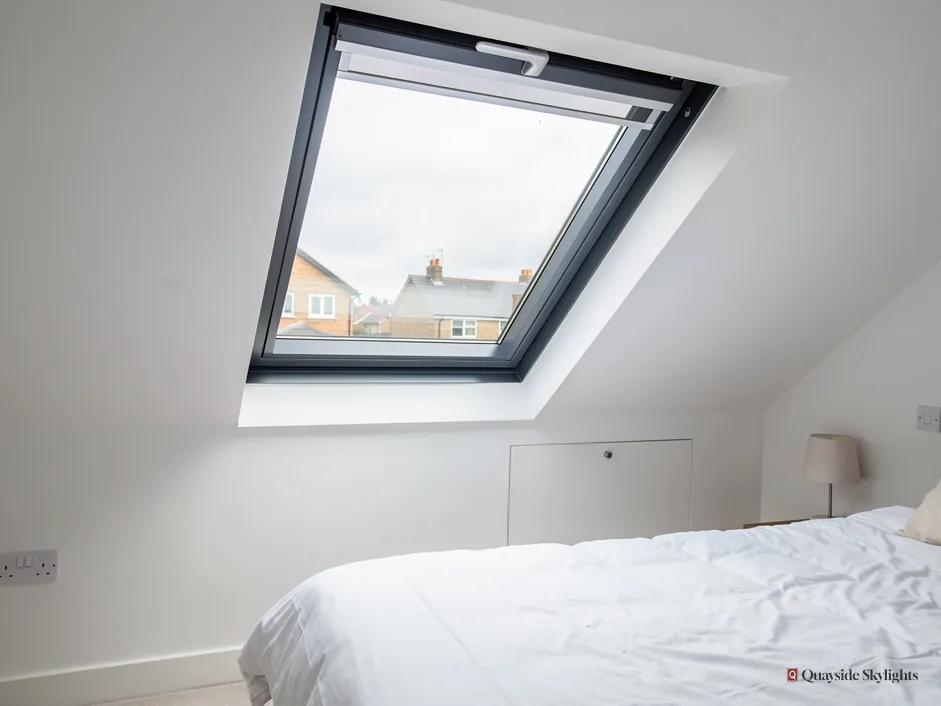
Landings and inner rooms that have never had daylight
Seaham grew from the late nineteenth century with the harbour and its collieries, and a town built up over those decades holds all sorts of rooms that were planned without a window. A stair landing, a bathroom deep inside the house and a box room behind the kitchen are typical examples. Overhead glass reaches them through the roof, and the right kind depends on what sits above each ceiling.
The rooflights available for Seaham homes
From the shortlist below, we recommend one only after seeing your roof. Roof lanterns, Flat roof rooflights, Roof windows, VELUX windows, Electric rooflights, Energy efficient rooflights, Misted rooflight replacement, Walk-on rooflights, Conservation rooflights, Sun tunnels.
Seaside town, permission to finish
Who says yes, what you live in, which tube or pane, and how the job runs
Four questions in a Seaham sequence: which council and which kind of ownership decide whether you may proceed, how your type of home changes the answer, how a sun tunnel reaches an inner room, and what the survey and fitting involve.
Whose permission do I need for a new skylight in Seaham?
Short answer
Durham County Council grants any planning permission or listed building consent. Beyond the council, whoever owns the roof can say yes or no: that is you on a house, and may be a neighbour or a freeholder on a flat.
Two parties can stand between you and a new skylight: the council and the owner of the roof. It pays to think about both from the start.
The council
Seaham sits in the area of Durham County Council, the body that deals with planning for a new rooflight here. Whether you need to apply to it at all depends on your home. A rooflight on an ordinary house mostly falls under permitted development, within limits. Our planning guide covers those limits and the cases where they stop applying, so they are not repeated on this page.
Flats follow a different track. A flat has no householder permitted development, so Durham County Council must grant consent before a new rooflight goes in. A listed house keeps its permitted development on the planning side, but nearly any rooflight on it needs listed building consent, and the outcome of that application decides the job.
The owner of the roof
Tenure is the second gate. On a house of your own there may be nobody else to ask, though your deeds are worth a glance. In one flat of a building holding two or more, the roof might be held by a different party, or jointly, and your title or lease will say. The same document records whether a neighbour or a freeholder must agree to any work. Read it, and talk to them, ahead of any order.
What a lease means in law is not ours to say, and we do not guess. What we can do is tell you which clauses to look for and what a plan has to show for them to be satisfied.
Why the order matters
Asking the council first and the neighbour second, or the other way round, wastes time if either says no. So we suggest finding out about the roof owner before the drawings are made, and about the council before the order is placed. That sequence costs nothing and keeps a refusal from landing after money has been spent.
A rented home
If you rent, the first conversation is with your landlord, because work on the roof is a decision for whoever holds the property. A landlord who wants a brighter building may welcome a quote for it. We are glad to send one to either of you.
Does the kind of home I live in change what I can do?
Short answer
Yes. Houses, upstairs flats, downstairs flats and listed buildings each have their own route, and sometimes their own roof owner. The table sets them side by side so you can find your row.
We do not assume a house type from a town's name or from its history. Find your own type of home among these rows to see where you stand.
How to read the table
Each row is a type of home. The middle column says what sort of permission the council side asks for. The right-hand column gives the thing worth settling before you spend anything. Neither column replaces a survey, because the details on your roof can still change the plan.
Houses of every shape
Whether it is a terrace, a semi-detached house, a detached house or a bungalow, a house is treated alike when it comes to the permitted development route: the same national limits apply, and the question is only whether your roof and rooflight fit within them. The exact limits are in the planning guide, where the details that change the answer sit.
Flats above and below
A Tyneside flat is a pair of flats, one upstairs and one down, each with its own front door. The same split can happen in any building, including a house later converted into flats. For roof work, the upstairs flat sits nearest the roof, but who holds the roof is answered by the lease or title, not by where the flat sits. Both halves need planning permission for a new rooflight.
Roofs with a condition attached
An Article 4 direction, or a condition on an earlier planning permission, can take permitted development away from a house. We cannot tell you from outside whether your address has one, and we never guess. The council can say, and the planning guide shows how to ask.
| Your home | What the council asks | Settle this first |
|---|---|---|
| A house of any shape | Mostly nothing, if the work stays inside the permitted limits | Whether an Article 4 direction or old condition applies |
| Upstairs flat | Planning consent, sought from Durham County Council | What the lease says about the roof above you |
| Downstairs flat | Planning consent, also sought from Durham County Council | Whether the roof is yours at all, and who else must agree |
| Listed house | Listed building consent, which decides the job | Apply for consent before ordering any glass |
| Rented home | Depends on the type of home | Written agreement from your landlord |
Would a sun tunnel brighten a Seaham stairwell or windowless bathroom?
Short answer
Yes, where a tube can run from the roof to the ceiling. A dome gathers the daylight, and a mirrored tube brings it through the loft to a diffuser in the ceiling. It suits a stair landing, a hall or a bathroom lacking an exterior wall.
If your dark room is buried inside the house, lacking an outside wall and sitting under a loft, a full roof window may be the wrong tool. A sun tunnel suits that situation well.
How a sun tunnel works
A small clear dome on the roof gathers daylight. A tube lined with a reflective surface runs from the dome down across the loft void. At the bottom, a flat or domed diffuser set in the ceiling spreads the light across the room. You see a ceiling light that glows during the day and needs no switch. There is no view out, which makes it a good match for a bathroom.
Straight or bent
Light drops off as a tube gets longer or bendier, so short and straight wins. Rigid tubes pass the most. Flexible ones can swing past a joist or a pipe, delivering a little less light at the far end. At the survey we measure the whole drop, dome to diffuser, and spot anything in the way. Our sun tunnels hub shows how far a tube can go and what the choices are.
Landings and stairwells
A stair landing is easy to overlook, and it is often the darkest space in a home. A sun tunnel there lights the whole stair and the doors off it. On a Tyneside flat, a tunnel through a roof that belongs to someone else needs their agreement and planning permission from Durham County Council.
Bathrooms and boxrooms
A sealed bathroom with only an extractor fan gains daylight without a window and without losing privacy. A boxroom used for a desk or a wardrobe does too. Add a ventilation fan or a ceiling light if you want both, since a tunnel brings no fresh air.
Where the room is under a flat roof, not a pitched one, we use a tunnel with a flat-roof base, or a fixed rooflight if the room is large enough to take one.
What happens at the survey, and what does the fitting involve?
Short answer
We visit free of charge, examine the roof inside and out, measure, and write you a fixed quote. At fitting we open the roof, set the unit, make it weathertight and finish the ceiling, and a ten-year written guarantee covers the workmanship.
The work is in two parts, and you hold the decision between them. We survey and quote first. Fitting only follows if you accept.
The survey
The visit is free and comes before any price. We study the roof covering and structure, going up into the loft and looking from outdoors too. We find the position of the rafters, measure the opening and the room, and note which way the slope faces. For a sun tunnel we also measure the run through the loft. We ask about ownership, listing and any planning history you know of. All of that feeds a quote, written down at a fixed figure, which only moves if the work does.
Fitting
Fitting starts when the roof covering is lifted where the unit will go, the structure is trimmed if needed, and the unit is set in place and made weathertight. For a roof window, flashings are fitted to suit the covering. For a flat rooflight, the upstand is built to the manufacturer's height, commonly around 150mm above the finished roof. For a sun tunnel, the tube is run and the diffuser is fixed. The ceiling and reveals inside are finished around the opening.
Afterwards
Where the work is notifiable, we handle the Building Control notification, through the local authority or a registered building control approver. When the installation is done our workmanship carries a guarantee on paper for ten years. You can read how the cover works on the guarantee page, and see what moves a price on the costs page.
If you are weighing up the villages nearby, our Murton page covers the neighbouring area.
Have these ready for the survey
- The room you want lit and a note of how you use it
- Whether the home is a house, a flat or listed
- The paperwork for your flat, if you own one
- Access to the loft or roof space above the room
- Any earlier planning papers for the property
Seaham queries, answered one by one
Is it Durham County Council that handles planning in Seaham?
Yes. Seaham is covered by Durham County Council, and that is where an application for a flat, or listed building consent for a listed house, would go. Ordinary houses often proceed under permitted development, so no application is needed.
Will a sun tunnel light a landing with no window?
Yes, if there is a clear line down from the roof to the landing ceiling. We measure that at the survey. A short, straight tube works best, and a flexible one can get round an obstruction if needed, with slightly less light reaching the bottom.
I rent in Seaham. Can I ask for a skylight?
You can ask your landlord. Work on the roof is their decision, so they have to agree and, where needed, make any application. We can survey the property with their permission and send the quote to either of you.
Does a flat above another flat need agreement from anyone?
Possibly. The wording of your lease or title settles who holds the roof, and which neighbours must consent. Read it first, then raise the plan with that owner. Whatever it says, the council still has to grant planning permission for a rooflight on a flat.
What should I send to get a survey booked?
Tell us the address, the sort of dwelling it is and the room, by WhatsApp on 07880 284133 or by email to info@quaysideskylightsnewcastle.co.uk. A photo of the room helps. The quote page offers a form as another route. The visit costs nothing.