Hetton-le-Hole: sun tunnels, skylights and rooflights for local homes
Hetton-le-Hole is a town in the City of Sunderland, 15.8 road miles south-east of Newcastle. We begin with who decides on a rooflight where you live, then match the product, often a sun tunnel, to the room.
Inner rooms that daylight forgot
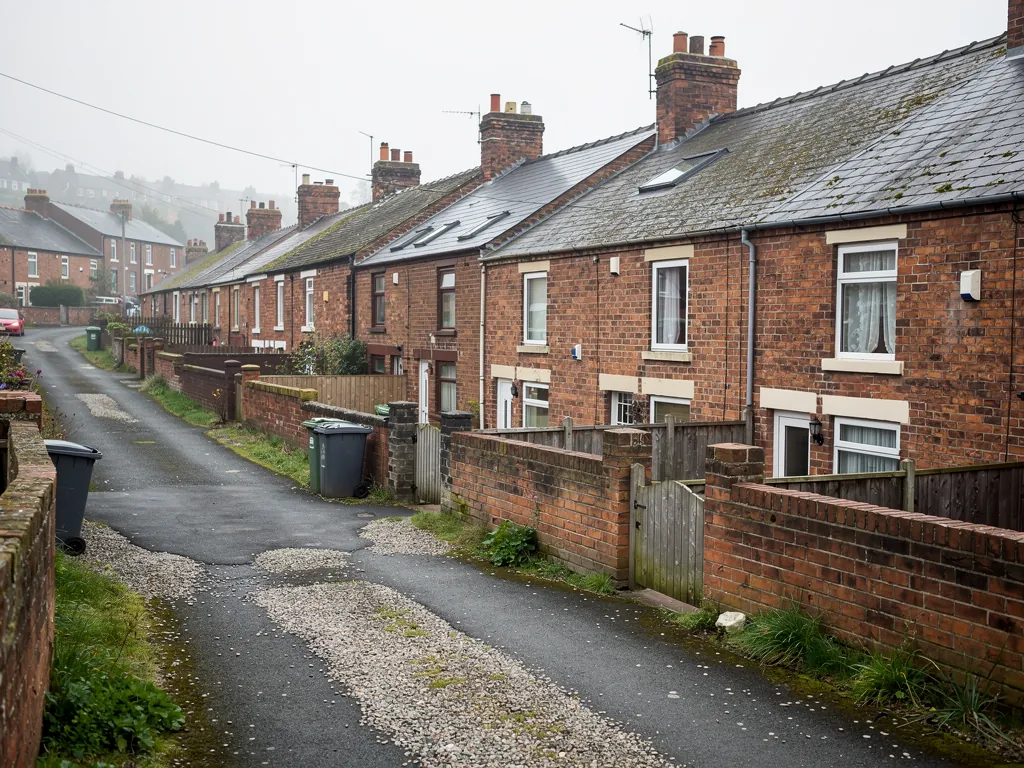
Hetton-le-Hole was a mining place in its own right by the 1890s, and today's homes are the product of everything built and rebuilt since. Whatever the age of yours, a floor plan may leave a landing, hall or bathroom without any outside wall. Those rooms are where a sun tunnel or a small rooflight does the most, because the roof can reach what the walls cannot.
Rooflights available across Hetton-le-Hole
We choose between them on a free survey, never from a catalogue page. Roof lanterns, Flat roof rooflights, Roof windows, VELUX windows, Electric rooflights, Energy efficient rooflights, Misted rooflight replacement, Walk-on rooflights, Conservation rooflights, Sun tunnels.
Hetton-le-Hole, in order
Permission, house, product and the day on the roof
Four steps frame a Hetton-le-Hole job: the authority with the say, the houses of the town, the product for an inner room, and the survey and fitting that deliver it. One question covers each step.
Whose approval does a Hetton-le-Hole rooflight need?
Short answer
Sunderland City Council is the authority here. On a house, a rooflight generally falls within permitted development; on a flat, the council must grant planning permission. Listed status brings a consent of its own. Who owns the roof is a separate question.
Hetton-le-Hole is a town in the civil parish of Hetton, and it lies in the City of Sunderland. Planning and listed building consent go through Sunderland City Council, and not Durham County Council.
Houses
Most rooflights on houses fall under permitted development within set limits, so no application is needed. We do not rehearse those limits on this page. Our planning permission guide sets them out and shows what can remove the allowance from a particular house. Where a house is on the statutory list, almost any rooflight calls for listed building consent from the council, and that consent settles the job.
Flats
A flat has no householder permitted development. A flat of any kind, whether above, below, in a block, in a split-up house or over a shop, sends a new rooflight through Sunderland City Council's planning process first. That is the general rule, and it holds whatever the product.
Tenure and the roof
Tenure is the second part of the question. If you rent, your landlord decides what happens to the roof, not you. A flat you own comes with a title or lease, and its wording decides who the roof and the cavity beneath belong to and when a neighbour must be asked. Never place an order until you have read it and spoken to the other owner. A table closing this section lines the routes up together.
What to bring to the first conversation
Before we visit, it helps to know three things. Do you own the house or flat outright, or hold it on a lease? Is there a freeholder, a management company or a neighbour with a say in the roof? Has any earlier work been done up there, and is there paperwork for it? None of this needs a solicitor. It only needs you to look at what you were given when you bought the place.
| Your home | Permission route | Speak to first |
|---|---|---|
| A house you own | Permitted development within limits | Our planning guide, then Sunderland City Council if it is unclear |
| A flat you own | Planning permission | The other owner, then Sunderland City Council |
| A listed house | Listed building consent | Sunderland City Council |
| A rented home | Your landlord decides | The landlord, before any survey |
What are the houses in Hetton-le-Hole like to put a rooflight into?
Short answer
We do not assume. The town's mining cottages have mostly gone, and what stands now was built and altered over many years. The survey reads the roof, the ceiling and the loft of your house, whatever period it belongs to.
The history of Hetton-le-Hole is a mining one. By 1896 it was a mining village in its own right, and one part of it was known as the Downs. Rows of miners' cottages stood on Francis Street in the Hetton Downs area. Those have all but gone, and twelve of them were taken down and re-erected stone by stone at Beamish Open Air Museum. That tells you the housing here has changed, and tells us not to assume anything about yours.
What we ask instead
We ask four plain things. House or flat, which is yours? Is the roof pitched, with slate or tile, or flat? Is there a loft, and is it boarded? Which room is dark? Those four answers narrow the field far more than a guess about a decade ever could.
Pitched roofs
A pitched roof over a room in use suits a roof window set in the slope. A pitched roof over a loft that is only storage suits a sun tunnel, with a dome in the slope and a tube down to the ceiling. Which of the two you can have depends on what lies beneath the covering, so we go up and look.
Extensions and flat roofs
A back kitchen or a single-storey addition may carry a flat roof. Such a roof is made of a deck, a waterproof layer and at times insulation, with the rooflight raised on an upstand above all that. Manufacturers commonly set the upstand at around 150mm above the finished roof. The options are walked through on our flat roof rooflights page.
Why the same product can differ
The same room in two houses can need two different answers. One may have a clear run to the roof and the other a bedroom above it. We say so on the survey and write the choice into the quote.
If you have photos of the loft and the roof from outside, send them with your first message. They save time, though we still go up and look ourselves.
Will a sun tunnel suit my landing or windowless inner room?
Short answer
Usually, when there is a loft or thick ceiling void between the room and the roof and a window would mean building a light well. Daylight reaches the room along a reflective tube. A roof window is better where the room sits directly under the slope.
A sun tunnel is a modest device with a clear job. A small dome outside collects the light. A tube lined with a mirrored finish carries it down. A diffuser in the ceiling plate lets the daylight spill across the room. There is no window to open and nothing to see out of, but the room is no longer lit by a bulb alone.
Where it works best
Landings at the top of a stair, halls between rooms, inner bathrooms, utilities and dressing areas are where one makes sense. These are rooms with no outside wall, and often with a loft above. A full roof window there would need a light well built through the loft, with its own framing and lining. A tube avoids that.
Rigid and flexible tubes
Rigid tubes carry more light for their length because their mirrored sides keep the light moving. Flexible tubes bend around joists and pipes in the roof void, but lose more light on the way. The choice depends on how clear the run is. Our sun tunnels page compares them in more detail.
When a roof window wins
Someone wanting a view, ventilation or a proper bedroom is better served by a roof window. A room beneath a flat roof is for a flat rooflight.
Asking which product is best in general gets you nowhere. Ask what sits over the ceiling and how far the light must go.
Glass, warmth and the ceiling beneath
A sun tunnel is a small opening, but it is still an opening in an insulated envelope, so the product has to meet the same Part L limit as other rooflights: 2.2 W/m²K. A roof window has a tighter limit of 1.4 W/m²K, or WER Band B. The cold side of the tube counts alongside the bright side, so the survey looks at how the run passes through the loft insulation.
Before you decide on a sun tunnel
- Is there a clear run in the loft between the roof and the ceiling
- How long is the run, and does it need to bend
- Do you want fresh air in the room, or only brightness
- Is the room above, below or beside a bedroom
- Would a light level that varies with the weather suit the room
How do the survey and fitting unfold for a Hetton-le-Hole house?
Short answer
No money changes hands for the survey, and no price is named before it. What follows is a quote, fixed and in writing, which stands unless the work itself changes. We handle the Building Control notification where it applies, and the 10-year workmanship guarantee comes in writing.
A job here follows the same shape as anywhere in our area, and it starts with a visit that costs you nothing.
At the survey
We go to the room, then the loft or the ceiling void, then the roof. Covering, structure beneath and the path of any tube all come under our eye. Your plans for the space come first, and then we go through glass, dimensions and any opening mechanism. At the end you have a clear idea of what is possible and what each choice involves.
The quote
The written quote that follows is fixed. Product, dimensions, glass and labour are each named in it. Only a change to the job alters the figure. The costs page shows which details raise or lower a quote, in case you want that before asking.
Fitting
Putting in a sun tunnel is lighter work than a roof window. It needs a modest opening in the roof, the tube run through the void, and a ceiling diffuser. A roof window means a larger opening, framing round it, a flashing kit and a lined reveal inside. Whichever it is, we handle the Building Control notification where the work is notifiable, with the local authority or a registered building control approver.
Afterwards
In writing you are given a ten-year guarantee on the workmanship. If the roof is shared, you will already have spoken to the other owner before the order, and that is the best time to do it.
The neighbouring towns of Houghton-le-Spring and Easington Lane are inside our area too. See our Houghton-le-Spring page if you live nearer there.
Choosing a day
Roof work depends on dry conditions, and you may need the floor beneath the opening cleared of furniture. Decide who will be at home and which rooms must stay usable, and tell us at the survey so the plan fits your week.
Hetton-le-Hole queries in short
Does Durham County Council cover Hetton-le-Hole?
No. Hetton-le-Hole is in the City of Sunderland, 15.8 road miles south-east of Newcastle, so Sunderland City Council is the authority. For a flat's planning application or a listed house's consent, Sunderland City Council is who you write to.
Can a sun tunnel light a bathroom with no outside wall?
Yes, as long as the loft above it allows a clear run for the tube. Rigid tubes lose less light than flexible ones, and the diffuser in the ceiling spreads the light. Nothing else is needed in the room beyond that.
I rent my house. Can I ask for a rooflight?
You can ask, but the landlord decides what is done to the roof and the ceiling. If the landlord wants to go ahead, we survey as usual and send the fixed written quote. The planning rules for a house or a flat apply in the same way.
What does a sun tunnel cost compared with a roof window?
We never give figures without a survey. A sun tunnel opens a smaller hole than a roof window, which tends to make it lighter work, though run length and roof covering each shift the quote. Visits are not charged, and our quotation afterwards does not float.