East Rainton skylights and rooflights, with the permissions sorted first
East Rainton is a village 14.7 road miles south-east of Newcastle, alongside the A690 between Sunderland and Durham. What sort of home is it, and which room lacks light? Those two answers are enough to begin.
The extension at the back that nobody can see into
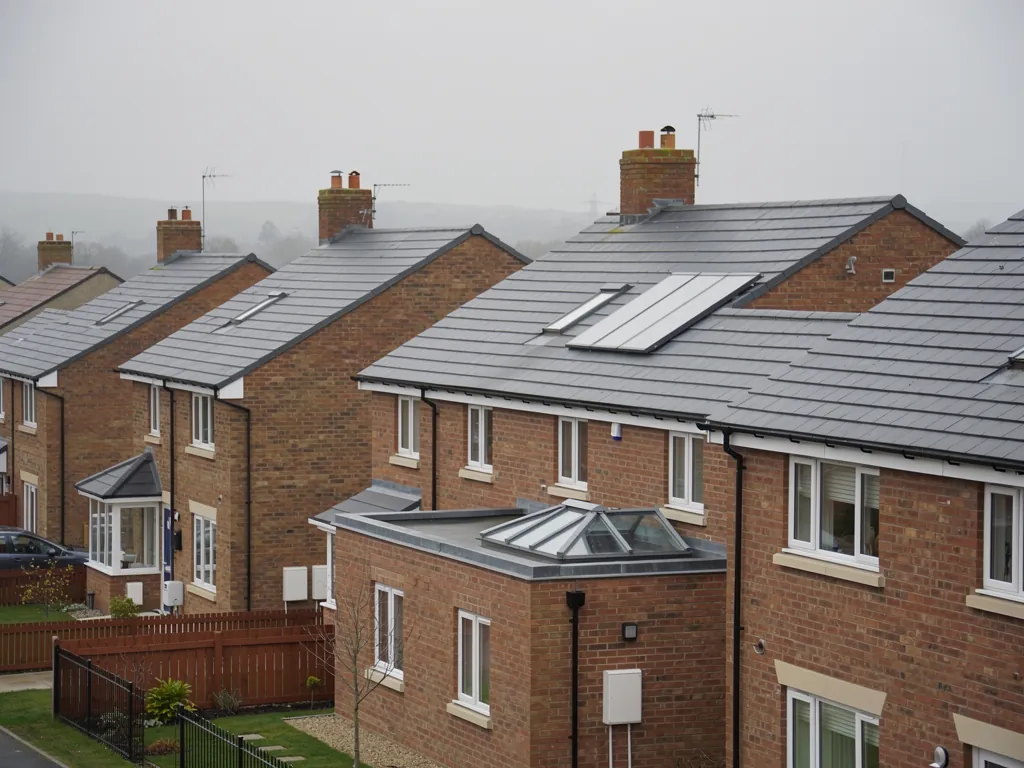
A village home often grows backwards. A kitchen, a utility or a dining room gets added behind the original walls, and the new room ends up deep in the plan with its only window facing a fence. Its roof is usually flat, which suits a rooflight well. What decides the job is the make-up of that roof and who has to approve a change to it.
Rooflights available in East Rainton
Our range, with the choice made after we have seen your roof. Roof lanterns, Flat roof rooflights, Roof windows, VELUX windows, Electric rooflights, Energy efficient rooflights, Misted rooflight replacement, Walk-on rooflights, Conservation rooflights, Sun tunnels.
East Rainton, permissions first
Permission, house, glass, then fitting: East Rainton in four steps
People often ask about glass before they ask about permission, and then discover the order should have been the other way round. We start with who decides in Sunderland, move through the homes and the glass, and finish with what the survey and the fitting are like.
Who has the final word on a new rooflight in East Rainton, the council or me?
Short answer
The type of home sets the answer. For a house you usually decide within national limits. For a flat, Sunderland City Council decides by planning application. For a listed house, listed building consent decides.
East Rainton sits in the Sunderland district of Tyne and Wear, and it belongs to the parish of Hetton, so the council that matters for planning is Sunderland City Council. Everything else about the job follows from the type of home you own.
Owning a house
If the property is a house, a new rooflight usually falls within permitted development, within limits that are set nationally. In the ordinary case there is no application to make. The exceptions are houses where permitted development has been removed by an Article 4 direction, or by a condition attached to an earlier planning permission. The national limits are covered in the planning guide, which we suggest reading alongside this page.
Owning a flat
A flat is different. Householder permitted development does not cover flats or maisonettes, so a new rooflight in the roof above one needs planning permission, and Sunderland City Council is the body that grants it. This applies equally to the upstairs and downstairs halves of a Tyneside flat. The upper flat is the one with the roof in question. Its lease or title documents describe how that roof is held and whether the other owner has a veto. Look them up before any order.
A listed home
A listed house keeps permitted development on the planning side, though almost any rooflight on it needs listed building consent, and that consent decides the job. If you have any doubt about whether your house is listed, settle that before you ask for a quote.
Why this comes before the glass
A rooflight bought before permission is checked can turn out to be the wrong one, or one that cannot be used at all. Checking first costs nothing and keeps the order simple.
| Your home | What applies | Who to talk to |
|---|---|---|
| A house | Permitted development within national limits | Nobody, unless an Article 4 direction or old condition applies |
| Either half of a Tyneside flat | Planning permission | The neighbour who shares the roof, then Sunderland City Council |
| Any other flat or maisonette | Planning permission | The freeholder or landlord, then the council |
| A listed house | Listed building consent | Sunderland City Council, before any order |
How does the type of home I live in change the way a rooflight is fitted?
Short answer
A house with a loft takes a roof window in the slope, a house with a flat extension takes a rooflight in the deck, and a flat shares its roof with another owner. The structure above your room decides the method.
Nothing about a village stops it having homes of every build, and we never assume which one yours is. We ask, look and measure. These are the types of roof we meet and what each means for the work.
Roofs with a loft
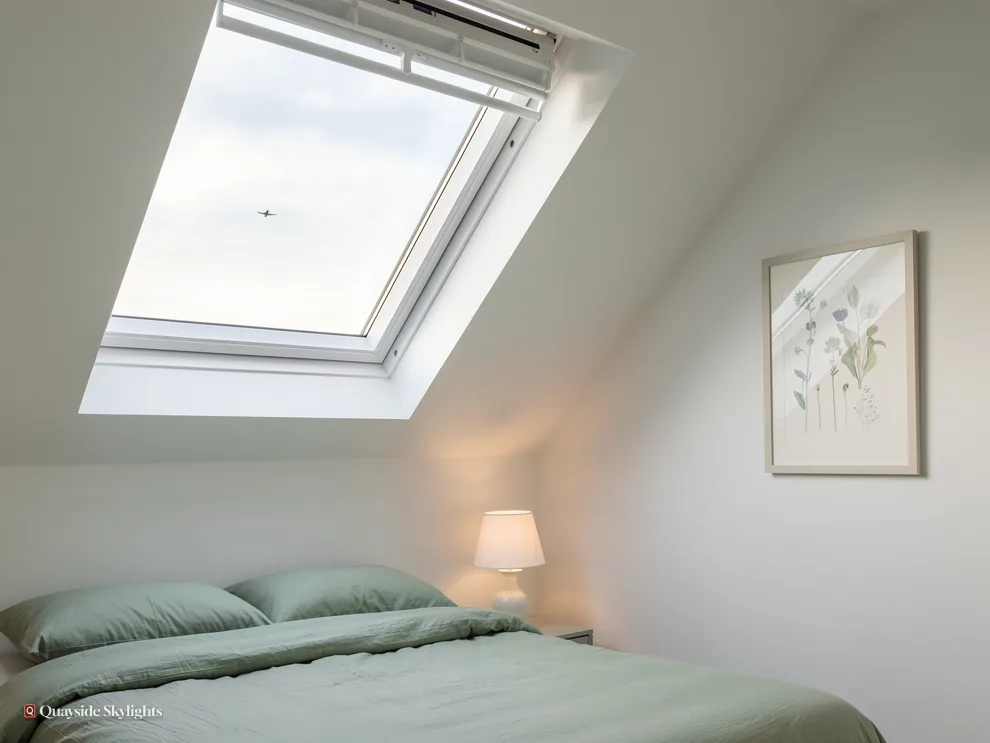
If your home has a pitched roof with a loft or room-in-the-roof, the slope is the place for a roof window. The window is cut between rafters, flashed to the covering and lined inside. The roof void deserves as much attention as the outside, because pipes, wiring and old boarding can sit exactly where you want the opening.
Roofs with no loft
A single-storey home, or a single-storey part of one, may have a shallow slope or a ceiling directly under the roof. A rooflight there is cut through a shorter build-up of timber and insulation, and the finish indoors is simpler, though the roof is closer to the room underneath, so the quality of the sealing matters more.
Flats
A flat has an owner above or below, and sometimes a freeholder as well. The roof may belong to one owner, to both, or to someone else entirely. Your title or lease says which. It also says whether work to the roof needs the agreement of the other owner. Please look before we visit, so that the survey can plan around the answer. We never state who owns what as a rule, because it differs from building to building.
Extensions and add-ons
A rear extension, a porch or a side addition is usually built differently from the house it was added to. Its roof may be flat, lean-to or low pitched, and the timber may have been sized for the span and nothing more. The next chapter looks at these roofs, because a rooflight over an extension is a common request.
The same checks apply a short drive away at Houghton-le-Spring and Hetton-le-Hole.
Which rooflight suits the flat roof over my back extension or outrigger?
Short answer
A flat rooflight on an upstand or a roof lantern, set on a roof with a proper fall and sound waterproofing. The upstand height, the fall and the age of the membrane decide which, so we check all three.
A flat roof behind the main house, whether over an extension or a narrow rear wing, is easy ground for adding daylight, and the details decide whether it stays dry.
What the roof must provide
A flat rooflight stands on an upstand, and manufacturers set minimum heights for that kerb, commonly around 150mm above the finished roof. Water has to be able to leave the roof, so the surface needs a slight fall toward a gutter or outlet. The membrane that waterproofs the deck must be in good condition where it meets the upstand. We look at each of these at the survey. You can read more about them in the guide to flat rooflights on a back extension.
Lantern or low rooflight
A lantern is a glazed crown that rises above the flat roof, and it brings light into the room from several sides. It suits a larger extension with a high enough ceiling to show it off. A low rooflight sits closer to the deck, suits a smaller room or a narrow passage. Fixed units give light alone. Opening units also let steam from a kitchen or a utility leave the room. See flat roof rooflights for the full range.
Choosing the glass
A south-facing flat roof can run hot, so a solar control pane or a blind earns a place in the plan. A north-facing one gives gentle, even light, and clear glass is usually enough. Inner panes over rooms are laminated.
The outrigger case
If your house has a narrow rear wing, the roof over it may be small and may share a wall or a gutter with the neighbour. We check the party wall and the drainage before proposing a unit, because water that cannot leave the roof is behind the worst problems a flat roof can have.
Can you walk me through the survey and the fitting day at my East Rainton house?
Short answer
Nothing is charged for the survey, which takes in the room, the loft or roof void and the outside of the roof. After it comes a written quote at a fixed price. Fitting means cutting the opening and setting the unit, and our 10-year guarantee is put in writing.
A first rooflight is unfamiliar territory, so here is the path from enquiry to finished room.
The survey
One of us comes to the house, studies the room you want lit, climbs into the roof space if there is one and examines the roof from outside where that can be done safely. Measurements follow for each opening that might work, with a note of anything obstructing it. You are not charged, and a price is not discussed until afterwards.
The quote
Then comes a quote on paper, giving one fixed price. Only a change to the job moves it: a bigger unit, say, or a second window. The costs page describes in plain words what moves a quote up or down.
Notification and permission
A new roof opening is notified to Building Control, which means Sunderland City Council or a registered building control approver. Where the work is notifiable, the paperwork is ours to send. If planning permission or listed building consent is required, it must be in place first.
On the day
Fitters open the roof, seat the unit and weather it with flashings made for your covering, then form the lining around the opening indoors. Over a flat roof the unit goes onto its upstand and is bonded to the waterproof layer. Clear the area underneath beforehand so work can begin straight away.
Planning the day
Fitting a rooflight is a day of noise and movement overhead. If the opening is above a stair, a landing or a bedroom, think about where furniture, flooring and belongings will sit while the roof is open. In a kitchen, clear worktops under the opening. Tell us about pets, small children or anyone who works from home, because a fitting day goes more smoothly when everyone in the house knows what is planned.
After the work
Once we leave, our fitting stays under a 10-year guarantee that you hold on paper.
Before the survey visit
- Decide which room you want lit, and be ready to show it
- Find your title or lease if you own a flat
- Make sure we can get into the loft or roof space
- Note any earlier planning conditions on the house
- Think about whether the room needs opening glass
East Rainton puzzles, one at a time
Is East Rainton covered by Sunderland City Council?
Yes. East Rainton is in the Sunderland district, so Sunderland City Council deals with planning questions and is one of the options for the Building Control notification. We confirm which route applies to your address at the survey.
Can I put a rooflight on a flat roof extension without planning permission?
On a house, usually yes, inside the national limits our planning guide describes. A flat is the opposite case: permission is needed. A house under an Article 4 direction or an old planning condition may also need an application, and the survey is where we sort that out.
Do you work near Houghton-le-Spring and Hetton-le-Hole?
Yes. Both are close to East Rainton and within our area. Wherever the address, the route is the same: survey free of charge, then a quote fixed in writing, with the right council in the picture. Details for the first are on the Houghton-le-Spring page.
Will my flat roof rooflight leak?
A well-chosen rooflight set on a proper upstand and sealed into a sound membrane is built to keep water out. The roof needs a slight fall and the details need to be right, which is what the survey is for.
What does the survey cost?
It is free. A quote comes afterwards, in writing and at a price that holds unless the job is altered. To begin, fill in the quote form or message 07880 284133 on WhatsApp.