Skylights and rooflights in Crawcrook, fitted to the house you have
Crawcrook is a Tyne Valley village, 8.1 road miles west of Newcastle. Whether you want a first skylight over a dark landing or a fresh rooflight where an old one has clouded over, we survey the house first.
An old pit village, and a roof that has seen weather
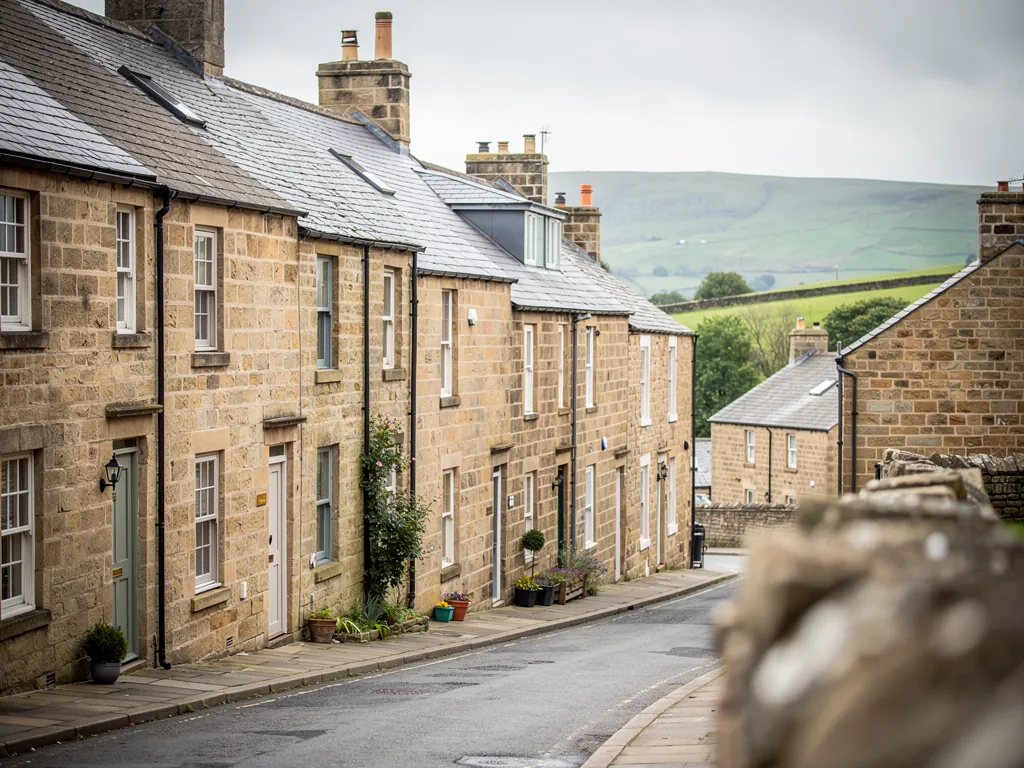
Crawcrook grew as a coal mining centre, with pits such as Emma and Clara, and some of the old miners’ homes still stand in the surrounding area. Houses that old have often had a rooflight added in a later decade, and that unit may now be cloudy, cold or stiff. A neat swap, or a first opening in a plain slope, starts with reading the roof you actually have.
Roof glazing we put in around Crawcrook
Every one follows a free survey, and each is picked to suit the slope or flat roof above your room. Roof lanterns, Flat roof rooflights, Roof windows, VELUX windows, Electric rooflights, Energy efficient rooflights, Misted rooflight replacement, Walk-on rooflights, Conservation rooflights, Sun tunnels.
Crawcrook rooflights
Before the ladder goes up: a village guide to light from above
Crawcrook homeowners usually want four things settled in turn: the room, the roof, the permission and the day itself. Each question below takes one, from the first gloomy landing to the finished lining.
Which room in my Crawcrook house is crying out for daylight from above?
Short answer
Start with whichever room needs its light on at noon: a stair landing, a bathroom, a bedroom in the loft, a kitchen at the back. The roof above it, and what lies beneath that roof, decides which kind of rooflight can go there.
Walk round the house on a bright morning and watch for where the lights are still on. In an older village house that is usually the middle of the plan: a landing, a hallway, a bathroom wedged between two bedrooms. Rooms like these have no outside wall to hold a window, so the only way daylight arrives is through the roof.
Landings and hallways
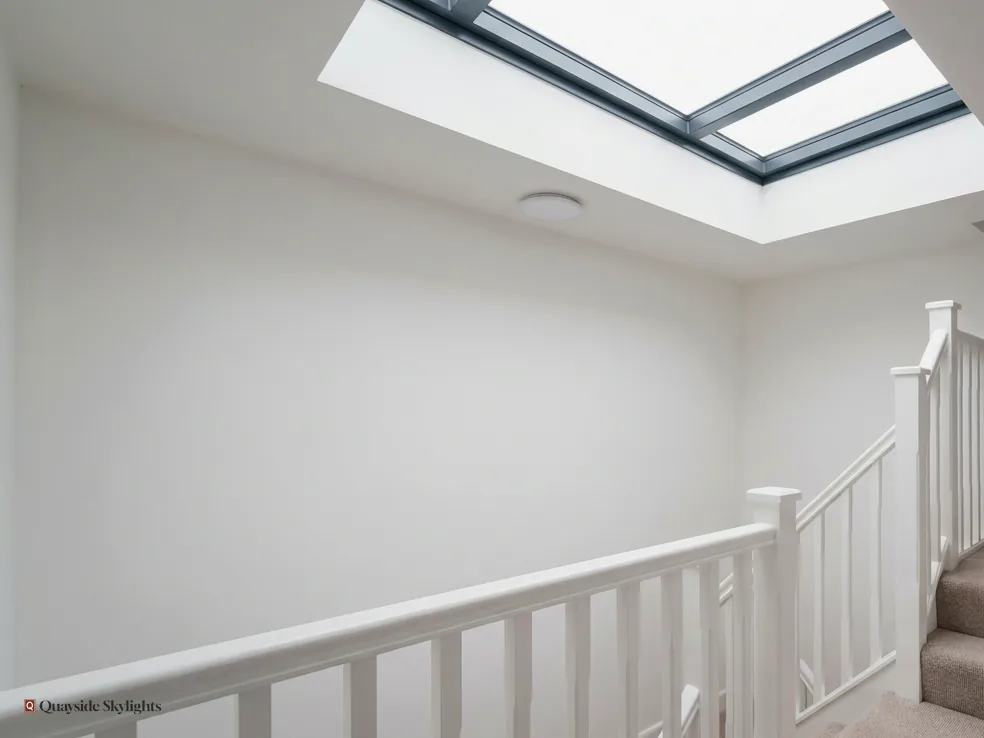
A stair landing is the classic dark spot. If the roof above it is pitched and the loft is unused, a roof window can sit in the slope with a short light shaft below it. If the loft is boarded for storage, we look at how the boards and joists run before suggesting anything. A narrower unit will often do the job better than a wide one, because the aim is a bright stairwell, not a hole in the ceiling. The same thinking applies to a hallway stretching front to back with a single door at one end: light from above can reach the far end, where nothing from the street ever will.
Bathrooms and kitchens
A bathroom with no window stays damp, because steam has nowhere to go. Open the skylight and the steam goes out, and a rain sensor will shut it again if a shower blows in. The kitchen at the rear, particularly one in a newer extension, may sit under a low-pitched or flat roof, and a lantern or flat rooflight there drops daylight onto the worktops. Over a sink or hob, the position matters more than the size, so we mark it out from inside before anyone looks at a catalogue.
Loft rooms
Where you already sleep or work up in the roof, a roof window is part of making that room a proper one. We measure the floor to the ridge, the position of the rafters and the head height, so the window sits where you can see out of it when standing or sitting. A room that is cramped by the slope of the roof can feel twice the size once daylight arrives from overhead.
Reading the roof, not the postcode
Crawcrook has a mix of older and newer roofs, and we do not assume one from the address. At the survey we go up, look at the covering, count the rafter spacing, and tell you plainly what the room can take. Then the choice of product is easy.
Spot the room that needs a rooflight
- Turn the lights off around noon and see which rooms stay gloomy
- Look for a room with no outside wall: landing, hall, inner bathroom
- Check whether the space above the ceiling is a loft, a void or a flat roof
- Note any room where steam or cooking smells linger after a shower
- Picture where the light should land: the stairs, the sink or the bed
Which glazing goes with the roof above my dark room?
Short answer
Sloping roofs take roof windows, flat ones take flat rooflights or lanterns, and a cramped room with a deep loft above suits a sun tunnel. The survey confirms which of these the structure allows.
Product choice follows the roof, not the other way round. Before we talk glass, we look at what you have: a sloping covering, a flat membrane, or something in between such as a low-pitched lean-to. Each one calls for a different way of keeping water out.
Pitched roofs: roof windows
On a sloping roof the usual answer is a roof window, a frame set into the slope with flashings around it so water runs off cleanly. Our roof windows page covers the pivot and top-hung styles and how they differ in use. Size codes tell you the frame width and height, so a unit can be matched to the gap between rafters and cut around as little timber as possible. A good fit means fewer joists trimmed and a tidier finish inside.
Level roofs and their glazing
Over a level roof the glazing stands on an upstand, a kerb raising the frame above the surface. Manufacturers set minimum upstand heights, commonly around 150mm, so the roof covering is dressed up and over it. A lantern adds a raised glazed roof with sloping sides, which brings in light from several directions. On a back extension it can turn a dim kitchen into the brightest room in the house.
Sun tunnels
Where the roof is pitched but the loft is shallow, or the room is small and boxed in, a sun tunnel is a round glazed collar on the roof linked to a diffuser in the ceiling by a reflective tube. It brings daylight without the weight and cost of a full window, though it does not offer a view. It suits a landing or an inner cloakroom well.
What the glass does in winter
Over habitable rooms the inner pane comes laminated, and your choice of glass shapes how the room feels in January and July. We explain the options at the survey in terms of what each does for your room, so you can choose without wading through data sheets.
If the house has a mix of roof types, a front slope and a rear flat extension, say, we may suggest more than one product. Your quote gives every opening its own line, which shows what each piece is there to do.
If my old rooflight has clouded over, what has to be agreed before it comes out?
Short answer
A swap into an existing opening raises fewer queries than a brand new cut, yet your council, and the house-or-flat split, still frame the answer. We confirm what applies, and whether Building Control needs notifying, at the survey.
A rooflight that has misted between the panes, gone grey on the outside or lost its seal is no longer doing its job. Swapping it is often simpler than starting from scratch, because the opening already exists and the roof around it has been cut and flashed before.
Why old units fail
Double glazing is a sealed pair of panes. Once a seal fails, damp enters the gap and the glass stays fogged. Older frames, particularly early plastic domes and thin aluminium ones, also lose heat quickly, which shows up as cold drips on a winter morning. Our misted rooflights page sets out the options when the glass has gone cloudy.
Who decides on a swap
For a house, a rooflight generally falls under permitted development within set limits, and our rooflight planning guide explains where those limits sit. A flat is different. Flats, including either half of a Tyneside flat, have no householder permitted development, so a new rooflight on one needs planning permission, and in Crawcrook the authority is Gateshead Council. If you are not certain whether yours counts as a replacement or a change, ask the council before you order.
Listed houses need listed building consent for almost any rooflight work, and that consent decides the job.
Who holds the roof
Two flats under one roof means two titles or leases, and each should say who owns the roof, plus who has the void beneath it, and whether the other flat has to consent. Check what it says, then talk to your neighbour before any order is placed. A short conversation up front is far easier than a disagreement once a scaffold is booked.
Notification
Cutting a new opening in a roof is building work and is notified to Building Control. Where a swap is notifiable, we handle the notification with the local authority or a registered building control approver. We look at your existing opening at the survey and tell you where the job stands. You are never left holding the paperwork.
What to bring to the survey
Any paperwork you hold about the old unit helps: an invoice, a brand name on the frame, a label on the glass edge. None of it is essential, because we measure everything on site, but it can save time.
What happens between your first visit and the day the new rooflight is in?
Short answer
The survey costs nothing. A fixed quote follows in writing, we fit the unit, any Building Control notification is dealt with, and a 10-year workmanship guarantee is handed over in writing.
The first step is a visit, not a price. A visit comes before a figure, because one product can be easy on one roof and fiddly on the next.
The survey
We study the room, get up to the roof wherever that is safe, and take note of the covering, the structure and the way any existing opening was formed. If the loft is accessible we check the timbers from inside. You tell us which problem you want solved: a dark room, a damp bathroom, a cold old unit. The survey is free and carries no obligation to go ahead.
The written quote
Once we have been up there, the fixed quote arrives in writing. That figure stands unless the job moves on, say because you ask for a different size or glass after agreeing. The costs page lists the factors that nudge a price either way, with no figures attached.
The fitting day
The old unit, if there is one, is lifted out, the opening is prepared and the new frame is set, flashed and sealed to the roof covering. Inside, the lining is finished so the light shaft meets the ceiling cleanly. Before the day, you hear which room will be disturbed and in what sequence.
Afterwards
We handle the Building Control notification where the work is notifiable. On completion you hold the 10-year workmanship guarantee, written down, that stands behind the way the unit was installed. Keep it with the deeds or the house papers, because it is useful when you sell.
To get going, request a survey and say which room, which roof and what type of home you have. That is enough to start, and the rest we read for ourselves on site.
Questions on the day
Ask anything while we work. If the plan has to change because the roof turns out different from the survey, we explain why, put the change in writing and carry on only once you have agreed it.
Our view: once the roof is read, change the clouded unit and let the survey set the size.
Crawcrook rooflight queries answered
Does Gateshead Council or Newcastle deal with a rooflight in Crawcrook?
Crawcrook is in the Gateshead borough, so Gateshead Council is the authority for planning and listed building consent. Newcastle City Council does not decide applications here. The rules are national, though the file for a Crawcrook address sits with Gateshead.
Is a former miner’s home a problem for a roof window?
Not usually. We fit them in older houses, and the survey is where we find out what the roof can carry. We look at the covering, the rafter spacing and the ceiling below, then propose a unit that fits those, not a catalogue default.
My rooflight is clouded between the panes. Do I need a whole new frame?
Not always. Sometimes the glazed unit can be swapped inside the existing frame, and sometimes the frame itself is tired and the whole assembly should go. The survey shows which, and our energy efficient rooflights page shows what a better unit gives you.
Do you work in Ryton and Wylam as well as Crawcrook?
Yes. Neighbouring villages such as Ryton and Wylam sit within the same area we cover, and we survey them in the same way: free, and a fixed price in writing follows the visit.
Who looks after Building Control for the new opening?
We handle it ourselves where the work is notifiable. Cutting a new roof opening is building work, so it is notified to the local authority or a registered building control approver. We deal with that step and tell you when it is done.