Guide
Centre-pivot or top-hung: choosing how a roof window opens
Two roof windows can look identical from the street and behave quite differently in the room. One turns on a middle axis, the other swings out from the top. This guide sets out what each does and which fits which space.
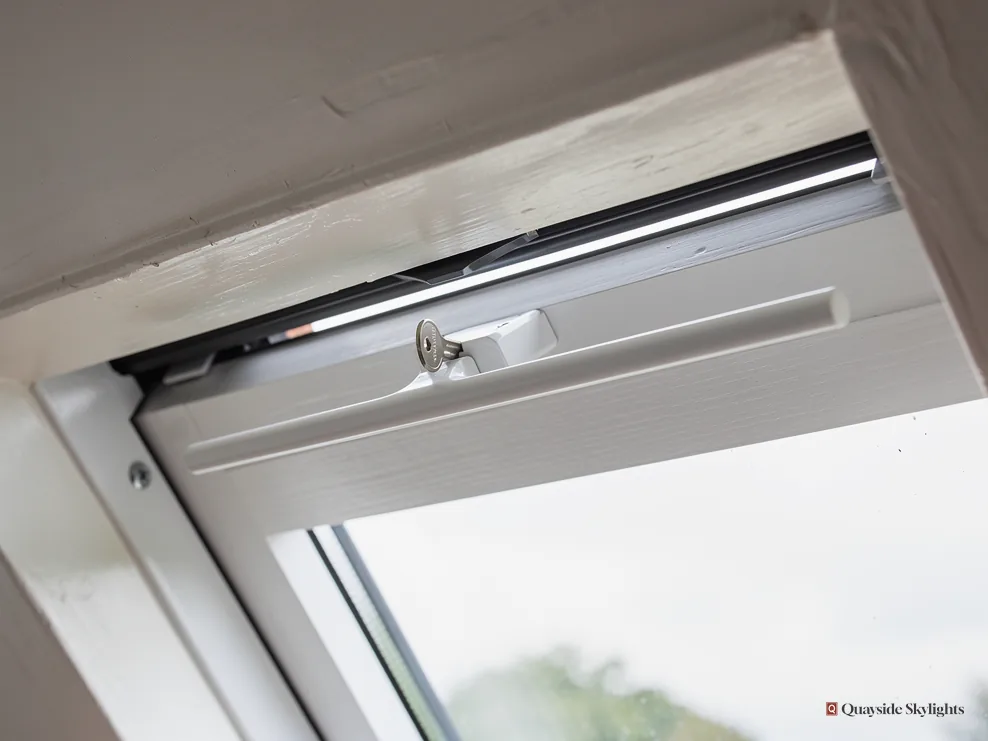
What the two names describe
A centre-pivot sash turns on pins at the middle of its sides, so the lower half swings into the room. A top-hung sash is hinged along the top and swings outwards from the bottom.
The names describe the hinge, which is the one thing that changes how the window feels to use.
Centre-pivot
The sash is held by pivots halfway up its sides. Pull the handle at the top and the window rotates, with the upper half moving out over the roof and the lower half coming into the room. Push it all the way round and it turns through a half circle, which brings the outer pane to face the room.
Top-hung
The sash is hinged along the head of the frame. Lift the bar at the bottom and the sash swings upwards and outwards, like an awning. The bottom edge rises clear of the roof, and the frame stays where it is. On many models the window can be opened a little way for air or pushed further for a view.
Why it matters before you choose
Everything else in this guide follows from that one difference. Where the sash goes when open decides the space needed in front of it, the height of the handle, the view you get and the way you air the room. Both types are ordinary roof windows, glazed to the same standards and fitted by the same method, so the choice is about use, not quality.
A word on the frame
The frame in the roof looks the same either way. What differs is the sash that sits inside it and the hardware that carries it. That is why a window can sometimes change from one type to the other without a new hole in the roof, and why the survey asks about the room before it asks about the product.
How a centre-pivot window behaves in the room
The handle is at the top, so it suits a window set in a roof you can reach under. The lower part of the sash swings in, so furniture below needs a gap.
A centre-pivot window is the familiar shape in loft conversions, and for good reason. It suits a roof room where the window sits at a height you can reach from the floor.
Reach and operation
The handle sits on the upper edge of the sash, which suits a window placed where the top is within an arm's length. That makes it a natural fit for a landing, a stair or a bathroom, where you stand close beneath the glass. A tall person in a low room can find the swing of the lower sash edge in the way, so the position needs planning.
Clearance inside
As the sash turns, its lower half moves into the space under the window. A desk, a wardrobe or a bed head directly beneath it can be struck by the glass, and the opening is best planned with that in mind. A gap between the open sash and the furniture, or a window set a little higher, solves it.
Turning for the outer pane
Because the sash can be rotated fully, the outside face of the glass is reachable from within the room. For a window that cannot be reached from the roof, that is a real benefit. The sash locks in the turned position, and the process is straightforward once you have done it. Some models also include a ventilation flap above the glass, which lets fresh air in while the sash stays shut.
How a top-hung window behaves in the room
It opens outwards from the bottom, so the room keeps its floor space and head clearance, and the view gains height. The handle is at the bottom, easy to reach from a seat.
A top-hung window keeps its movement outside the room, and that is what recommends it in tighter spaces.
Room kept clear
When the sash opens, nothing swings into the loft. A bed, a desk or a chair can sit directly below without being struck, and a person standing under the window keeps their head clear of the glass. That makes it a good partner for the lower part of a sloping ceiling, where the space is already tight.
View and air
Opened wide, the sash lifts and lets you lean out a little, and the view from a seat is better than through a closed pane. Opened a notch, it gives a gentle stream of air along the slope. Both uses suit a bedroom or study.
Limits to know
A top-hung sash cannot be turned to clean its outer face, so the outside of the glass needs another route, such as a long-handled tool or access from the roof where that is safe. In wind, the open sash is more exposed, and a stay or a restrictor helps. Our table sets the two types side by side.
| Point | Centre-pivot | Top-hung |
|---|---|---|
| Handle position | On the top edge of the sash | On the bottom bar of the sash |
| Where the sash goes | Lower half swings into the room | Bottom edge lifts out over the roof |
| Space beneath | Needs a gap for the swing | Stays clear |
| Outer pane | Turns round to be reached from inside | Needs another route |
| Suits | Landings, stairs, bathrooms | Beds, desks, low slopes |
Pitch, height and how they steer the choice
Makers publish the pitch range for each type, and the position of the window up the slope changes how its handle and sash feel. The survey sets both against the real roof.
Neither type suits every roof. Each is made for a range of slopes, and the range is set by the manufacturer, not by us.
Pitch
A shallow slope and a steep slope present the glass at different angles. On a shallow pitch a sash that lifts outwards presents a larger opening to the sky and the weather, and the maker's data tells you which models it supports at your angle. We measure the pitch of your roof at the survey and check the models against it, so the window that goes on the quote is one the maker approves for that roof.
Position up the slope
A window set low on the slope puts its handle and sash within easy reach but puts the view close to the floor. A window set higher gives a long view and plenty of headroom beneath, though the handle may rise out of reach. For a top-hung model the handle is at the bottom, so a high position costs less in reach. For a centre-pivot model a high position can mean a pole or a control.
Headroom
Where a window sits against a knee wall or a slope, the opening sash can clash with the ceiling line or a rafter beam. The depth beneath the glass, from the floor to the sill, is a measurement worth checking against both types. Sill and head heights get their own treatment in the sizes guide for loft rooms.
Fresh air, rain and the closed position
Both types can be left slightly open for air or closed on a trickle vent. A wide-open sash lets rain in, so the choice affects how you ventilate on damp days.
A loft room fills with warm air in summer and with moisture in winter, so how the window ventilates is a practical question.
Everyday airing
Both styles can be held a short way open. Many models also carry a vent in the head, which lets air through with the sash closed and locked. On a wet or windy day that is the setting you use, and the sash can stay latched against the weather.
Wide open
Open fully, a centre-pivot lets the air move through the top of the opening, and the sash catches some of the rain. A top-hung sash acts as a small canopy over the opening, and rain can run in around its sides. Neither suits being left wide open while you are out, and neither pretends to.
Fixed and electric options
A window placed beyond your reach can be motorised, with a sensor that closes the sash when rain starts. What the controls do is covered under electric and opening rooflights. A fixed window is a third choice where air is supplied another way, and a roof room used as a bathroom may want one fixed pane and one opening.
Choosing for your house, and what the rules say
Pick the type by where the window sits and who uses the room. On a side-elevation roof slope of a house, the rules ask for obscure glazing and a non-opening or high-opening window.
With the hinge understood, the choice follows the room. A landing or a bathroom with the window within reach suits a centre-pivot. A bed or desk under the slope suits a top-hung. A room with both needs can take one of each.
On the side slope of a house
A rooflight on a house is permitted development if it projects no more than 150mm beyond the plane of the roof slope and sits no higher than the highest part of the roof. Class C adds a condition for a side-elevation roof slope: the whole window must be obscure-glazed. It must also be non-opening, unless the parts that open are more than 1.7 metres above the floor of the room. That can rule out a window you could otherwise open, and it shapes the choice of type.
Flats and listed homes
A flat or maisonette has no householder permitted development, so a new roof window on a Tyneside flat needs planning permission. A listed house keeps Class C on the planning side, but almost any rooflight on it needs listed building consent. Our planning guide sets out how each case works.
Ordering
Tell us how you use the room, and we draw the type into the quote after the free survey. The quote form is the way in, and the roof windows page lists what else to weigh.
Questions that settle the type
- Can you reach the top of the window from the floor?
- Will a bed, desk or wardrobe stand directly beneath it?
- Is the window on a side-elevation slope of a house?
- Do you want a view from a seat or just daylight?
- Is the outer pane within reach for cleaning?
Opening-style questions, answered
Which opens wider, a pivot or a top-hung?
A top-hung sash can swing out further and tends to give a larger view when open, while a pivot opens through the middle and gives air at top and bottom. Both can be held part open. The maker's data shows the angle for each model.
Can I swap a pivot window for a top-hung one?
Sometimes, if the new window fits the same opening and the maker offers it for your pitch. The flashing kit and the lining may change. We check the opening and the pitch at the survey and say what can be swapped like for like.
Is one safer for children?
Neither is safe without care near an open sash. A restrictor or a stay holds the sash at a set angle, and both types accept one. Keep beds away from a window that opens, and discuss the option when we plan the room.
Which is easier to keep clean?
A centre-pivot, because the sash can be turned to bring the outer pane inside. A top-hung window needs a long-handled tool or roof access. Choose by where the window sits and whether you can reach the glass from within the room.
Does the type change the planning position?
Not on a house, where the 150mm and highest-point limits apply to both. On a side-elevation slope the glass must be obscure and either non-opening or high-opening. On a flat, either type needs planning permission.