Guide
Double or triple glazed rooflights: which suits your roof
Triple glazing adds a pane, a gap and some weight. Whether that is a gain depends on the room under the glass, the frame it sits in and what the roof can carry. This guide goes through each of those in turn.
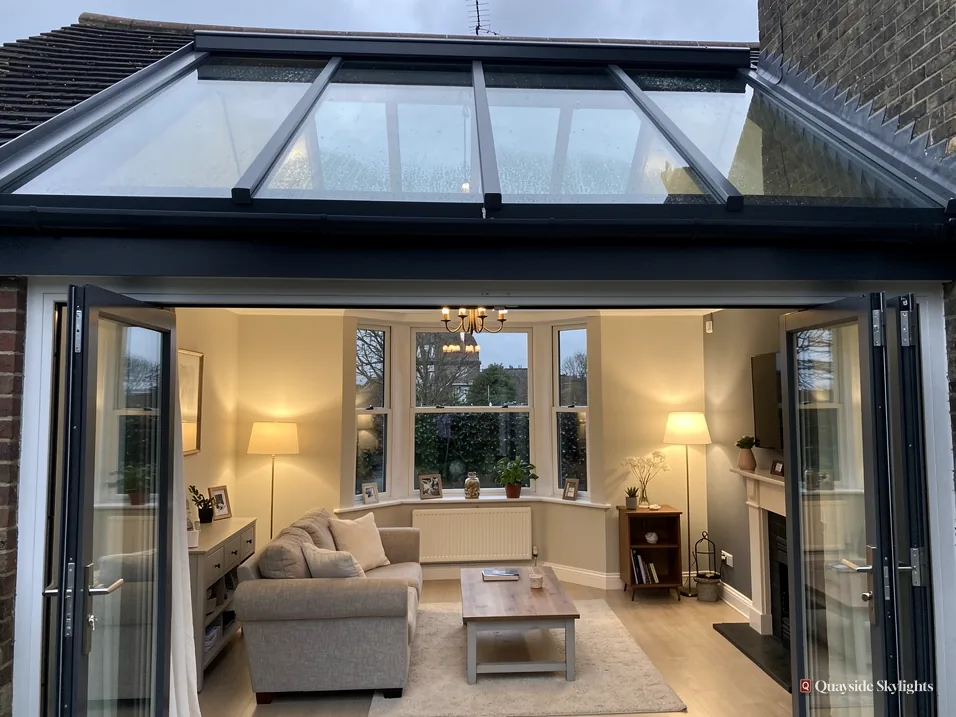
What is inside a double or triple glazed unit?
Sealed panes held apart by a spacer, plus a heat-reflecting low-e layer and gas filling the gaps. A triple unit adds a third pane and a second gap, which means more glass, more weight and a thicker edge.
A sealed glazing unit is a small sandwich. Two or three panes of glass are held a fixed distance apart by a spacer bar around the rim, and the space between them is sealed. The sealed gap is what slows heat down. Still air or gas does not move easily, so heat has a harder time getting across it.
The coating and the gas
A thin metallic coating on one pane, called low emissivity or low-e, reflects heat back towards the warm side. Many sealed units also replace the air in the gap with a heavier gas such as argon, which conducts less heat than air does. Both improve the unit's figure without adding another pane at all. This is why a modern double unit can outperform an older triple one that has neither.
Counting the panes
Double glazing has two panes and one gap. Triple glazing has three panes and two gaps, so there is a second barrier for heat to cross, and a second coating can be added. The cost is that each extra pane makes the unit thicker, heavier and more costly to make, and the frame has to be deeper to hold it.
The inner pane over a room
The pane facing the room is laminated. Laminated glass has a tough plastic layer between two sheets, so if the glass is broken it holds together instead of falling into the room. That is true whether the unit has two panes or three, and it is one reason a rooflight build-up differs from a vertical window.
When does a third pane make a real difference?
Where the rooflight is large, sits over a room you use all day, or has to meet a tight heat-loss target. In those places the extra barrier pays back; elsewhere the gain is smaller.
The benefit of a third pane is real, but it is not the same everywhere. It grows with the area of glass, with the hours spent in the room beneath it, and with how cold it gets inside the glass edge.
Big glass, long hours
A lantern over an open-plan kitchen is a good example. A lot of glass overhead, a room that is occupied from breakfast to bedtime and a ceiling that seems to hold a cold surface above your head. The surface temperature of the inner pane makes a difference to comfort as well as to heating bills: a warmer inner pane gives off less chill. A triple unit keeps the inside pane warmer than a double unit does in the same spot.
Targets and tight margins
For existing dwellings in England, the limiting U-value is 2.2 W/m²K for a rooflight and 1.4 W/m²K, or WER Band B, for a roof window. A well-made double unit with a good coating and warm edge spacer can meet the first. The tighter figure for a roof window is easier to reach with a third pane, though many double units pass it too. Our guide to rooflight U-values and Part L explains what the numbers measure.
Sound as a side benefit
Rain on glass is audible in a room below. A thicker or laminated build-up softens it. If the loft room is a bedroom, glazing with differently sized panes can calm the patter, though a third pane is not the only way to get it.
Our view: go for triple glazing where the glass is large and the room is lived in, and let a good double unit do the rest.
When is double glazing the better choice?
On small rooflights, over passing spaces, where the roof or frame cannot carry extra weight, or where a slim frame and a clear view matter more than the last bit of insulation.
A third pane is an addition, not an upgrade in every respect. Some jobs are better served by double glazing, and the reasons are practical ones.
Small and passing
A small flat rooflight over a bathroom or a landing has little glass to lose heat through, and nobody sits underneath it for hours. A good double unit meets the Part L limit and gives the room all the daylight it needs. Adding a pane would cost more and make little difference you could feel.
Weight and structure
Glass is heavy. A third pane adds to the load on the kerb, the joists and, on a pitched roof, the fixings. On an older flat roof with modest joists, a large triple unit may call for a stronger structure beneath it, which brings extra cost that a lighter unit would avoid. The survey measures the opening and looks at what holds it up, so the choice is made with the roof in front of us.
Depth, light and clarity
More panes means a thicker edge, which can mean a deeper frame that stands higher above the roof. On a house, rooflights are permitted development only if they project no more than 150mm beyond the plane of the roof slope, so a taller unit can change which planning route you need. Each pane also takes a little of the light that passes through, and a slightly tinted look can show up in three-pane glass. If your room is dim already, keep the build-up as clear as the thermal needs allow.
A frame fit for the glass
A triple unit set in a basic frame wastes most of what it offers. The edge and the frame carry more heat than the middle of the glass, so a slim aluminium frame without a thermal break can undo a lot of the gain.
Does the type of house change the choice?
It changes what the roof can carry and what permission applies. A flat's loft, a terrace extension and a new build each pull the choice a different way, so decide with the structure and the paperwork in view.
The house sets the limits before the glass does. Three situations come up around Tyneside, and each leans in a different direction.
An upstairs Tyneside flat
The loft above an upstairs flat is a natural place for a rooflight, but flats and maisonettes have no householder permitted development, so a new rooflight needs planning permission from the council. The deeds for a flat are where it says which owner has the roof and loft void, and whether a neighbour must consent. Read them and talk to that neighbour first. Heavy triple units are best weighed against what that roof structure can bear, and a lighter double unit can be the practical pick.
A terrace or semi with an extension
A kitchen extension with a flat roof is where larger glazing usually goes. This is the setting in which a triple unit has most to offer, as the room is large, warm and used for long periods. The flat roof structure is typically designed for the opening, so weight can be planned in from the start.
A new build
New-build roofs are already insulated to a high standard, so the rooflight is the weak link in the ceiling. A better unit narrows the gap, and the roof is usually built to take it. Whatever the house, cutting a new opening is building work that is notified to Building Control, and we handle that notification where it applies.
Putting the pieces together
The wider range of glass and frame choices appears on our energy efficient rooflights page, and the planning detail for each kind of home is in the rooflight planning guide.
What decides the cost of the extra pane?
Size, frame material, coatings and the structure under the unit move the price more than the pane count alone. A quote after the survey shows each of them.
A third pane is one input among several. Looking at the whole list gives a fairer sense of where the money goes than looking at the pane count alone.
Glass and frame together
The price follows the area of glass, the frame it is mounted in, and the coatings and spacers in the unit. A larger triple unit in a thermally broken frame costs more than a smaller double unit in a simple one, and rightly so. The two are different products.
What the roof needs
Heavier units may need stronger joists or a beam, and the kerb, flashing and roof covering around the opening are part of the work. Access matters as well, because big sheets of glass have to be lifted into place safely.
Running costs against purchase cost
A third pane costs more on the day and saves a little heat every winter after it. How quickly the saving catches up depends on the size of the glass and how many hours the room is heated, which is why a big kitchen lantern and a small bathroom rooflight give such different answers to the same question.
Fixed and written
Once the free survey is done we put a fixed written quote together, and its figure only moves if the job does. You will see the unit named, the size and the glass specification set out, so a double and a triple option can be set side by side. For the full discussion of what lifts or lowers a price, see our costs page.
What moves the price
Keeps it lower
- A smaller area of glass over a passing space
- A standard double unit in a standard frame
- A roof structure that can carry the unit as it stands
- A simple kerb and an easy line for lifting glass in
Pushes it higher
- A large triple unit with extra coatings
- A thermally broken frame with a deeper section
- Joists or beams strengthened to carry the weight
- A made-to-measure size instead of a standard one
Each point is written into the quote after the survey, so you can see which ones apply to your roof.
Glazing questions before you order
Will a triple glazed rooflight stop condensation?
The inner pane stays warmer, which makes condensation indoors less likely. It can show on the outside on clear still nights, because less heat escapes to warm the outer pane. That is a sign the unit is holding warmth, not that it has failed.
Is argon gas worth having?
Argon conducts heat less readily than air, so it improves a sealed unit's figure at little extra complexity. It is a standard part of a good build-up. Ask the supplier to confirm the gas and the coating in writing.
Can I fit triple glazing in an existing frame?
Rarely. A third pane makes the unit thicker, and old frames are cut for the thickness they were made for. The usual route is a new rooflight with the matching frame, kerb and flashing. That is replacement, and we survey the opening first.
Do roof windows come in triple glazed form?
Yes, several makers offer them. Part L sets the roof window limit at 1.4 W/m²K or WER Band B, and a third pane is one way to meet it. Our page on roof windows covers the product type itself.
Does triple glazing cut summer heat?
Not by itself. Extra panes slow heat moving both ways, but sunshine passing through still warms the room. The coating is what tackles that, and it has its own answer in this section. On a south-facing slope, ask us about a solar control coating at the survey, and we will compare it with blinds for that room.